

Motmot

ブロンズトキ 対 ホオアカトキ

Plegadis falcinellus 対 Geronticus eremita

ブロンズトキとホオアカトキのクイズ
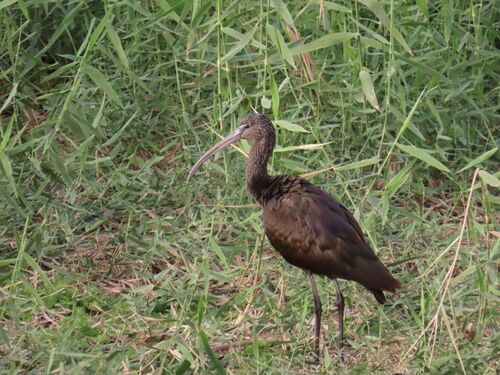
ブロンズトキ (Plegadis falcinellus) ブロンズトキ
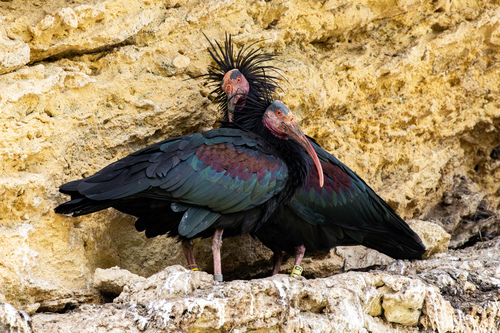
ホオアカトキ (Geronticus eremita) ホオアカトキ

メディア

読み込み中…

要点

ブロンズトキとホオアカトキを区別する最も信頼できるフィールドマークは、ホオアカトキの無羽毛で鈍い赤い顔と頭の存在であり、対してブロンズトキは完全に羽毛に覆われた暗い顔を持っています。飛行中、ホオアカトキはより大きく、がっしりとしたプロファイルを示し、翼はあまり丸くなく、首は短く、尾を超えて足が突き出ることはありません。一方、ブロンズトキはより細身で、首と足が尾を超えて伸びています。幼鳥のブロンズトキは完全に無毛の赤い顔を持たず、若いホオアカトキは暗い羽毛の頭を持っていますが、依然として重い構造を示しています。羽毛の虹色は両方に存在しますが、繁殖期のブロンズトキはより栗色であり、ホオアカトキはより均一に黒っぽく、青銅色と紫色の光沢を持っています。生息地と行動も異なります:ブロンズトキは湿地や水辺の渡り鳥であり、ホオアカトキは乾燥した岩の多い地域や開けた草地を好み、めったに水に浸かりません。

識別のコツ

  1. 無毛の赤い顔と頭(ホオアカトキ): このペアの中で、成鳥として完全に無羽毛の鈍い赤い顔と頭を持つ唯一の種です。ブロンズトキは常に羽毛のある顔を持ち、幼鳥や非繁殖成鳥でも同様です。
  2. くちばしの色と形: 両方とも長く、曲がったくちばしを持っていますが、ホオアカトキのくちばしは赤(成鳥)でより頑丈であり、ブロンズトキのくちばしは茶色がかっていてより細身です。
  3. 飛行中の首と足の突き出し: ブロンズトキは首と足を完全に伸ばして飛び、足は尾を超えて突き出ます。ホオアカトキは飛行中に首が短く、足は尾を超えず、よりコンパクトな外観を持ちます。
  4. 飛行中の翼の形: ホオアカトキは翼があまり丸くなく、がっしりとした、より力強い飛行スタイルを持っています。ブロンズトキはより細身で優雅に見え、翼は長く狭いです。
  5. 羽毛の虹色: 両種とも虹色を示しますが、ブロンズトキは繁殖期に赤茶色で、緑/青銅/紫の光沢があります。ホオアカトキはより均一に黒く、青銅色と紫色の光沢を持ち、栗色のトーンは欠けています。
  6. 幼鳥の混乱: 幼鳥のブロンズトキは鈍い茶色で、頭/首に細い白い筋があり、常に羽毛のある顔を持っています。幼鳥のホオアカトキは暗い羽毛の頭、淡いくちばし、灰色の足を持っていますが、全体的によりがっしりとして暗いです。成長するにつれて、頭は無毛になり赤くなります。
  7. 後ろ首のフリル: ホオアカトキの成鳥は後ろ首にふわふわしたフリルを持っていますが、ブロンズトキにはありません。
  8. 足の色: ホオアカトキは赤い足(成鳥)を持ち、ブロンズトキは赤茶色の足を持っています。
  9. 生息地: ブロンズトキはほぼ常に湿地、沼地、または浅い水の中または近くにいます。ホオアカトキは乾燥した岩の多い地域や開けた草地の生息地に見られ、めったに水にいません。
  10. 行動: ブロンズトキは浅い水で渡り、採餌し、しばしば群れで行動します。ホオアカトキは乾燥した地面で採餌し、めったに水に浸かりません。
  11. 止まり姿勢: ホオアカトキは止まっているときによりがっしりとして直立して見え、目立つ無毛の頭を持っています。ブロンズトキはより細身で、より前かがみです。
  12. サイズ: ホオアカトキははるかに大きく重いです;これは直接比較または経験でのみ使用してください。
  13. 顔の模様: ブロンズトキは繁殖成鳥に狭い白い顔の帯を示すことがありますが、それは微妙で、ホオアカトキの無毛の赤い顔ほど際立ってはいません。
  14. 鳴き声: フィールドでの診断には信頼できませんが、ホオアカトキはコロニーで喉の奥からの呼び声を発することがあります。
  15. 季節的文脈: 他の渡り鳥と一緒に湿地で見られた場合、ブロンズトキの方がはるかに可能性が高いです。乾燥した岩の多い地域や開けた場所、特に崖の近くにいる場合は、ホオアカトキが好まれます。

大きさ

ホオアカトキはブロンズトキよりもはるかに大きく重いです。ホオアカトキは長さ70〜80 cm、翼幅125〜135 cm、体重1.0〜1.3 kgで、頑丈でがっしりとした鳥です。ブロンズトキは中型で、長さ48〜66 cm、翼幅80〜105 cm、平均体重は633 gです。フィールドでは、ホオアカトキはよりがっしりとして威圧的に見え、ブロンズトキは明らかに細身で優雅です。

羽色

行動

ブロンズトキは典型的な渡り鳥で、浅い水で餌を取り、しばしば群れで行動し、時には餌場から遠く離れた木に共に止まります。彼らはしばしば首を伸ばして優雅なV字型の編隊で飛びます。ホオアカトキは非渡りで、乾燥した開けた生息地で昆虫や小動物を探し、崖や岩の ledge でコロニーを作ります。飛行中、ホオアカトキは力強いですが、優雅さには欠け、浅く柔軟な翼の打撃と短い首の突き出しを持っています。彼らの足は、ブロンズトキとは異なり、飛行中に尾を超えません。

生息環境

ブロンズトキは淡水または塩水の湿地、沼地、氾濫原、湿った草地に見られ、乾燥した岩の多い地域にはめったに出かけません。彼らは立ち水と出現植物のある地域を強く好みます。それに対して、ホオアカトキは開けた草地、岩山、半砂漠に生息し、しばしば流れる水の近くにいますが、湿地にはいません。彼らはめったに水に浸かることはなく、乾燥した地面や崖の ledge に見られることが多いです。

声

ホオアカトキは繁殖コロニーを除いてほとんど静かで、そこで喉の奥からの「フンプ」と高く粗い「ヒョー」という呼び声を発します。ブロンズトキは一般的に静かで、これらの2種のフィールドでの区別のための特有の鳴き声は記録されていません。

より良い説明を送る

比較と同じ項目を使ってください。文章はすぐに公開されます。

The most reliable field mark to separate Glossy Ibis from Northern Bald Ibis is the presence of an unfeathered, dull red face and head on the Northern Bald Ibis, versus the fully feathered dark face of the Glossy Ibis. In flight, Northern Bald Ibis shows a bulkier, stockier profile with less rounded wings, a shorter neck, and legs that do not project beyond the tail, while Glossy Ibis appears more slender with longer neck and legs that extend past the tail. Juvenile Glossy Ibis lacks the bald red face entirely, while young Northern Bald Ibis has a dark, feathered head but still shows a heavier structure. Plumage iridescence is present in both, but the Glossy Ibis is more chestnut in breeding season, whereas Northern Bald Ibis is more uniformly blackish with a bronze-green and violet sheen. Habitat and behavior also differ: Glossy Ibis is a wader of marshes and wetlands, while Northern Bald Ibis prefers dry, rocky, or open grassland areas and rarely wades.

  1. Bald red face and head (Northern Bald Ibis): The only species in this pair with a completely unfeathered, dull red face and head as an adult. Glossy Ibis always has a feathered face, even in juveniles and non-breeding adults.
  2. Bill color and shape: Both have long, decurved bills, but Northern Bald Ibis's bill is red (adults) and more robust, while Glossy Ibis's bill is brownish and more slender.
  3. Neck and leg projection in flight: Glossy Ibis flies with neck and legs fully outstretched, and the feet project well beyond the tail. Northern Bald Ibis has a shorter neck in flight and its feet do not project beyond the tail, giving a more compact look.
  4. Wing shape in flight: Northern Bald Ibis has less rounded wings and a stockier, more powerful flight style. Glossy Ibis appears more slender and graceful with longer, narrower wings.
  5. Plumage iridescence: Both species show iridescence, but Glossy Ibis is reddish-brown with green/bronze/purple sheen, especially in breeding season. Northern Bald Ibis is more uniformly black with bronze-green and violet gloss, lacking the chestnut tones.
  6. Juvenile confusion: Juvenile Glossy Ibis is dull brown with fine white streaks on the head/neck and always feathered-faced. Juvenile Northern Bald Ibis has a dark feathered head, pale bill, and grey legs, but is bulkier and darker overall. As it matures, the head becomes bald and red.
  7. Hind-neck ruff: Northern Bald Ibis adults have a wispy ruff on the hind neck, absent in Glossy Ibis.
  8. Leg color: Northern Bald Ibis has red legs (adults), while Glossy Ibis has red-brown legs.
  9. Habitat: Glossy Ibis is almost always in or near wetlands, marshes, or shallow water. Northern Bald Ibis is found in dry, rocky, or open grassland habitats, rarely in water.
  10. Behavior: Glossy Ibis wades and forages in shallow water, often in flocks. Northern Bald Ibis forages on dry ground, rarely wading.
  11. Perched posture: Northern Bald Ibis appears bulkier and more upright when perched, with a prominent bald head. Glossy Ibis is slimmer and more hunched.
  12. Size: Northern Bald Ibis is much larger and heavier; use this only with direct comparison or experience.
  13. Facial pattern: Glossy Ibis may show a narrow white facial band in breeding adults, but it is subtle and never as striking as the bald red face of Northern Bald Ibis.
  14. Vocalization: Not reliably diagnostic in the field, but Northern Bald Ibis may be heard giving guttural calls at colonies.
  15. Seasonal context: If seen in a wetland with other waders, Glossy Ibis is much more likely. If in a dry, rocky, or open area, especially near cliffs, Northern Bald Ibis is favored.

Northern Bald Ibis is significantly larger and heavier than Glossy Ibis. Northern Bald Ibis measures 70–80 cm in length with a wingspan of 125–135 cm and weighs 1.0–1.3 kg, making it a robust, stocky bird. Glossy Ibis is mid-sized at 48–66 cm in length, wingspan 80–105 cm, and average mass of 633 g. In the field, Northern Bald Ibis will look bulkier and more imposing, while Glossy Ibis is noticeably slimmer and more graceful.

  • Juveniles and immatures: Juvenile Glossy Ibis is duller brown with fine white streaking on the head and neck, and always has a feathered face. Juvenile Northern Bald Ibis has a dark, feathered head (not yet bald), pale bill, and light grey legs, but is still bulkier and darker overall. As they mature, Northern Bald Ibis gradually loses head feathers and develops the characteristic red, bald face.
  • Adults: Glossy Ibis in breeding plumage is reddish-brown with strong metallic green, bronze, or purple iridescence on the wings, and a subtle white facial border. Non-breeding adults and immatures are duller but retain the feathered face. Northern Bald Ibis adults are glossy black with bronze-green and violet sheen, a wispy hind-neck ruff, and a fully unfeathered, dull red face and head. The bill and legs are red in adults. The overall impression is much darker and less chestnut than Glossy Ibis.

Glossy Ibis is a classic wader, feeding in shallow water, often in flocks, and roosting communally in trees, sometimes far from feeding sites. They often fly in graceful V formations with necks outstretched. Northern Bald Ibis is non-wading, foraging in dry, open habitats for insects and small animals, and breeds colonially on cliffs or rocky ledges. In flight, Northern Bald Ibis is powerful but less graceful, with shallow, flexible wingbeats and a shorter neck projection. Their feet do not extend past the tail in flight, unlike Glossy Ibis.

Glossy Ibis is found in freshwater or brackish wetlands, marshes, floodplains, and wet meadows, rarely venturing into dry or rocky areas. It strongly prefers areas with standing water and emergent vegetation. Northern Bald Ibis, in contrast, inhabits open grasslands, rocky mountains, and semi-deserts, often near running water but not in wetlands. It is rarely seen wading and is more likely to be found on dry ground or cliff ledges.

Northern Bald Ibis is mostly silent except at breeding colonies, where it gives guttural 'hrump' and high, hoarse 'hyoh' calls. Glossy Ibis is generally quiet, and no distinctive vocalization is noted for field separation between these two species.

変更を破棄しますか?

保存していない編集があります。今離れると失われます。

ブロンズトキ · ホオアカトキ · 苦手な鳥