

Mignattaio vs Ibis eremita
Plegadis falcinellus contro Geronticus eremita
Fai un quiz con Mignattaio e Ibis eremita
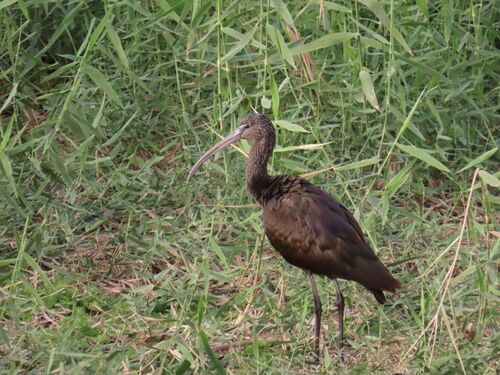 Mignattaio
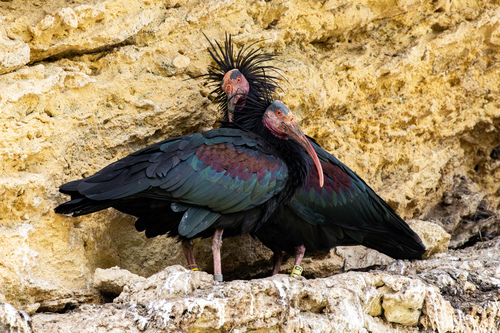 Ibis eremita
In breve
Il segno distintivo più affidabile per separare il Mignattaio dall'Ibis eremita è la presenza di un volto e una testa rossi opachi e privi di piume sull'Ibis eremita, rispetto al volto scuro completamente piumato del Mignattaio. In volo, l'Ibis eremita mostra un profilo più massiccio e robusto con ali meno arrotondate, un collo più corto e gambe che non si proiettano oltre la coda, mentre il Mignattaio appare più snello con collo e gambe più lunghi che si estendono oltre la coda. Il Mignattaio giovane non ha affatto il volto rosso calvo, mentre il giovane Ibis eremita ha una testa scura e piumata ma mostra comunque una struttura più pesante. L'iridescenza del piumaggio è presente in entrambi, ma il Mignattaio è più castano durante la stagione di riproduzione, mentre l'Ibis eremita è più uniformemente nerastro con una lucentezza verde bronzo e viola. L'habitat e il comportamento differiscono anche: il Mignattaio è un trampoliere di paludi e zone umide, mentre l'Ibis eremita preferisce aree asciutte, rocciose o praterie aperte e raramente si immerge.
Consigli di identificazione
- Volto e testa rossi calvi (Ibis eremita): L'unica specie in questo gruppo con un volto e una testa completamente privi di piume e rossi opachi da adulto. Il Mignattaio ha sempre un volto piumato, anche nei giovani e negli adulti non in riproduzione.
- Colore e forma del becco: Entrambi hanno becchi lunghi e ricurvi, ma il becco dell'Ibis eremita è rosso (adulti) e più robusto, mentre il becco del Mignattaio è bruno e più snello.
- Proiezione di collo e gambe in volo: Il Mignattaio vola con collo e gambe completamente distesi, e i piedi si proiettano bene oltre la coda. L'Ibis eremita ha un collo più corto in volo e i suoi piedi non si proiettano oltre la coda, dando un aspetto più compatto.
- Forma delle ali in volo: L'Ibis eremita ha ali meno arrotondate e uno stile di volo più massiccio e potente. Il Mignattaio appare più snello e aggraziato con ali più lunghe e strette.
- Iridescenza del piumaggio: Entrambe le specie mostrano iridescenza, ma il Mignattaio è rosso-bruno con lucentezza verde/bronzo/viola, specialmente durante la stagione di riproduzione. L'Ibis eremita è più uniformemente nero con lucentezza verde bronzo e viola, privo delle tonalità castanee.
- Confusione nei giovani: Il Mignattaio giovane è di un marrone opaco con sottili striature bianche sulla testa/collo e ha sempre un volto piumato. L'Ibis eremita giovane ha una testa piumata scura, becco chiaro e gambe grigie, ma è bulkier e più scuro nel complesso. Man mano che matura, la testa diventa calva e rossa.
- Collare sul collo posteriore: Gli adulti dell'Ibis eremita hanno un collare piumoso sul collo posteriore, assente nel Mignattaio.
- Colore delle gambe: L'Ibis eremita ha gambe rosse (adulti), mentre il Mignattaio ha gambe rosso-brune.
- Habitat: Il Mignattaio è quasi sempre in o vicino a zone umide, paludi o acque poco profonde. L'Ibis eremita si trova in habitat di praterie asciutte, rocciose o aperte, raramente in acqua.
- Comportamento: Il Mignattaio si immerge e cerca cibo in acque poco profonde, spesso in gruppi. L'Ibis eremita cerca cibo a terra asciutta, raramente immergendosi.
- Postura in perching: L'Ibis eremita appare più massiccio e più eretto quando è posato, con una prominente testa calva. Il Mignattaio è più snello e più curvo.
- Dimensioni: L'Ibis eremita è molto più grande e pesante; usa questo solo con un confronto diretto o esperienza.
- Schema facciale: Il Mignattaio può mostrare una sottile banda facciale bianca negli adulti in riproduzione, ma è sottile e mai così evidente come il volto rosso calvo dell'Ibis eremita.
- Vocalizzazione: Non è affidabilmente diagnostica sul campo, ma l'Ibis eremita può essere sentito emettere richiami gutturali nelle colonie.
- Contesto stagionale: Se visto in una zona umida con altri trampolieri, il Mignattaio è molto più probabile. Se in un'area asciutta, rocciosa o aperta, specialmente vicino a scogliere, l'Ibis eremita è favorito.
Taglia
L'Ibis eremita è significativamente più grande e pesante del Mignattaio. L'Ibis eremita misura 70–80 cm di lunghezza con un'apertura alare di 125–135 cm e pesa 1,0–1,3 kg, rendendolo un uccello robusto e massiccio. Il Mignattaio è di dimensioni medie, con una lunghezza di 48–66 cm, apertura alare di 80–105 cm e una massa media di 633 g. Sul campo, l'Ibis eremita apparirà più massiccio e imponente, mentre il Mignattaio è visibilmente più snello e aggraziato.
Piumaggio
- Giovani e immaturi: Il Mignattaio giovane è di un marrone più opaco con sottili striature bianche sulla testa e sul collo, e ha sempre un volto piumato. L'Ibis eremita giovane ha una testa piumata scura (non ancora calva), becco chiaro e gambe grigie, ma è comunque più massiccio e scuro nel complesso. Man mano che maturano, l'Ibis eremita perde gradualmente le piume della testa e sviluppa il caratteristico volto calvo e rosso.
- Adulti: Il Mignattaio in piumaggio di riproduzione è rosso-bruno con una forte iridescenza verde metallica, bronzo o viola sulle ali, e un sottile bordo facciale bianco. Gli adulti non in riproduzione e gli immaturi sono più opachi ma mantengono il volto piumato. Gli adulti dell'Ibis eremita sono neri lucidi con lucentezza verde bronzo e viola, un collare piumoso sul collo posteriore e un volto e una testa completamente privi di piume e rossi opachi. Il becco e le gambe sono rossi negli adulti. L'impressione generale è molto più scura e meno castanea rispetto al Mignattaio.
Comportamento
Il Mignattaio è un trampoliere classico, si nutre in acque poco profonde, spesso in gruppi, e si riposa comunemente sugli alberi, a volte lontano dai siti di alimentazione. Spesso volano in aggraziate formazioni a V con i colli distesi. L'Ibis eremita non si immerge, cerca cibo in habitat asciutti e aperti per insetti e piccoli animali, e si riproduce colonialmente su scogliere o sporgenze rocciose. In volo, l'Ibis eremita è potente ma meno aggraziato, con battiti d'ali superficiali e flessibili e una proiezione del collo più corta. I loro piedi non si estendono oltre la coda in volo, a differenza del Mignattaio.
Habitat
Il Mignattaio si trova in zone umide dolci o salmastre, paludi, pianure alluvionali e prati umidi, raramente avventurandosi in aree asciutte o rocciose. Preferisce fortemente aree con acqua stagnante e vegetazione emergente. L'Ibis eremita, al contrario, abita praterie aperte, montagne rocciose e semi-deserti, spesso vicino a corsi d'acqua ma non in zone umide. È raramente visto immergersi ed è più probabile trovarlo a terra asciutta o su sporgenze rocciose.
Voce
L'Ibis eremita è per lo più silenzioso, tranne che nelle colonie di riproduzione, dove emette richiami gutturali 'hrump' e richiami alti e rauchi 'hyoh'. Il Mignattaio è generalmente silenzioso e non si nota alcuna vocalizzazione distintiva per la separazione sul campo tra queste due specie.