

fairy prion vs fluttering shearwater
Pachyptila turtur versus Puffinus gavia
Jogue um quiz com fairy prion e fluttering shearwater
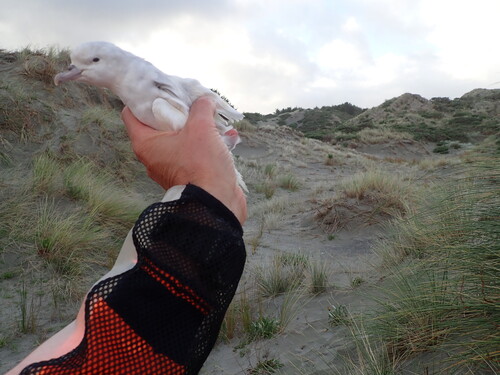 fairy prion
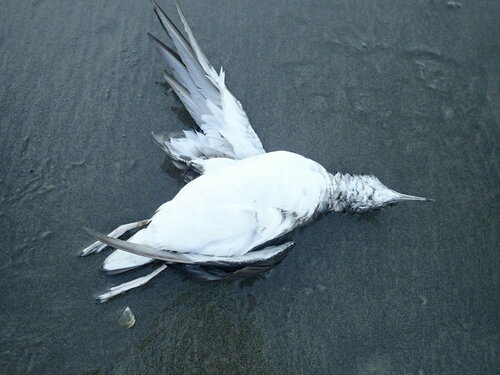 fluttering shearwater
Em resumo
A marca de campo mais confiável para separar fairy prion de fluttering shearwater é o padrão da asa superior: fairy prion apresenta um dorso azul-acinzentado com uma marcante marcação escura em forma de 'M' que se estende pelas asas até as pontas, enquanto fluttering shearwater tem partes superiores uniformemente marrons escuras sem qualquer padrão em 'M'. Em voo, fairy prion parece mais pálido e prateado acima, enquanto fluttering shearwater é consistentemente escuro acima e branco abaixo, com uma distinta mancha escura na coxa visível nas partes inferiores. A estrutura também ajuda: fairy prion é menor, com uma cauda em forma de cunha e um bico curto e azul pálido, enquanto fluttering shearwater é maior, com uma cauda em forma de leque, bico longo e escuro, e pernas marrom-rosadas que frequentemente se projetam além da cauda. Ambos podem ser vistos em habitats oceânicos semelhantes, mas seu estilo de voo e padrão de asa são as maneiras mais rápidas de diferenciá-los.
Dicas de identificação
- Padrão da asa superior (todas as idades): Fairy prion apresenta um dorso azul-acinzentado com uma marcante marcação escura em forma de 'M' nas asas superiores até as pontas; fluttering shearwater é uniformemente marrom escuro acima, sem padrão em 'M'. Esta é a marca mais confiável em voo.
- Forma da cauda: Fairy prion tem uma cauda em forma de cunha com uma ponta escura, enquanto fluttering shearwater tem uma cauda curta em forma de leque com coloração mista escura e branca.
- Cor e forma do bico: Fairy prion tem um bico curto e azul pálido; o bico do fluttering shearwater é mais longo, mais fino e escuro.
- Pernas e pés: Fairy prion tem pernas e pés azuis, que raramente são visíveis em campo. Fluttering shearwater tem pernas e pés marrom-rosados com membranas escuras, e os pés frequentemente se projetam além da cauda em voo — uma marca útil se vista.
- Partes inferiores: Ambos são brancos abaixo, mas fluttering shearwater apresenta uma mancha escura na coxa nas partes inferiores brancas, visível em voo; as partes inferiores do fairy prion são brancas limpas.
- Asa inferior: A asa inferior do fluttering shearwater é principalmente branca com axilares marrom-acinzentados; a asa inferior do fairy prion é branca simples, combinando com o corpo.
- Padrão do rosto: O rosto do fairy prion é pálido com uma coroa azul-acinzentada; o rosto e o pescoço do fluttering shearwater são marrom-acinzentados, desvanecendo para branco abaixo do olho, mas isso é sutil no mar.
- Estilo de voo: Fairy prion é mais flutuante e desliza mais; fluttering shearwater voa baixo e rápido com batidas de asa rápidas e deslizes curtos.
- Tamanho e volume: Fairy prion é muito menor e mais leve (139 g) do que fluttering shearwater (243–302 g), que parece mais volumoso e com asas mais longas.
- Efeitos da muda: Fluttering shearwater no final do verão até o outono pode parecer mais pálido e desgastado acima, mas ainda carece do padrão em 'M' do fairy prion.
- Confusão juvenil: O juvenil fluttering shearwater se parece com o adulto, mas com bordas de penas de asa mais pálidas; nenhuma idade do fluttering shearwater apresenta um padrão em 'M'.
- Projeção dos pés: Em voo, procure por pés se projetando além da cauda (apenas fluttering shearwater).
- Ponta da cauda: A cauda do fairy prion é em forma de cunha com uma ponta escura; a do fluttering shearwater é em forma de leque e de cor mista.
- Vocalizações: Apenas fluttering shearwater é provável que chame no mar; se você ouvir o chamado 'ka-hek-ka-hek', não é um fairy prion.
- Sobreposição de habitat: Ambos podem ser vistos juntos no mar, então não confie apenas na localização para identificação.
Tamanho
Fairy prion é muito menor e mais leve, com uma massa corporal de cerca de 139 g [wikidata], em comparação com o fluttering shearwater, que é significativamente mais pesado (fêmeas adultas pesam em média 302 g, machos 243 g [wikipedia]). Fairy prion tem cerca de 25 cm de comprimento com uma envergadura de 56 cm, enquanto fluttering shearwater é descrito como médio a pequeno para um shearwater, mas ainda é notavelmente mais volumoso e com asas mais longas do que fairy prion. Essa diferença de tamanho é frequentemente aparente quando ambas as espécies são vistas juntas ou com outras aves marinhas para escala.
Plumagem
Os juvenis e adultos de fairy prion de todas as idades apresentam partes superiores azul-acinzentadas com uma forte marcação escura em forma de 'M' que se estende do dorso pelas asas superiores até as pontas, e uma cauda em forma de cunha com uma ponta escura. As partes inferiores são brancas limpas. O bico é azul pálido, e as pernas e pés são azuis. O fluttering shearwater, por outro lado, tem partes superiores uniformemente marrons escuras, incluindo o pescoço, asas e cauda, sem qualquer padrão em 'M'. O rosto e o pescoço são marrom-acinzentados, desvanecendo para branco abaixo do olho, e as partes inferiores são brancas, exceto por uma conspícua mancha escura na coxa visível em voo. A asa inferior é principalmente branca, mas os axilares (área da axila) são marrom-acinzentados. A cauda é em forma de leque e curta em voo, com mistura de marrom escuro e branco. Durante a muda (final de janeiro a abril), as partes superiores do fluttering shearwater desbotam para um marrom enferrujado mais pálido e podem parecer desgastadas, mas ainda carecem de qualquer padrão em 'M'. Os juvenis de fluttering shearwater se assemelham aos adultos, mas com bordas de penas de asa mais pálidas.
Comportamento
Fairy prion normalmente voa com um voo mais flutuante e deslizante e é frequentemente visto mergulhando na superfície da água para se alimentar. Fluttering shearwater tem um estilo de voo baixo, rápido e determinado, caracterizado por batidas de asa rápidas intercaladas com deslizes. Em voo, os pés do fluttering shearwater frequentemente se projetam além da cauda, uma característica não vista no fairy prion. Ambas as espécies se alimentam no mar, mas o fluttering shearwater é mais provável de ser visto mergulhando e nadando atrás da presa, usando suas asas para se impulsionar debaixo d'água.
Habitat
Ambas as espécies são pelágicas e podem ser vistas sobre o oceano aberto, mas suas áreas de reprodução diferem: fairy prion se reproduz em ilhas subantárticas e subtropicais em todo o Hemisfério Sul, enquanto fluttering shearwater é endêmico da Nova Zelândia e migra para a Austrália e as Ilhas Salomão. No mar, seus habitats se sobrepõem, então o contexto nem sempre é útil para separação.
Voz
Fluttering shearwater tem um chamado de voo distinto e desarticulado descrito como 'ka-hek-ka-hek-ka-hek', geralmente emitido em voo. Fairy prion é mais frequentemente silencioso no mar, mas em colônias pode emitir chamados suaves à noite. As vocalizações provavelmente não serão úteis para separação em campo, a menos que as aves estejam chamando.