

Motmot

ヒメクジラドリ 対 ミナミミズナギドリ

Pachyptila turtur 対 Puffinus gavia

ヒメクジラドリとミナミミズナギドリのクイズ
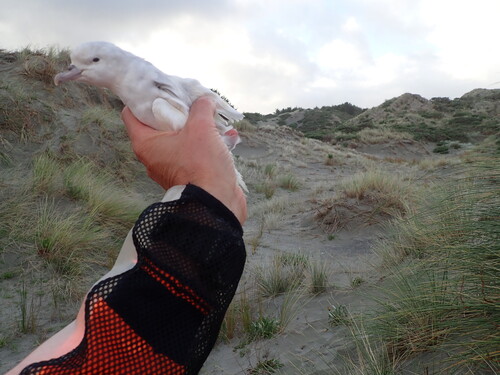
ヒメクジラドリ (Pachyptila turtur) ヒメクジラドリ
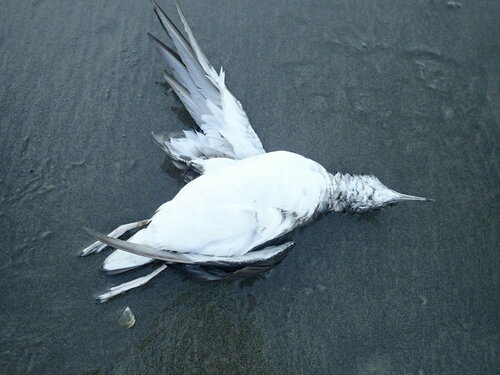
ミナミミズナギドリ (Puffinus gavia) ミナミミズナギドリ

メディア

読み込み中…

要点

ヒメクジラドリとミナミミズナギドリを区別する最も信頼できるフィールドマークは、上翼のパターンです:ヒメクジラドリは、翼の先端まで広がる太い暗い 'M' マークのある青灰色の背中を示し、一方ミナミミズナギドリは 'M' パターンのない均一な暗褐色の上面を持っています。飛行中、ヒメクジラドリは上面がより明るく銀色に見えるのに対し、ミナミミズナギドリは常に上面が暗く、下面が白く、下部には特徴的な暗い太ももパッチが見えます。構造も役立ちます:ヒメクジラドリは小さく、くさび形の尾と短い淡い青のくちばしを持ち、ミナミミズナギドリは大きく、扇形の尾、長い暗いくちばし、しばしば尾を超えて突き出るピンク褐色の脚を持っています。両者は似たような海洋生息地で見ることができますが、飛行スタイルと翼のパターンが最も早く区別する方法です。

識別のコツ

  1. Upperwing pattern (all ages): ヒメクジラドリは、翼の先端まで広がる太い暗い 'M' マークのある青灰色の背中を示します; ミナミミズナギドリは上面が均一な暗褐色で 'M' パターンがありません。これは飛行中に最も信頼できるマークです。
  2. Tail shape: ヒメクジラドリは暗い先端のあるくさび形の尾を持ち、ミナミミズナギドリは混合した暗い色と白の短い扇形の尾を持っています。
  3. Bill color and shape: ヒメクジラドリは短い淡い青のくちばしを持ち、ミナミミズナギドリのくちばしは長く、細く、暗い色です。
  4. Legs and feet: ヒメクジラドリは青い脚と足を持ち、フィールドではめったに見えません。ミナミミズナギドリは暗い水かきのあるピンク褐色の脚と足を持ち、飛行中に足が尾を超えて突き出ることがよくあります—見えた場合は便利なマークです。
  5. Underparts: 両者は下面が白ですが、ミナミミズナギドリは白い下面に暗い太ももパッチを示し、飛行中に見えます; ヒメクジラドリの下面は清潔な白です。
  6. Underwing: ミナミミズナギドリの下翼は主に白で、灰褐色の腋窩があります; ヒメクジラドリの下翼は体に合わせた無地の白です。
  7. Face pattern: ヒメクジラドリの顔は淡く青灰色の冠を持ち、ミナミミズナギドリの顔と首は灰褐色で、目の下で白にフェードしますが、これは海上では微妙です。
  8. Flight style: ヒメクジラドリはより浮力があり、より滑空します; ミナミミズナギドリは低く速く飛び、急速な翼の拍動と短い滑空を特徴とします。
  9. Size and bulk: ヒメクジラドリはミナミミズナギドリ(243–302 g)よりもはるかに小さく軽量(139 g)で、ミナミミズナギドリはより大きく、長い翼を持っています。
  10. Moult effects: 夏の終わりから秋にかけてのミナミミズナギドリは上面がより明るく、ぼろぼろに見えることがありますが、依然としてヒメクジラドリの 'M' パターンはありません。
  11. Juvenile confusion: 幼鳥のミナミミズナギドリは成鳥に似ていますが、翼の覆羽の縁が淡いです; ミナミミズナギドリのどの年齢も 'M' パターンを示しません。
  12. Feet projection: 飛行中、尾を超えて突き出る足を探してください(ミナミミズナギドリのみ)。
  13. Tail tip: ヒメクジラドリの尾は暗い先端のあるくさび形で、ミナミミズナギドリの尾は扇形で色が混ざっています。
  14. Vocalizations: 海上で呼ぶ可能性があるのはミナミミズナギドリのみです; 'ka-hek-ka-hek' の呼び声が聞こえた場合、それはヒメクジラドリではありません。
  15. Habitat overlap: 両者は海上で一緒に見ることができるため、識別のために位置だけに頼らないでください。

大きさ

ヒメクジラドリははるかに小さく軽量で、体重は約139 g [wikidata]で、ミナミミズナギドリは大幅に重い(成鳥の雌は平均302 g、雄は243 g [wikipedia])。ヒメクジラドリは長さ約25 cm、翼幅56 cmですが、ミナミミズナギドリはミズナギドリとしては中型から小型とされますが、ヒメクジラドリよりも明らかに大きく、長い翼を持っています。このサイズの違いは、両種が一緒に見られるときや他の海鳥と比較されるときにしばしば明らかです。

羽色

幼鳥と成鳥のヒメクジラドリはすべての年齢で青灰色の上面を示し、背中から上翼を経て翼先端まで広がる強い暗い 'M' マークと、暗い先端のあるくさび形の尾を持っています。下面は清潔な白です。くちばしは淡い青で、脚と足は青です。対照的に、ミナミミズナギドリは均一な暗褐色の上面を持ち、首、翼、尾を含み、'M' パターンがありません。顔と首は灰褐色で、目の下で白にフェードし、下面は白ですが、飛行中に見える目立つ暗い太ももパッチがあります。下翼は主に白ですが、腋窩(脇の下の部分)は灰褐色です。尾は扇形で、飛行中は短く、暗褐色と白が混ざっています。換羽中(1月下旬から4月)、ミナミミズナギドリの上面はより明るい錆色にフェードし、ぼろぼろに見えることがありますが、依然として 'M' パターンはありません。幼鳥のミナミミズナギドリは成鳥に似ていますが、翼の覆羽の縁が淡いです。

行動

ヒメクジラドリは通常、より浮力のある滑空飛行をし、水面に降りて餌を取る姿がよく見られます。ミナミミズナギドリは低く速い決定的な飛行スタイルを持ち、急速な翼の拍動と滑空が交互に行われます。飛行中、ミナミミズナギドリの足はしばしば尾を超えて突き出し、これはヒメクジラドリには見られない特徴です。両種は海で餌を取りますが、ミナミミズナギドリは獲物を追って潜水し、泳ぐ姿が見られることが多く、翼を使って水中で推進します。

生息環境

両種は外洋性で、開けた海上で見ることができますが、繁殖範囲は異なります:ヒメクジラドリは南半球の亜南極および亜熱帯の島々で繁殖し、ミナミミズナギドリはニュージーランド固有で、オーストラリアやソロモン諸島に移動します。海上では生息地が重なるため、文脈が常に区別に役立つわけではありません。

声

ミナミミズナギドリは、飛行中に通常発せられる 'ka-hek-ka-hek-ka-hek' と呼ばれる特徴的で不連続な飛行呼び声を持っています。ヒメクジラドリは海上ではより静かですが、コロニーでは夜に柔らかいクーイングの呼び声を発することがあります。呼び声は、鳥が呼んでいる場合を除いて、フィールドでの区別には役立たない可能性があります。

より良い説明を送る

比較と同じ項目を使ってください。文章はすぐに公開されます。

The most reliable field mark to separate Fairy Prion from Fluttering Shearwater is the upperwing pattern: Fairy Prion shows a blue-grey back with a bold dark 'M' marking extending across the wings to the wingtips, while Fluttering Shearwater has uniformly dark brown upperparts without any 'M' pattern. In flight, Fairy Prion appears paler and more silvery above, whereas Fluttering Shearwater is consistently dark above and white below, with a distinctive dark thigh patch visible on the underparts. Structure also helps: Fairy Prion is smaller, with a wedge-shaped tail and a short, pale blue bill, while Fluttering Shearwater is larger, with a fan-shaped tail, long dark bill, and pinkish-brown legs that often project beyond the tail. Both can be seen in similar oceanic habitats, but their flight style and wing pattern are the quickest ways to tell them apart.

  1. Upperwing pattern (all ages): Fairy Prion shows a blue-grey back with a bold dark 'M' marking across the upperwings to the wingtips; Fluttering Shearwater is uniformly dark brown above with no 'M' pattern. This is the single most reliable mark in flight.
  2. Tail shape: Fairy Prion has a wedge-shaped tail with a dark tip, while Fluttering Shearwater has a short, fan-shaped tail with mixed dark and white coloration.
  3. Bill color and shape: Fairy Prion has a short, pale blue bill; Fluttering Shearwater's bill is longer, thinner, and dark-colored.
  4. Legs and feet: Fairy Prion has blue legs and feet, which are rarely visible in the field. Fluttering Shearwater has pinkish-brown legs and feet with dark webs, and the feet often project beyond the tail in flight—a useful mark if seen.
  5. Underparts: Both are white below, but Fluttering Shearwater shows a dark thigh patch on the white underparts, visible in flight; Fairy Prion's underparts are clean white.
  6. Underwing: Fluttering Shearwater's underwing is mostly white with grey-brown axillaries; Fairy Prion's underwing is plain white, matching the body.
  7. Face pattern: Fairy Prion's face is pale with a blue-grey crown; Fluttering Shearwater's face and neck are grey-brown, fading to white below the eye, but this is subtle at sea.
  8. Flight style: Fairy Prion is more buoyant and glides more; Fluttering Shearwater flies low and fast with rapid wingbeats and short glides.
  9. Size and bulk: Fairy Prion is much smaller and lighter (139 g) than Fluttering Shearwater (243–302 g), which appears bulkier and longer-winged.
  10. Moult effects: Fluttering Shearwater in late summer to autumn may look paler and ragged above, but still lacks the 'M' pattern of Fairy Prion.
  11. Juvenile confusion: Juvenile Fluttering Shearwater looks like the adult but with paler wing covert edges; no age of Fluttering Shearwater shows an 'M' pattern.
  12. Feet projection: In flight, look for feet extending past the tail (Fluttering Shearwater only).
  13. Tail tip: Fairy Prion's tail is wedge-shaped with a dark tip; Fluttering Shearwater's is fan-shaped and mixed in color.
  14. Vocalizations: Only Fluttering Shearwater is likely to call at sea; if you hear the 'ka-hek-ka-hek' call, it's not a Fairy Prion.
  15. Habitat overlap: Both can be seen together at sea, so do not rely on location alone for identification.

Fairy Prion is much smaller and lighter, with a body mass of about 139 g [wikidata], compared to the Fluttering Shearwater, which is significantly heavier (adult females average 302 g, males 243 g [wikipedia]). Fairy Prion is about 25 cm in length with a 56 cm wingspan, while Fluttering Shearwater is described as medium to small for a shearwater but is still notably bulkier and longer-winged than Fairy Prion. This size difference is often apparent when both species are seen together or with other seabirds for scale.

Juvenile and adult Fairy Prion of all ages show blue-grey upperparts with a strong dark 'M' marking that extends from the back across the upperwings to the wingtips, and a wedge-shaped tail with a dark tip. The underparts are clean white. The bill is pale blue, and the legs and feet are blue. Fluttering Shearwater, by contrast, has uniformly dark brown upperparts, including the neck, wings, and tail, lacking any 'M' pattern. The face and neck are grey-brown, fading to white below the eye, and the underparts are white except for a conspicuous dark thigh patch visible in flight. The underwing is mostly white, but the axillaries (armpit area) are grey-brown. The tail is fan-shaped and short in flight, with mixed dark brown and white. During moult (late January to April), Fluttering Shearwater's upperparts fade to a paler, rusty brown and may appear ragged, but still lack any 'M' pattern. Juvenile Fluttering Shearwaters resemble adults but with paler wing covert edges.

Fairy Prion typically flies with a more buoyant, gliding flight and is often seen dipping to the water's surface to feed. Fluttering Shearwater has a low, fast, and determined flight style, characterized by rapid wingbeats interspersed with glides. In flight, the feet of Fluttering Shearwater often extend beyond the tail, a feature not seen in Fairy Prion. Both species feed at sea, but Fluttering Shearwater is more likely to be seen diving and swimming after prey, using its wings to propel itself underwater.

Both species are pelagic and can be seen over open ocean, but their breeding ranges differ: Fairy Prion breeds on subantarctic and subtropical islands throughout the Southern Hemisphere, while Fluttering Shearwater is endemic to New Zealand and migrates to Australia and the Solomon Islands. At sea, their habitats overlap, so context is not always helpful for separation.

Fluttering Shearwater has a distinctive, disjointed flight call described as 'ka-hek-ka-hek-ka-hek,' usually given in flight. Fairy Prion is more often silent at sea, but at colonies may give soft cooing calls at night. Vocalizations are unlikely to be helpful for field separation unless birds are calling.

変更を破棄しますか?

保存していない編集があります。今離れると失われます。

ヒメクジラドリ · ミナミミズナギドリ · 苦手な鳥