

peto-real vs pica-pau-preto
Picus viridis versus Dryocopus martius
Jogue um quiz com peto-real e pica-pau-preto
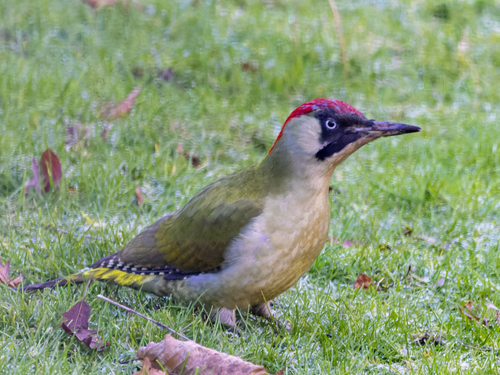 peto-real
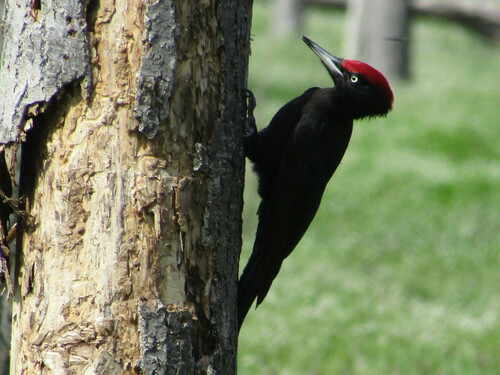 pica-pau-preto
Em resumo
A marca de campo mais confiável entre esses dois é a cor geral: o peto-real é verde brilhante por cima, com um rabo amarelo e uma coroa vermelha, enquanto o pica-pau-preto é completamente preto, exceto por uma mancha vermelha na coroa. Pica-paus-reais juvenis são fortemente manchados e listrados, ao contrário do pica-pau-preto juvenil, que é mais uniformemente escuro e opaco. Em voo, o peto-real exibe um voo ondulante e saltitante, com flashes de amarelo no rabo, enquanto o pica-pau-preto voa com batidas de asas lentas e constantes, aparecendo completamente preto. O tamanho também é uma pista forte: o pica-pau-preto é muito maior e mais robusto do que o peto-real. Vocalizações e padrões faciais oferecem mais separação se vistos ou ouvidos bem.
Dicas de identificação
- Cor Geral: O peto-real é verde por cima, com um rabo amarelo; o pica-pau-preto é completamente preto, exceto pela coroa vermelha. Esta é a separação mais rápida na maioria das vistas.
- Padrão Juvenil: Pica-paus-reais juvenis são fortemente manchados e listrados, especialmente nas partes inferiores e no rosto. Pica-paus-preto juvenis são pretos simples e opacos, com uma coroa vermelha mais apagada e garganta pálida, sem manchas ou listras.
- Padrão da Coroa (Sexo/Idade): O pica-pau-real macho adulto tem uma coroa e nuca vermelhas, com uma faixa de bigode preta contendo vermelho; a fêmea tem um bigode preto sólido. Machos de pica-pau-preto têm toda a coroa vermelha, enquanto as fêmeas têm apenas a parte de trás da coroa. O pica-pau-preto juvenil tem uma coroa vermelha mais apagada e menos extensa.
- Marcas Faciais: O peto-real tem uma 'máscara' preta ao redor do olho e das lore, e um olho pálido contrastante. O pica-pau-preto não tem máscara facial, apenas um rosto preto com uma coroa vermelha.
- Estrutura do Bico: O pica-pau-preto tem um bico muito mais longo, pesado e pálido; o bico do peto-real é mais curto e menos robusto.
- Estilo de Voo: O peto-real voa com um voo saltitante e ondulante (3–4 batidas de asas e depois um deslizamento); o pica-pau-preto voa com batidas de asas lentas, constantes e ininterruptas, mantendo a cabeça erguida—sem saltos.
- Cor do Rabo em Voo: O peto-real exibe um rabo amarelo brilhante em voo; o rabo do pica-pau-preto é preto, misturando-se com o resto do corpo.
- Tamanho e Jizz: O pica-pau-preto é muito maior, mais robusto e com aparência mais poderosa, com uma cauda e bico mais longos. O peto-real é menor, mais esguio e menos imponente.
- Uso do Habitat: O peto-real é frequentemente visto no chão em áreas abertas, gramados ou parques; o pica-pau-preto é quase sempre visto em troncos de árvores em florestas maduras.
- Vocalizações: O peto-real emite um 'yaffle' alto e risonho e um barulhento 'kyü-kyü-kyück' em voo; o pica-pau-preto emite um 'kree-kree-kree' agudo e chamados semelhantes a gritos, nunca um yaffle.
- Tambores: Ambas as espécies tamborilam raramente, mas se ouvidos, o tamboril do peto-real é suave e rápido; o tamboril do pica-pau-preto não é descrito como uma marca de campo aqui.
- Diferenças Sexuais: Para o peto-real, verifique a faixa do bigode: centro vermelho nos machos, todo preto nas fêmeas. Para o pica-pau-preto, verifique a extensão do vermelho na coroa: total nos machos, apenas na parte de trás da coroa nas fêmeas.
- Postura Empoleirada: O pica-pau-preto parece ter um pescoço longo, com uma cabeça e bico grandes, e senta-se ereto em troncos. O peto-real é mais compacto e frequentemente visto no chão.
- Contexto: Se visto em uma grande floresta madura com grandes árvores mortas, especialmente longe de áreas abertas, o pica-pau-preto é mais provável. Em parques abertos ou jardins, o peto-real é muito mais provável.
- Armadilhas: Luz fraca ou vistas distantes podem fazer o peto-real parecer mais escuro ou menos verde; sempre procure o rabo amarelo e o padrão facial. Pica-paus-reais juvenis podem parecer estranhamente marcados, mas nunca completamente pretos.
Tamanho
O pica-pau-preto é significativamente maior do que o peto-real. O peto-real mede 30–36 cm de comprimento, com uma envergadura de 45–51 cm e uma massa corporal em torno de 193 g [wikidata]. Em contraste, o pica-pau-preto é do tamanho de um corvo, medindo 45–55 cm de comprimento, com uma envergadura de 64–84 cm e uma massa corporal de 250–400 g [wikipedia]. O bico do pica-pau-preto também é notavelmente mais longo e pesado. No campo, o pica-pau-preto parece muito mais imponente e poderoso, enquanto o peto-real é distintamente menor e mais esguio.
Plumagem
- Juvenis: Pica-paus-reais juvenis são fortemente manchados e listrados por toda parte, com um bigode escuro e algumas penas vermelhas aparecendo no bigode de machos jovens no meio do verão. Pica-paus-preto juvenis são pretos mais apagados, menos brilhantes, com uma coroa vermelha mais apagada e uma garganta e bico cinza mais pálidos, mas carecem das pesadas manchas e listras dos pica-paus-reais juvenis.
- Adultos: Pica-paus-reais adultos são verdes por cima, verde amarelado pálido por baixo, com um rabo amarelo brilhante e uma coroa/nuca vermelha. Machos têm um bigode preto com um centro vermelho; fêmeas têm um bigode preto sólido. O rosto tem uma 'máscara' preta ao redor do olho e das lore. Pica-paus-preto adultos são completamente pretos, exceto pela coroa vermelha: machos têm toda a coroa vermelha, fêmeas apenas a parte de trás da coroa. O bico é pálido e strikingly longo. Não há tons amarelos ou verdes em nenhum lugar no pica-pau-preto.
- Voo: Em voo, o peto-real exibe um rabo amarelo e um voo ondulante, enquanto o pica-pau-preto aparece completamente preto e voa com batidas de asas lentas e constantes.
Comportamento
Pica-paus-reais passam muito tempo se alimentando no chão, especialmente de formigas, e são tímidos, muitas vezes mais facilmente ouvidos do que vistos. Eles raramente tamborilam e têm um voo ondulante e saltitante distinto. Pica-paus-preto se alimentam martelando árvores mortas ou doentes em busca de insetos brotadores de madeira e formigas carpinteiras, e são mais frequentemente vistos em troncos de árvores. Seu voo é direto, com batidas de asas lentas e profundas, sem saltos. As poderosas escavações do pica-pau-preto criam grandes buracos de ninho, frequentemente reutilizados por outras espécies.
Habitat
Ambas as espécies podem ocorrer em florestas maduras, mas o pica-pau-preto está mais estritamente ligado a grandes florestas maduras com grandes árvores para nidificação e alimentação, especialmente álamo ou pinheiro com podridão central. Pica-paus-reais são mais flexíveis, encontrados em florestas abertas, parques, pomares e até jardins, e são mais propensos a serem vistos se alimentando no chão em áreas abertas. O pica-pau-preto é menos provável em habitats abertos ou fragmentados.
Voz
O peto-real é famoso por seus altos chamados 'yaffle'—uma série de 10–18 notas 'klü' que aceleram e caem em tom, e um barulhento 'kyü-kyü-kyück' em voo. O chamado da fêmea é mais fino e mais rápido. O tamborilar é raro e suave. O pica-pau-preto emite um 'kree-kree-kree' alto e assobiado (apenas duas vezes seguidas), e um grito semelhante a um grito em voo. Seus chamados são mais agudos e penetrantes, e ele não produz um som risonho ou de 'yaffle'. O tamborilar não é mencionado como uma característica proeminente para nenhum dos dois nestas notas.