

Picchio verde vs Picchio nero
Picus viridis contro Dryocopus martius
Fai un quiz con Picchio verde e Picchio nero
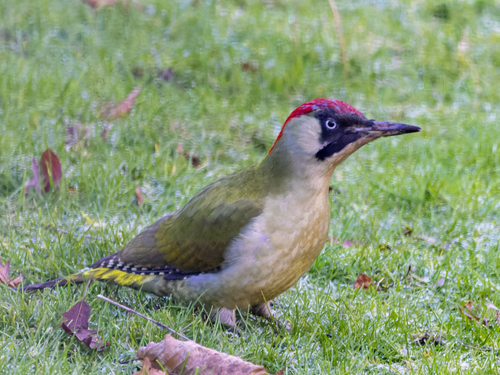 Picchio verde
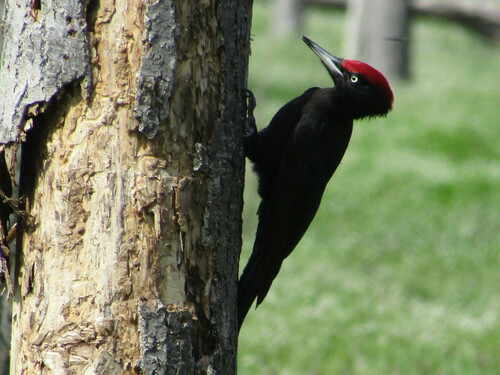 Picchio nero
In breve
Il segno distintivo più affidabile tra questi due è il colore generale: il Picchio verde è di un verde brillante sopra con un sottocoda giallo e una corona rossa, mentre il Picchio nero è completamente nero tranne che per una macchia rossa sulla corona. I picchi verdi juvenili sono pesantemente macchiati e striati, a differenza del più uniformemente scuro e opaco picchio nero juvenile. In volo, il Picchio verde mostra un volo ondulato e rimbalzante e lampi di giallo sul sottocoda, mentre il Picchio nero vola con battiti d'ala lenti e costanti e appare completamente nero. Anche le dimensioni sono un forte indizio: il Picchio nero è molto più grande e massiccio del Picchio verde. Le vocalizzazioni e i modelli facciali offrono ulteriori differenziali se visti o sentiti bene.
Consigli di identificazione
- Colore Generale: Il Picchio verde è verde sopra con un sottocoda giallo; il Picchio nero è completamente nero tranne che per la corona rossa. Questa è la separazione più rapida nella maggior parte delle viste.
- Modello Juvenile: I picchi verdi juvenili sono pesantemente macchiati e striati, specialmente nelle parti inferiori e sul viso. I picchi neri juvenili sono semplici, neri opachi con una corona rossa più opaca e una gola pallida, privi di macchie o striature.
- Modello della Corona (Sesso/Età): Il Picchio verde maschio adulto ha una corona e una nuca rosse, con una striscia nera a baffo contenente rosso; la femmina ha un baffo completamente nero. I maschi del Picchio nero hanno l'intera corona rossa, le femmine solo la parte posteriore della corona. Il Picchio nero juvenile ha una corona rossa più opaca e meno estesa.
- Marcature Facciali: Il Picchio verde ha una 'maschera' nera attorno all'occhio e alle lore, e un occhio pallido contrastante. Il Picchio nero non ha maschera facciale, solo un viso nero con una corona rossa.
- Struttura del Becco: Il Picchio nero ha un becco molto più lungo, pesante e pallido; il becco del Picchio verde è più corto e meno robusto.
- Stile di Volo: Il Picchio verde vola con un volo rimbalzante e ondulato (3–4 battiti d'ala e poi un planare); il Picchio nero vola con battiti d'ala lenti, costanti e ininterrotti e tiene la testa sollevata—niente rimbalzi.
- Colore del Sottocoda in Volo: Il Picchio verde mostra un sottocoda giallo brillante in volo; il sottocoda del Picchio nero è nero, fondendosi con il resto del corpo.
- Dimensioni e Aspetto: Il Picchio nero è molto più grande, massiccio e dall'aspetto più potente, con una coda e un becco più lunghi. Il Picchio verde è più piccolo, più snodato e meno imponente.
- Uso dell'Habitat: Il Picchio verde è spesso visto a terra in aree aperte, prati o parchi; il Picchio nero è quasi sempre visto sui tronchi degli alberi in foreste mature.
- Vocalizzazioni: Il Picchio verde emette un forte, ridacchiante 'yaffle' e un rumoroso 'kyü-kyü-kyück' in volo; il Picchio nero emette un acuto 'kree-kree-kree' e richiami simili a strilli, mai un yaffle.
- Battere: Entrambe le specie battono raramente, ma se sentiti, il battere del Picchio verde è morbido e veloce; il battere del Picchio nero non è descritto come un segno distintivo qui.
- Differenze Sessuali: Per il Picchio verde, controlla la striscia a baffo: centro rosso nei maschi, tutto nero nelle femmine. Per il Picchio nero, controlla l'estensione del rosso sulla corona: pieno nei maschi, solo la parte posteriore della corona nelle femmine.
- Postura in Perché: Il Picchio nero appare con un collo lungo, con una grande testa e becco, e si siede dritto sui tronchi. Il Picchio verde è più compatto e spesso visto a terra.
- Contesto: Se visto in una grande foresta matura con grandi alberi morti, specialmente lontano da terreni aperti, il Picchio nero è più probabile. In parchi aperti o giardini, il Picchio verde è molto più probabile.
- Insidie: Luce scarsa o viste distanti possono far sembrare il Picchio verde più scuro o meno verde; cerca sempre il sottocoda giallo e il modello facciale. I picchi verdi juvenili possono apparire stranamente marcati, ma mai completamente neri.
Taglia
Il Picchio nero è significativamente più grande del Picchio verde. Il Picchio verde misura 30–36 cm di lunghezza con un'apertura alare di 45–51 cm e una massa corporea di circa 193 g [wikidata]. Al contrario, il Picchio nero è delle dimensioni di un corvo, misurando 45–55 cm di lunghezza con un'apertura alare di 64–84 cm e una massa corporea di 250–400 g [wikipedia]. Il becco del Picchio nero è anche notevolmente più lungo e pesante. Sul campo, il Picchio nero appare molto più imponente e potente, mentre il Picchio verde è distintamente più piccolo e più snodato.
Piumaggio
- Juvenili: I picchi verdi juvenili sono pesantemente macchiati e striati ovunque, con un baffo scuro e alcune piume rosse che appaiono nel baffo dei giovani maschi a metà estate. I picchi neri juvenili sono neri più opachi, meno lucidi, con una corona rossa più opaca e una gola e un becco grigi più pallidi, ma privi delle pesanti macchie e striature dei picchi verdi juvenili.
- Adulti: I picchi verdi adulti sono verdi sopra, giallo-verde pallido sotto, con un sottocoda giallo brillante e una corona/nuca rossa. I maschi hanno un baffo nero con un centro rosso; le femmine hanno un baffo completamente nero. Il viso ha una 'maschera' nera attorno all'occhio e alle lore. I picchi neri adulti sono completamente neri tranne che per la corona rossa: i maschi hanno l'intera corona rossa, le femmine solo la parte posteriore della corona. Il becco è pallido e straordinariamente lungo. Non ci sono toni gialli o verdi da nessuna parte sul Picchio nero.
- Volo: In volo, il Picchio verde mostra un sottocoda giallo e un volo ondulato, mentre il Picchio nero appare completamente nero e vola con battiti d'ala lenti e costanti.
Comportamento
I Picchi verdi trascorrono molto tempo a nutrirsi a terra, specialmente di formiche, e sono timidi, spesso più facilmente sentiti che visti. Battono raramente e hanno un volo distintivo ondulato e rimbalzante. I Picchi neri si nutrono battendo in alberi morti o malati per insetti xilofagi e formiche falegname, e sono più spesso visti sui tronchi degli alberi. Il loro volo è diretto, con battiti d'ala lenti e profondi e senza rimbalzi. Le potenti escavazioni del Picchio nero creano grandi nidi, spesso riutilizzati da altre specie.
Habitat
Entrambe le specie possono verificarsi in boschi maturi, ma il Picchio nero è più strettamente legato a grandi foreste mature con grandi alberi per nidificazione e alimentazione, specialmente pioppi o pini con marciume del cuore. I Picchi verdi sono più flessibili, trovati in boschi aperti, parchi, frutteti e persino giardini, e sono più propensi a essere visti nutrirsi a terra in aree aperte. Il Picchio nero è meno probabile in habitat aperti o frammentati.
Voce
Il Picchio verde è famoso per le sue forti, ridacchianti chiamate 'yaffle'—una serie di 10–18 note 'klü' che accelerano e scendono di tono, e un rumoroso 'kyü-kyü-kyück' in volo. La chiamata della femmina è più sottile e più rapida. Il battere è raro e morbido. Il Picchio nero emette un forte 'kree-kree-kree' (solo due volte di seguito), e un acuto simile a uno strillo in volo. Le sue chiamate sono più acute e penetranti, e non produce un suono ridacchiante o yaffling. Il battere non è menzionato come una caratteristica prominente per nessuno di questi appunti.