
cuco-bronzeado-grande vs superb starling
Chrysococcyx caprius versus Lamprotornis superbus
Jogue um quiz com cuco-bronzeado-grande e superb starling
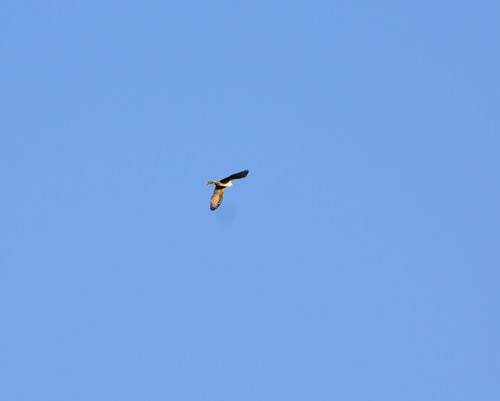 cuco-bronzeado-grande
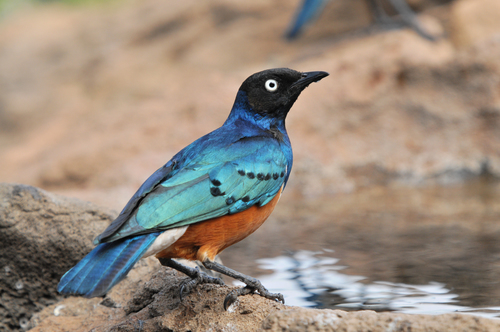 superb starling
Em resumo
A marca de campo mais confiável para separar o cuco-bronzeado-grande do superb starling é a combinação do padrão geral de plumagem e das diferenças estruturais: os adultos do superb starling apresentam uma cabeça preta marcante, partes superiores azul-esverdeadas iridescentes, uma faixa branca no peito e uma barriga ruiva-alaranjada, enquanto o cuco-bronzeado-grande é um pássaro mais esguio, verde e branco, com realces cobre e carece dos blocos de cor ousados do starling. Os cucos-bronzeados-grandes juvenis têm um bico vermelho e uma faixa branca na asa, enquanto os juvenis do superb starling são mais apagados, mas nunca mostram uma faixa branca na asa ou tons cobre. O cuco-bronzeado-grande é muito mais leve e mais esbelto, com um bico mais curto e fino e um comportamento mais solitário e furtivo. O superb starling é mais pesado, robusto e mais gregário, frequentemente visto em grupos. As vocalizações também são distintas: o cuco emite um 'deed-deed-deed-er-ick' repetitivo e claro, enquanto o starling produz trilos, conversas e gritos ásperos.
Dicas de identificação
- Faixa na asa juvenil: Se você ver um pequeno pássaro com uma faixa branca na asa, bico vermelho e partes superiores cobre, especialmente em voo ou empoleirado, é um cuco-bronzeado-grande juvenil. Os juvenis do superb starling nunca mostram uma faixa branca na asa ou tons cobre.
- Formato do bico: O cuco-bronzeado-grande tem um bico curto e fino, enquanto o superb starling tem um bico mais longo, estreito e forte. O formato do bico é especialmente útil à queima-roupa.
- Cabeça e face: Os adultos do superb starling têm uma cabeça preta e olhos creme-pálido, enquanto o cuco-bronzeado-grande tem uma cabeça esverdeada com uma faixa ocular branca quebrada e olhos escuros. Os starlings juvenis têm olhos marrons.
- Peito e barriga: O superb starling apresenta uma faixa branca nítida no peito que separa o peito azul da barriga ruiva-alaranjada. O cuco-bronzeado-grande tem partes inferiores esbranquiçadas, às vezes acastanhadas nas fêmeas, mas nunca uma faixa branca ousada ou barriga ruiva.
- Partes superiores: O cuco-bronzeado-grande é verde brilhante com áreas cobre (especialmente nas fêmeas e juvenis), enquanto o superb starling é azul-esverdeado iridescente, mas carece de tons cobre.
- Padrão da cauda: O cuco-bronzeado-grande tem pontas brancas nas quatro penas externas da cauda e manchas brancas no par mais externo; a cauda do superb starling é azul-esverdeada e carece de tal padrão.
- Marcas laterais: O cuco-bronzeado-grande fêmea e juvenil apresentam listras ou manchas marrons ou cobre nas laterais; as laterais do superb starling são ruivas-alaranjadas e sem marcas.
- Tamanho e estrutura: O cuco-bronzeado-grande é mais esguio, leve (33g) e mais alongado, enquanto o superb starling é mais pesado (65,5g), robusto e mais robusto.
- Comportamento: O cuco-bronzeado-grande é solitário e frequentemente se esconde em arbustos; o superb starling é gregário, frequentemente em bandos barulhentos.
- Habitat: Se o pássaro estiver em um grupo em campo aberto, jardins ou áreas urbanas, é provável que seja um superb starling. O cuco-bronzeado-grande é mais frequentemente visto sozinho em áreas arbustivas ou florestadas.
- Voz: Ouça o 'deed-deed-deed-er-ick' repetitivo e claro do cuco em comparação com os trilos, conversas e gritos ásperos do starling. As vocalizações são um separador confiável se ouvidas bem.
- Diferenças sexuais: A fêmea do cuco-bronzeado-grande é mais cobre por cima e tem listras cobre nas laterais; o superb starling não apresenta dimorfismo sexual forte na plumagem.
- Voo: O cuco-bronzeado-grande voa com um voo mais direto e ondulante e parece mais esguio; o superb starling é mais robusto e direto no voo, frequentemente em um bando.
- Armadilhas: Um juvenil do superb starling apagado pode não ter a faixa branca no peito, mas não mostrará tons cobre, faixa branca na asa ou bico vermelho. A fêmea do cuco-bronzeado-grande pode parecer mais acastanhada embaixo, mas nunca mostra os blocos de cor do starling.
- Contexto: Se você ver um pássaro perto de ninhos de tecelões ou bispos, especialmente agindo de forma secreta, considere o cuco-bronzeado-grande, pois é um parasita de ninho dessas espécies.
Tamanho
O cuco-bronzeado-grande é significativamente mais leve (33,0g) do que o superb starling (65,5g), embora seus comprimentos se sobreponham (ambos em torno de 18–20 cm). O cuco é mais esguio e mais delicado, com um bico fino e curto, enquanto o starling é robusto, com um bico mais longo e estreito e pés fortes. No campo, o starling frequentemente parece mais robusto e ereto, especialmente quando empoleirado, em comparação com a aparência mais alongada e esbelta do cuco.
Plumagem
- Juvenis: O cuco-bronzeado-grande juvenil apresenta um bico vermelho, garganta listrada, faixa branca na asa, partes superiores cobre e laterais manchadas de marrom. O superb starling juvenil não tem a faixa branca no peito, tem coloração geral mais apagada e olhos marrons, mas nunca mostra uma faixa branca na asa ou tons cobre.
- Adulto cuco-bronzeado-grande: Verde brilhante por cima com áreas cobre, faixa ocular branca quebrada, faixa malar verde curta, partes inferiores esbranquiçadas e manchas brancas nas penas internas das remiges. A cauda tem pontas brancas e manchas nas penas externas. As fêmeas são mais cobre por cima e têm listras cobre nas laterais, com partes inferiores frequentemente lavadas de marrom.
- Adulto superb starling: Cabeça preta, costas azul-esverdeadas iridescentes, peito superior, asas e cauda. A faixa branca no peito separa nitidamente o peito azul da barriga ruiva-alaranjada. Coberturas brancas da cauda e forros das asas. Os olhos são creme-pálido nos adultos.
- Contraste chave: Apenas o cuco (especialmente os juvenis) mostra uma faixa branca na asa e tons cobre; apenas o starling tem uma cabeça preta, faixa branca no peito e barriga ruiva.
Comportamento
O cuco-bronzeado-grande é tipicamente solitário, frequentemente se escondendo em florestas abertas, savanas ou arbustos à beira do rio, e é menos conspícuo em seus movimentos. O superb starling é altamente social, frequentemente visto em bandos barulhentos, forrageando abertamente no chão ou nas árvores, e é muito mais provável de ser visto em grupos. O cuco é um parasita de ninho e raramente é visto interagindo com outros pássaros, exceto durante a postura dos ovos, enquanto o starling é gregário durante todo o ano.
Habitat
O cuco-bronzeado-grande prefere florestas abertas, savanas e arbustos à beira do rio, frequentemente em áreas mais vegetadas ou arbustivas, e é geralmente solitário. O superb starling é comum em campos abertos, incluindo savanas, jardins e áreas urbanas, e é muito mais provável de ser visto em habitats alterados pelo homem e em grupos. Se você ver um pássaro em um bando em uma cidade ou campo aberto, é muito mais provável que seja um superb starling.
Voz
O cuco-bronzeado-grande emite um chamado persistente, alto e claro de 'deed-deed-deed-deed-er-ick', geralmente quatro notas idênticas seguidas por um trinado. O superb starling tem uma longa e alta canção de trilos e conversas, com frases repetidas mais suaves ao meio-dia e vários chamados ásperos e complexos descritos como 'skerrrreeee-cherrrroo-tcherreeeeeet'. O chamado do cuco é repetitivo e claro, enquanto o do starling é variado, barulhento e frequentemente áspero.
cuco-bronzeado-grande · superb starling · Minhas aves difíceis