

topetinho-verde-amazônico vs golden-winged sparrow
Lophornis verreauxii versus Arremon schlegeli
Jogue um quiz com topetinho-verde-amazônico e golden-winged sparrow
 topetinho-verde-amazônico
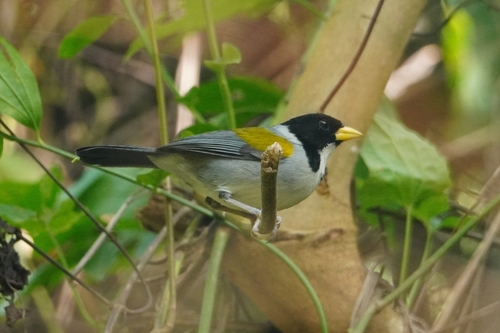 golden-winged sparrow
Em resumo
A marca de campo mais confiável para separar o topetinho-verde-amazônico do golden-winged sparrow é a estrutura geral e a plumagem: o topetinho-verde-amazônico é um beija-flor minúsculo e compacto com tons iridescentes de verde e marrom, frequentemente exibindo uma longa crista com ponta vermelha e 'bigodes' faciais nos machos, enquanto o golden-winged sparrow é um pássaro cantor muito maior e robusto, com uma cabeça preta distinta, bico amarelo e partes superiores verde-acinzentadas. Em voo ou empoleirado, o pequeno tamanho e os movimentos rápidos do topetinho contrastam fortemente com a aparência mais robusta e o comportamento de forrageio no solo do sparrow. As fêmeas e os imaturos do topetinho não possuem a ornamentação na cabeça, mas continuam sendo muito menores e mais metálicos do que qualquer sparrow. A confusão é mais provável com fêmeas/imaturos do topetinho e sparrows juvenis, mas a forma do bico, o padrão da cabeça e as proporções gerais permanecem separadores claros.
Dicas de identificação
- Tamanho e estrutura: O topetinho-verde-amazônico é minúsculo, cerca da metade do comprimento e uma fração da massa do golden-winged sparrow. Mesmo à distância, a construção pequena e delicada do topetinho e o voo rápido e pairante são diagnósticos.
- Forma do bico: O topetinho tem um bico de beija-flor delgado e reto (adaptado para alimentação de néctar); o sparrow tem um bico grosso e cônico de comedor de sementes, brilhantemente amarelo nos adultos e preto nos juvenis.
- Padrão da cabeça (machos): O macho do topetinho exibe uma cabeça verde profunda com uma longa crista com ponta vermelha e 'bigodes' verdes com pontas brancas—único entre os beija-flores e não presente nos sparrows. O macho do sparrow tem uma cabeça completamente preta, rosto, malar e queixo, com um bico amarelo e garganta branca.
- Padrão da cabeça (fêmeas/imaturos): A fêmea do topetinho não possui crista e bigodes, mas exibe uma mancha malar esbranquiçada e tons verdes metálicos. A fêmea do sparrow mantém uma cabeça preta (menos intensa em juvenis), partes inferiores mais claras e bico amarelo ou preto.
- Partes superiores: O topetinho é verde metálico com destaques dourados e coberturas de cauda superiores avermelhadas ou bronzeadas; o sparrow é cinza com uma mancha verde nas costas (algumas subespécies são totalmente cinzas), nunca iridescente.
- Cauda: A cauda do topetinho é marrom ou verde bronzeada, curta e quadrada; a cauda do sparrow é típica de um pássaro cantor, mais longa e sem cores vibrantes.
- Partes inferiores: O topetinho é verde por baixo com coxas brancas; o sparrow tem garganta branca com partes inferiores cinzas ou claras (fêmeas são mais claras).
- Estilo de voo: O topetinho paira e se move rapidamente, raramente se empoleirando por muito tempo; o sparrow anda ou salta no chão, voa em curtas distâncias e se empoleira ereto.
- Habitat: O topetinho prefere bordas de florestas úmidas e clareiras com flores abundantes; o sparrow é encontrado em florestas secas, arbustos e florestas degradadas, frequentemente no chão ou em vegetação baixa.
- Vocalizações: O sparrow canta uma série de notas repetidas e agudas; o topetinho é geralmente silencioso ou emite pequenos sons finos, nunca uma canção estruturada.
- Armadilhas de sexo/idade: Fêmeas e imaturos do topetinho não possuem ornamentação na cabeça, mas permanecem muito menores, mais metálicos e têm um bico delgado. Sparrows juvenis têm um bico preto e uma cabeça preta menos intensa, mas ainda mostram o bico grosso e o comportamento de forrageio no solo.
- Variação de subespécies: As subespécies do topetinho podem ser mais escuras ou bronzeadas, mas nunca perdem os tons metálicos ou o pequeno tamanho. As subespécies do sparrow podem não ter verde nas costas (cinza em vez disso), mas sempre têm a cabeça preta e bico amarelo/preto.
- Dicas contextuais: Se visto se alimentando em flores com batidas de asas rápidas, é um topetinho; se visto forrageando no chão ou cantando de um poleiro baixo, é um sparrow.
- Distribuição geográfica: Ambos ocorrem na Colômbia e na Venezuela, mas o sparrow é restrito a habitats mais secos, enquanto o topetinho é mais amplamente distribuído e prefere áreas úmidas.
- Identidade equivocada: A maior parte da confusão surge quando fêmeas/imaturos do topetinho são vistos de forma inadequada, mas a forma do bico, o tamanho e a falta de cabeça preta no topetinho são sempre confiáveis.
Tamanho
O topetinho-verde-amazônico é dramaticamente menor, medindo apenas cerca de 7,5–9,1 cm de comprimento e pesando muito menos que o golden-winged sparrow (que pesa em média 28 g e tem cerca de 15 cm de comprimento). O topetinho é um típico beija-flor: minúsculo, delicado, com uma cauda proporcionalmente curta e bico delgado. Em contraste, o golden-winged sparrow é um pássaro cantor robusto e de tamanho médio, com um bico grosso e cônico e um corpo muito mais pesado. Mesmo à distância, o tamanho e a robustez do sparrow são óbvios em comparação com o diminuto topetinho.
Plumagem
- Padrões de voo juvenis/imaturos: Nenhuma marca distinta na parte superior da asa ou marcas de voo são descritas para nenhuma das espécies em qualquer idade, portanto, a separação depende da estrutura e da plumagem.
- Machos adultos: Os machos do topetinho-verde-amazônico têm uma cabeça verde profunda com uma longa crista verde com ponta vermelha e longos 'bigodes' verdes com pontas brancas, costas verdes com destaques dourados, coberturas de cauda superiores avermelhadas, uma faixa branca na região do rabo, partes inferiores verdes com coxas brancas e uma cauda marrom. Os machos do golden-winged sparrow têm uma cabeça completamente preta, bico amarelo, partes superiores cinzas com uma mancha verde nas costas, garganta branca, nuca cinza e sem iridescência ou ornamentação na cabeça.
- Fêmeas/imaturos: As fêmeas do topetinho não possuem crista e bigodes, mas mostram uma mancha malar esbranquiçada, coberturas de cauda superiores avermelhadas menos intensas e destaques dourados no peito. As fêmeas do sparrow têm partes inferiores mais claras, mas mantêm a cabeça preta (embora menos intensa em juvenis), bico amarelo ou preto (juvenis têm bicos pretos) e sem iridescência. Ambos os sexos do topetinho são muito mais metálicos e compactos do que o sparrow em qualquer idade.
- Subespécies: Algumas subespécies do topetinho são mais escuras no geral, com coberturas de cauda superiores verde-oliva bronzeadas e caudas verde bronzeadas, mas ainda mantêm a estrutura básica de beija-flor e os tons metálicos. As subespécies do golden-winged sparrow variam na cor das costas (algumas com mais cinza, algumas com verde), mas sempre têm a cabeça preta e bico amarelo ou preto.
Comportamento
O topetinho-verde-amazônico é um beija-flor clássico, pairando em flores e se alimentando de néctar com movimentos rápidos e ágeis, raramente se empoleirando por muito tempo. O golden-winged sparrow forrageia no chão ou perto dele, alimentando-se de sementes, frutas e insetos, frequentemente visto pulando ou andando em vez de voar. Os sparrows geralmente são encontrados sozinhos ou em pares, às vezes em vegetação baixa, e são muito menos ativos em voo do que os topetinhos.
Habitat
O topetinho-verde-amazônico habita uma variedade de habitats florestais em toda a Bolívia, Brasil, Colômbia, Equador, Peru e Venezuela, mas geralmente está associado a bordas de florestas úmidas e clareiras. O golden-winged sparrow é restrito à Colômbia e Venezuela, preferindo florestas secas subtropicais ou tropicais, arbustos e florestas degradadas, frequentemente em habitats mais secos e abertos do que o topetinho. Se visto em florestas secas, arbustivas ou em matas abertas, é muito mais provável que seja um sparrow; o topetinho prefere áreas úmidas e ricas em flores.
Voz
O golden-winged sparrow tem uma canção distinta e aguda descrita como uma repetição de 'Zeut-zeut-zeut-zee' ou 'Soot-soot-soot-see', mais frequentemente ouvida nas primeiras horas da manhã durante a estação chuvosa. O topetinho-verde-amazônico, como a maioria dos beija-flores, é geralmente silencioso ou emite apenas pequenos sons finos e agudos, não uma canção estruturada. Se você ouvir uma canção repetida e estruturada, isso aponta fortemente para o sparrow.
topetinho-verde-amazônico · golden-winged sparrow · Minhas aves difíceis