

Coqueta Verde Norteña vs Cerquero Alidorado
Lophornis verreauxii frente a Arremon schlegeli
Juega un quiz con Coqueta Verde Norteña y Cerquero Alidorado
 Coqueta Verde Norteña
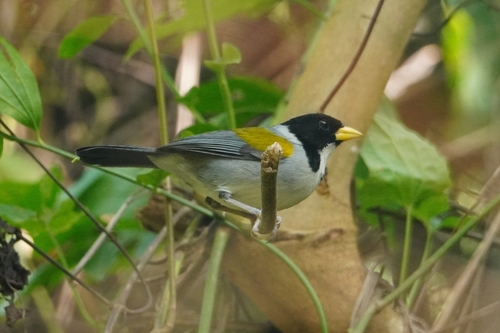 Cerquero Alidorado
En breve
La marca de campo más confiable para separar la Coqueta Verde Norteña del Cerquero Alidorado es la estructura y plumaje en general: la Coqueta Verde Norteña es un colibrí diminuto y compacto con tonos iridiscentes de verde y marrón, que a menudo muestra una larga cresta con punta roja y 'bigotes' faciales en los machos, mientras que el Cerquero Alidorado es un ave cantora mucho más grande y robusta con una cabeza negra distintiva, pico amarillo y partes superiores verdosas o grises. En vuelo o posada, el pequeño tamaño y los movimientos rápidos de la coqueta contrastan marcadamente con la apariencia más robusta y el comportamiento de forrajeo en el suelo del gorrión. Las coquetas hembras e inmaduras carecen del ornamento en la cabeza, pero siguen siendo mucho más pequeñas y metálicas que cualquier gorrión. La confusión es más probable con coquetas hembras/inmaduras y gorriones juveniles, pero la forma del pico, el patrón de la cabeza y las proporciones generales siguen siendo separadores claros.
Consejos de identificación
- Tamaño y estructura: La Coqueta Verde Norteña es diminuta, aproximadamente la mitad de la longitud y una fracción de la masa del Cerquero Alidorado. Incluso a distancia, la pequeña y delicada construcción de la coqueta y su vuelo rápido y suspendido son diagnósticos.
- Forma del pico: La coqueta tiene un pico delgado y recto (adaptado para alimentarse de néctar); el gorrión tiene un pico grueso y cónico, brillante y amarillo en los adultos y negro en los juveniles.
- Patrón de la cabeza (machos): El macho de la coqueta muestra una cabeza verde profunda con una larga cresta con punta roja y 'bigotes' verdes con puntas blancas, únicos entre los colibríes y no presentes en los gorriones. El macho del gorrión tiene una cabeza completamente negra, cara, malar y barbilla, con un pico amarillo y garganta blanca.
- Patrón de la cabeza (hembras/inmaduros): La hembra de la coqueta carece de cresta y bigotes, pero muestra una mancha malar blanquecina y tonos metálicos verdes. La hembra del gorrión retiene una cabeza negra (menos intensa en los juveniles), partes inferiores más claras y un pico amarillo o negro.
- Partes superiores: La coqueta es verde metálico con reflejos dorados y cobertoras de la cola superiores rojizas o bronceadas; el gorrión es gris con una mancha verde en la espalda (algunas subespecies son completamente grises), nunca iridisente.
- Cola: La cola de la coqueta es marrón o verde bronceada, corta y cuadrada; la cola del gorrión es típica de un ave cantora, más larga y no colorida.
- Partes inferiores: La coqueta es verde por debajo con muslos blancos; el gorrión tiene garganta blanca con partes inferiores grises o claras (las hembras son más claras).
- Estilo de vuelo: La coqueta se mantiene en el aire y se mueve rápidamente, rara vez posándose por mucho tiempo; el gorrión camina o salta en el suelo, vuela en cortos estallidos y se posan erguido.
- Hábitat: La coqueta prefiere los bordes de bosques húmedos y claros con abundantes flores; el gorrión se encuentra en bosques secos, matorrales y bosques degradados, a menudo en el suelo o en vegetación baja.
- Vocalizaciones: El gorrión canta una serie de notas repetidas y agudas; la coqueta es mayormente silenciosa o emite pequeños sonidos agudos, nunca una canción estructurada.
- Trampas de sexo/edad: Las coquetas hembras e inmaduras carecen de ornamentos en la cabeza, pero siguen siendo mucho más pequeñas, más metálicas y tienen un pico delgado. Los gorriones juveniles tienen un pico negro y una cabeza negra menos intensa, pero aún muestran el pico grueso y el comportamiento de forrajeo en el suelo.
- Variación de subespecies: Las subespecies de coqueta pueden ser más oscuras o bronceadas, pero nunca pierden los tonos metálicos o el pequeño tamaño. Las subespecies de gorrión pueden carecer de verde en la espalda (en su lugar gris), pero siempre tienen la cabeza negra y el pico amarillo/negro.
- Pistas contextuales: Si se ve alimentándose en flores con batidos de alas rápidos, es una coqueta; si se ve forrajeando en el suelo o cantando desde un posadero bajo, es un gorrión.
- Rango geográfico: Ambos ocurren en Colombia y Venezuela, pero el gorrión está restringido a hábitats más secos, mientras que la coqueta es más amplia y favorece áreas húmedas.
- Identidad equivocada: La mayor confusión surge cuando se ven coquetas hembras/inmaduras de manera deficiente, pero la forma del pico, el tamaño y la falta de cabeza negra en la coqueta son siempre confiables.
Tamaño
La Coqueta Verde Norteña es dramáticamente más pequeña, midiendo solo aproximadamente 7.5–9.1 cm de longitud y pesando mucho menos que el Cerquero Alidorado (que promedia 28 g y mide aproximadamente 15 cm de largo). La coqueta es un colibrí típico: diminuto, delicado, con una cola proporcionalmente corta y un pico delgado. En contraste, el Cerquero Alidorado es un ave cantora robusta de tamaño mediano con un pico grueso y cónico y un cuerpo mucho más pesado. Incluso a distancia, el tamaño y la robustez del gorrión son obvios en comparación con la diminuta coqueta.
Plumaje
- Patrones de vuelo juveniles/inmaduros: No se describen marcas distintivas en el ala superior o patrones de vuelo para ninguna de las especies a ninguna edad, por lo que la separación se basa en la estructura y el plumaje.
- Machos adultos: Los machos de la Coqueta Verde Norteña tienen una cabeza verde profunda con una larga cresta verde con punta roja y largos 'bigotes' verdes con puntas blancas, espalda verde con reflejos dorados, cobertoras de la cola superiores rojizas, una banda blanca en el rabadilla, partes inferiores verdes con muslos blancos y una cola marrón. Los machos del Cerquero Alidorado tienen una cabeza completamente negra, pico amarillo, partes superiores grises con una mancha verde en la espalda, garganta blanca, nuca gris y sin iridiscencia ni ornamentos en la cabeza.
- Hembras/inmaduros: Las hembras de coqueta carecen de cresta y bigotes, pero muestran una mancha malar blanquecina, cobertoras de la cola superiores rojas menos intensas y reflejos dorados en el pecho. Las hembras de gorrión tienen partes inferiores más claras, pero retienen la cabeza negra (aunque menos intensa en los juveniles), pico amarillo o negro (los juveniles tienen picos negros) y sin iridiscencia. Ambos sexos de la coqueta son mucho más metálicos y compactos que el gorrión a cualquier edad.
- Subespecies: Algunas subespecies de coqueta son más oscuras en general, con cobertoras de la cola superiores de oliva bronceadas y colas verdes bronceadas, pero aún retienen la estructura básica del colibrí y los tonos metálicos. Las subespecies de Cerquero Alidorado varían en color de espalda (algunas con más gris, algunas con verde), pero siempre tienen la cabeza negra y el pico amarillo o negro.
Comportamiento
La Coqueta Verde Norteña es un colibrí clásico, suspendiéndose en las flores y alimentándose de néctar con movimientos rápidos y veloces, rara vez posándose por mucho tiempo. El Cerquero Alidorado forrajea en o cerca del suelo, alimentándose de semillas, frutas e insectos, a menudo visto saltando o caminando en lugar de volar. Los gorriones generalmente se encuentran solos o en parejas, a veces en vegetación baja, y son mucho menos activos en vuelo que las coquetas.
Hábitat
La Coqueta Verde Norteña habita una variedad de hábitats forestales en Bolivia, Brasil, Colombia, Ecuador, Perú y Venezuela, pero generalmente se asocia con bordes de bosques húmedos y claros. El Cerquero Alidorado está restringido a Colombia y Venezuela, favoreciendo bosques secos subtropicales o tropicales, matorrales y antiguos bosques degradados, a menudo en hábitats más secos y abiertos que la coqueta. Si se ve en un bosque seco, arbustivo o en matorrales abiertos, es mucho más probable que sea un gorrión; la coqueta prefiere áreas más húmedas y ricas en flores.
Voz
El Cerquero Alidorado tiene una canción distintiva y aguda descrita como 'Zeut-zeut-zeut-zee' o 'Soot-soot-soot-see' repetida, que se escucha más a menudo en la mañana temprano durante la temporada de lluvias. La Coqueta Verde Norteña, como la mayoría de los colibríes, es generalmente silenciosa o solo emite pequeños sonidos agudos o trinos, no una canción estructurada. Si escuchas una canción repetida y estructurada, apunta fuertemente hacia el gorrión.
Coqueta Verde Norteña · Cerquero Alidorado · Mis aves difíciles