

Butterfly Coquette vs Golden-winged Sparrow
Lophornis verreauxii contro Arremon schlegeli
Fai un quiz con Butterfly Coquette e Golden-winged Sparrow
 Butterfly Coquette
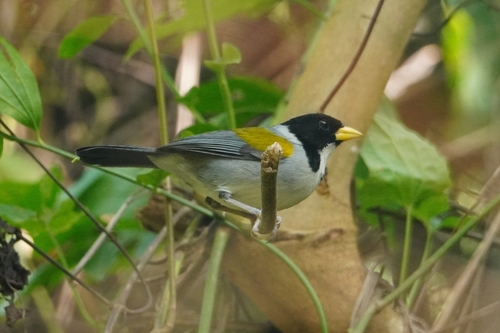 Golden-winged Sparrow
In breve
Il segno distintivo più affidabile per separare il Butterfly Coquette dal Golden-winged Sparrow è la struttura e il piumaggio complessivi: il Butterfly Coquette è un colibrì minuscolo e compatto con toni iridescenti di verde e marrone, che spesso mostra una lunga cresta con punta rossa e 'baffi' facciali nei maschi, mentre il Golden-winged Sparrow è un uccello canoro molto più grande e massiccio con una testa nera distintiva, un becco giallo e parti superiori verdastre o grigie. In volo o posato, le piccole dimensioni e i rapidi movimenti del coquette contrastano nettamente con la corporatura più robusta e il comportamento di foraggiamento a terra dello sparrow. Le coquettes femmine e immature mancano dell'ornato copricapo ma rimangono molto più piccole e più metalliche di qualsiasi sparrow. La confusione è più probabile con le coquettes femmine/immature e gli sparrows juvenili, ma la forma del becco, il motivo della testa e le proporzioni complessive rimangono chiari separatori.
Consigli di identificazione
- Dimensioni e struttura: Il Butterfly Coquette è minuscolo, circa la metà della lunghezza e una frazione della massa del Golden-winged Sparrow. Anche a distanza, la piccola e delicata struttura del coquette e il volo rapido e sospeso sono diagnostici.
- Forma del becco: Il coquette ha un becco di colibrì sottile e dritto (adattato per l'alimentazione con nettare); lo sparrow ha un becco spesso e conico da mangiatore di semi, di un giallo brillante negli adulti e nero nei giovanili.
- Motivo della testa (maschi): Il maschio coquette mostra una testa verde scura con una lunga cresta con punta rossa e 'baffi' verdi con punte bianche—unico tra i colibrì e non presente negli sparrows. Il maschio sparrow ha una testa completamente nera, viso, malar e mento, con un becco giallo e una gola bianca.
- Motivo della testa (femmine/immature): La femmina coquette manca di cresta e baffi ma mostra una macchia malar biancastra e toni verdi metallici. La femmina sparrow mantiene una testa nera (meno intensa nei giovanili), parti inferiori più chiare e un becco giallo o nero.
- Parti superiori: Il coquette è verde metallico con riflessi dorati e copritail rosati o bronzati; lo sparrow è grigio con una macchia verde sulla schiena (alcune sottospecie sono completamente grigie), mai iridescente.
- Coda: La coda del coquette è marrone o verde bronzato, corta e squadrata; la coda dello sparrow è tipica per un uccello canoro, più lunga e non colorata.
- Parti inferiori: Il coquette è verde sotto con cosce bianche; lo sparrow ha una gola bianca con parti inferiori grigie o chiare (femmine più chiare).
- Stile di volo: Il coquette fluttua e scatta, raramente posandosi a lungo; lo sparrow cammina o salta a terra, vola in brevi scatti e si posa eretto.
- Habitat: Il coquette preferisce i margini delle foreste umide e le radure con abbondanti fiori; lo sparrow si trova in foreste secche, cespugli e boschi degradati, spesso a terra o in bassa vegetazione.
- Vocalizzazioni: Lo sparrow canta una serie ripetuta di note acute; il coquette è per lo più silenzioso o emette piccoli suoni sottili, mai una canzone strutturata.
- Trappole per sesso/età: Le coquettes femmine e immature mancano di copricapo ornato ma rimangono molto più piccole, più metalliche e hanno un becco sottile. Gli sparrows giovanili hanno un becco nero e una testa nera meno intensa, ma mostrano comunque il becco spesso e il comportamento di foraggiamento a terra.
- Variazione delle sottospecie: Le sottospecie di coquette possono essere più scure o bronzate, ma non perdono mai i toni metallici o le piccole dimensioni. Le sottospecie di sparrow possono mancare di verde sulla schiena (grigio invece), ma hanno sempre la testa nera e il becco giallo/nero.
- Indizi contestuali: Se visto nutrirsi di fiori con battiti d'ali rapidi, è un coquette; se visto foraggiare a terra o cantare da un posatoio basso, è uno sparrow.
- Gamma geografica: Entrambi si trovano in Colombia e Venezuela, ma lo sparrow è limitato a habitat più secchi, mentre il coquette è più diffuso e favorisce aree umide.
- Identità errata: La maggior parte della confusione sorge quando le coquettes femmine/immature sono viste male, ma la forma del becco, le dimensioni e la mancanza di testa nera nel coquette sono sempre affidabili.
Taglia
Il Butterfly Coquette è drammaticamente più piccolo, misurando solo circa 7.5–9.1 cm di lunghezza e pesando molto meno del Golden-winged Sparrow (che pesa in media 28 g ed è lungo circa 15 cm). Il coquette è un tipico colibrì: minuscolo, delicato, con una coda proporzionalmente corta e un becco sottile. Al contrario, il Golden-winged Sparrow è un uccello canoro robusto di dimensioni medie con un becco spesso e conico e un corpo molto più pesante. Anche a distanza, le dimensioni e la massa dello sparrow sono evidenti rispetto al coquette minuto.
Piumaggio
- Schemi di volo giovanili/immaturi: Non sono descritti segni distintivi sulle ali superiori o segni di volo per nessuna delle due specie a qualsiasi età, quindi la separazione si basa su struttura e piumaggio.
- Maschi adulti: I maschi del Butterfly Coquette hanno una testa verde scura con una lunga cresta verde con punta rossa e lunghi 'baffi' verdi con punte bianche, schiena verde con riflessi dorati, copritail rosati, una banda bianca sul dorso, parti inferiori verdi con cosce bianche e una coda marrone. I maschi del Golden-winged Sparrow hanno una testa completamente nera, becco giallo, parti superiori grigie con una macchia verde sulla schiena, gola bianca, nuca grigia e nessuna iridescenza o copricapo ornato.
- Femmine/immature: Le femmine di coquette mancano di cresta e baffi ma mostrano una macchia malar biancastra, copritail rosati meno intensi e riflessi dorati sul petto. Le femmine di sparrow hanno parti inferiori più chiare ma mantengono la testa nera (anche se meno intensa nei giovanili), becco giallo o nero (i giovanili hanno becco nero) e nessuna iridescenza. Entrambi i sessi del coquette sono molto più metallici e compatti rispetto allo sparrow a qualsiasi età.
- Sottospecie: Alcune sottospecie di coquette sono complessivamente più scure, con copritail verde bronzato e code verdi bronzate, ma mantengono comunque la struttura di base del colibrì e i toni metallici. Le sottospecie di Golden-winged Sparrow variano nel colore della schiena (alcune con più grigio, alcune con verde), ma hanno sempre la testa nera e il becco giallo o nero.
Comportamento
Il Butterfly Coquette è un classico colibrì, che fluttua sui fiori e si nutre di nettare con movimenti rapidi e scattanti, raramente posandosi a lungo. Il Golden-winged Sparrow foraggia a terra o vicino al suolo, nutrendosi di semi, frutta e insetti, spesso visto saltellare o camminare piuttosto che volare. Gli sparrows si trovano di solito singolarmente o in coppie, a volte in bassa vegetazione, e sono molto meno attivi in volo rispetto ai coquettes.
Habitat
Il Butterfly Coquette abita una gamma di habitat forestali in Bolivia, Brasile, Colombia, Ecuador, Perù e Venezuela, ma è generalmente associato ai margini delle foreste umide e alle radure. Il Golden-winged Sparrow è limitato a Colombia e Venezuela, favorendo foreste secche subtropicali o tropicali, cespugli e boschi degradati, spesso in habitat più secchi e aperti rispetto al coquette. Se visto in boschi secchi e cespugli o in roveti aperti, è molto più probabile che si tratti di uno sparrow; il coquette preferisce aree più umide e ricche di fiori.
Voce
Il Golden-winged Sparrow ha una canzone distintiva e acuta descritta come una serie ripetuta di 'Zeut-zeut-zeut-zee' o 'Soot-soot-soot-see', udita più spesso al mattino presto durante la stagione delle piogge. Il Butterfly Coquette, come la maggior parte dei colibrì, è generalmente silenzioso o emette solo piccoli suoni sottili e acuti, non una canzone strutturata. Se senti una canzone ripetuta e strutturata, indica fortemente lo sparrow.
Butterfly Coquette · Golden-winged Sparrow · I miei uccelli difficili