

Motmot

Butterfly Coquette 対 キガタシズカシトド

Lophornis verreauxii 対 Arremon schlegeli

Butterfly Coquetteとキガタシズカシトドのクイズ

Butterfly Coquette (Lophornis verreauxii) Butterfly Coquette
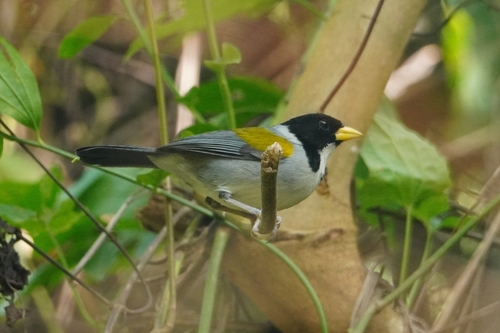
キガタシズカシトド (Arremon schlegeli) キガタシズカシトド

メディア

読み込み中…

要点

Butterfly Coquetteとキガタシズカシトドを区別する最も信頼できるフィールドマークは、全体の構造と羽毛です。Butterfly Coquetteは、虹色の緑とマルーンのトーンを持つ小さくてコンパクトなハチドリで、オスではしばしば長い赤い先端の冠と顔の「ひげ」を見せます。一方、キガタシズカシトドは、特徴的な黒い頭、黄色いくちばし、緑がかったまたは灰色の上面を持つ、はるかに大きくてずんぐりした歌鳥です。飛んでいるときや止まっているとき、コケットの小さなサイズと迅速な動きは、スズメのより大きく、地面を探るような印象と鋭く対照的です。雌や未熟なコケットは華やかな頭飾りを欠いていますが、いかなるスズメよりもはるかに小さく、金属的です。混乱は主に雌/未熟なコケットと幼鳥のスズメとの間で起こりますが、くちばしの形、頭の模様、全体の比率は明確な区別を保ちます。

識別のコツ

  1. Size and structure: Butterfly Coquetteは小さく、キガタシズカシトドの約半分の長さと質量の一部です。遠くからでも、コケットの小さくて繊細な体型と迅速でホバリングする飛行は診断的です。
  2. Bill shape: コケットは細長く、まっすぐなハチドリのくちばしを持ち(蜜を食べるために適応)、スズメは厚く円錐形の種子食者のくちばしを持ち、成鳥は明るい黄色、幼鳥は黒です。
  3. Head pattern (males): オスのコケットは、長い赤い先端の冠と白い先端の緑の「ひげ」を持つ深い緑の頭を示します—ハチドリの中で独特で、スズメには存在しません。オスのスズメは完全に黒い頭、顔、マラール、あごを持ち、黄色いくちばしと白い喉を持っています。
  4. Head pattern (females/immatures): 雌のコケットは冠とひげを欠いていますが、白っぽいマラール斑と金属的な緑のトーンを示します。雌のスズメは黒い頭(幼鳥ではあまり強くない)、バフィーな下部、黄色または黒いくちばしを保持しています。
  5. Upperparts: コケットは金属的な緑で、金色のハイライトと赤または青銅色の上尾羽を持ち、スズメは灰色で背中に緑の斑点があります(いくつかの亜種は全て灰色)、決して虹色ではありません。
  6. Tail: コケットの尾はマルーンまたは青銅色の緑で、短くて四角いです。スズメの尾は典型的な歌鳥のもので、長くて色がありません。
  7. Underparts: コケットは下側が緑で、太ももが白いです。スズメは白い喉と灰色またはバフィーな下部を持ち(雌はよりバフィーです)。
  8. Flight style: コケットはホバリングして急速に動き、長く止まることはほとんどありません。スズメは地面を歩いたり跳ねたりし、短いバーストで飛び、直立して止まります。
  9. Habitat: コケットは湿った森林の端や空き地を好み、スズメは乾燥した森林、低木地、劣化した森林に見られ、しばしば地面や低い植生にいます。
  10. Vocalizations: スズメは繰り返される高音の音を歌います。コケットはほとんど静かで、薄いチップを出すか、決して構造化された歌を持ちません。
  11. Sex/age pitfalls: 雌と未熟なコケットは華やかな頭飾りを欠いていますが、はるかに小さく、金属的で、細長いくちばしを持っています。幼鳥のスズメは黒いくちばしとあまり強くない黒い頭を持っていますが、依然として厚いくちばしと地面を探る行動を示します。
  12. Subspecies variation: コケットの亜種はより暗いまたは青銅色になることがありますが、金属的なトーンや小さなサイズを失うことはありません。スズメの亜種は背中に緑がない場合があります(代わりに灰色)、しかし常に黒い頭と黄色/黒いくちばしを持っています。
  13. Contextual clues: 花で急速な羽ばたきで餌を食べているのが見られた場合、それはコケットです。地面を探ったり低い止まり木から歌ったりしているのが見られた場合、それはスズメです。
  14. Geographic range: 両方ともコロンビアとベネズエラに生息していますが、スズメは乾燥した生息地に制限され、コケットはより広範囲に分布し、湿った地域を好みます。
  15. Mistaken identity: 最も混乱が生じるのは、雌/未熟なコケットが不明瞭に見られたときですが、くちばしの形、サイズ、コケットの黒い頭の欠如は常に信頼できます。

大きさ

Butterfly Coquetteは劇的に小さく、長さは約7.5〜9.1 cmで、キガタシズカシトド(平均28 g、約15 cmの長さ)よりもはるかに軽いです。コケットは典型的なハチドリで、小さくて繊細で、相対的に短い尾と細長いくちばしを持っています。それに対して、キガタシズカシトドは頑丈で中型の歌鳥で、厚い円錐形のくちばしとずっと重い体を持っています。遠くからでも、スズメのサイズと体重は小さなコケットと比較して明らかです。

羽色

行動

Butterfly Coquetteは典型的なハチドリで、花の上でホバリングし、急速で素早い動きで蜜を食べ、長く止まることはほとんどありません。キガタシズカシトドは地面の上または近くで餌を探し、種子、果物、昆虫を食べ、飛ぶよりも跳ねたり歩いたりしているのがよく見られます。スズメは通常、単独またはペアで見られ、時には低い植生の中にいて、コケットよりも飛行中ははるかに活動的ではありません。

生息環境

Butterfly Coquetteはボリビア、ブラジル、コロンビア、エクアドル、ペルー、ベネズエラの森林生息地の範囲に生息していますが、一般的には湿った森林の端や空き地に関連しています。キガタシズカシトドはコロンビアとベネズエラに制限され、亜熱帯または熱帯の乾燥森林、低木地、劣化した元の森林を好み、コケットよりも乾燥した、より開放的な生息地に見られます。乾燥した低木林や開けた茂みで見られた場合、スズメの方がはるかに可能性が高く、コケットは湿った花が豊富な地域を好みます。

声

キガタシズカシトドは、繰り返される「ゼウト・ゼウト・ゼウト・ジー」または「スート・スート・スート・シー」として説明される特徴的な高音の歌を持ち、主に湿季の早朝に聞かれます。Butterfly Coquetteは、ほとんどのハチドリのように、一般的には静かで、薄い高音のチップやトリルしか出さず、構造化された歌はありません。繰り返される構造化された歌が聞こえた場合、それはスズメを強く示唆します。

より良い説明を送る

比較と同じ項目を使ってください。文章はすぐに公開されます。

The most reliable field mark to separate Butterfly Coquette from Golden-winged Sparrow is overall structure and plumage: Butterfly Coquette is a tiny, compact hummingbird with iridescent green and maroon tones, often showing a long, red-tipped crest and facial 'whiskers' in males, while Golden-winged Sparrow is a much larger, chunky songbird with a distinctive black head, yellow bill, and greenish or gray upperparts. In flight or perched, the coquette's small size and rapid movements contrast sharply with the sparrow's bulkier, ground-foraging jizz. Female and immature coquettes lack the ornate headgear but remain much smaller and more metallic than any sparrow. Confusion is most likely with female/immature coquettes and juvenile sparrows, but bill shape, head pattern, and overall proportions remain clear separators.

  1. Size and structure: Butterfly Coquette is tiny, about half the length and a fraction of the mass of Golden-winged Sparrow. Even at a distance, the coquette's small, delicate build and rapid, hovering flight are diagnostic.
  2. Bill shape: Coquette has a slender, straight hummingbird bill (adapted for nectar feeding); sparrow has a thick, conical seed-eater's bill, bright yellow in adults and black in juveniles.
  3. Head pattern (males): Male coquette shows a deep green head with a long, red-tipped crest and green 'whiskers' with white tips—unique among hummingbirds and not present in sparrows. Male sparrow has a completely black head, face, malar, and chin, with a yellow bill and white throat.
  4. Head pattern (females/immatures): Female coquette lacks crest and whiskers but shows a whitish malar patch and metallic green tones. Female sparrow retains a black head (less intense in juveniles), buffier underparts, and yellow or black bill.
  5. Upperparts: Coquette is metallic green with golden highlights and reddish or bronzy uppertail coverts; sparrow is gray with a green patch on the back (some subspecies all gray), never iridescent.
  6. Tail: Coquette's tail is maroon or bronzy green, short and squared; sparrow's tail is typical for a songbird, longer and not colorful.
  7. Underparts: Coquette is green below with white thighs; sparrow is white-throated with gray or buffy underparts (females buffier).
  8. Flight style: Coquette hovers and darts, rarely perching for long; sparrow walks or hops on the ground, flies in short bursts, and perches upright.
  9. Habitat: Coquette prefers humid forest edges and clearings with abundant flowers; sparrow is found in dry forests, shrubland, and degraded woodland, often on the ground or in low vegetation.
  10. Vocalizations: Sparrow sings a repeated, high-pitched series of notes; coquette is mostly silent or gives thin chips, never a structured song.
  11. Sex/age pitfalls: Female and immature coquettes lack ornate headgear but remain much smaller, more metallic, and have a slender bill. Juvenile sparrows have a black bill and less intense black head, but still show the thick bill and ground-foraging behavior.
  12. Subspecies variation: Coquette subspecies may be darker or bronzier, but never lose the metallic tones or small size. Sparrow subspecies may lack green on the back (gray instead), but always have the black head and yellow/black bill.
  13. Contextual clues: If seen feeding at flowers with rapid wingbeats, it's a coquette; if seen foraging on the ground or singing from a low perch, it's a sparrow.
  14. Geographic range: Both occur in Colombia and Venezuela, but sparrow is restricted to drier habitats, while coquette is more widespread and favors humid areas.
  15. Mistaken identity: Most confusion arises when female/immature coquettes are seen poorly, but bill shape, size, and lack of black head in coquette are always reliable.

Butterfly Coquette is dramatically smaller, measuring only about 7.5–9.1 cm in length and weighing far less than the Golden-winged Sparrow (which averages 28 g and is about 15 cm long). The coquette is a typical hummingbird: tiny, delicate, with a proportionally short tail and slender bill. In contrast, Golden-winged Sparrow is a robust, medium-sized songbird with a thick, conical bill and a much heavier body. Even at a distance, the sparrow's size and bulk are obvious compared to the diminutive coquette.

  • Juvenile/immature flight patterns: No distinctive upperwing or flight marks are described for either species at any age, so separation relies on structure and plumage.
  • Adult males: Butterfly Coquette males have a deep green head with a long, red-tipped green crest and long green 'whiskers' with white tips, green back with golden highlights, reddish uppertail coverts, a white rump band, green underparts with white thighs, and a maroon tail. Golden-winged Sparrow males have a completely black head, yellow bill, gray upperparts with a green patch on the back, white throat, gray nape, and no iridescence or ornate headgear.
  • Females/immatures: Female coquettes lack the crest and whiskers but show a whitish malar patch, less intense red uppertail coverts, and golden highlights on the breast. Female sparrows have buffier underparts but retain the black head (though less intense in juveniles), yellow or black bill (juveniles have black bills), and no iridescence. Both sexes of the coquette are much more metallic and compact than the sparrow at any age.
  • Subspecies: Some coquette subspecies are darker overall, with bronzy olive uppertail coverts and bronzy green tails, but still retain the basic hummingbird structure and metallic tones. Golden-winged Sparrow subspecies vary in back color (some with more gray, some with green), but always have the black head and yellow or black bill.

Butterfly Coquette is a classic hummingbird, hovering at flowers and feeding on nectar with rapid, darting movements, rarely perching for long. Golden-winged Sparrow forages on or near the ground, feeding on seeds, fruit, and insects, often seen hopping or walking rather than flying. Sparrows are usually found singly or in pairs, sometimes in low vegetation, and are much less active in flight than coquettes.

Butterfly Coquette inhabits a range of forested habitats across Bolivia, Brazil, Colombia, Ecuador, Peru, and Venezuela, but is generally associated with humid forest edges and clearings. Golden-winged Sparrow is restricted to Colombia and Venezuela, favoring subtropical or tropical dry forests, shrubland, and degraded former forest, often in drier, more open habitats than the coquette. If seen in dry, scrubby woodland or open thickets, sparrow is far more likely; coquette prefers wetter, flower-rich areas.

Golden-winged Sparrow has a distinctive, high-pitched song described as repeated 'Zeut-zeut-zeut-zee' or 'Soot-soot-soot-see,' most often heard in the early morning during the wet season. Butterfly Coquette, like most hummingbirds, is generally quiet or gives only thin, high-pitched chips or trills, not a structured song. If you hear a repeated, structured song, it points strongly to the sparrow.

変更を破棄しますか?

保存していない編集があります。今離れると失われます。

Butterfly Coquette · キガタシズカシトド · 苦手な鳥