

brown-cheeked rail vs slaty-breasted rail
Rallus indicus versus Lewinia striata
Jogue um quiz com brown-cheeked rail e slaty-breasted rail
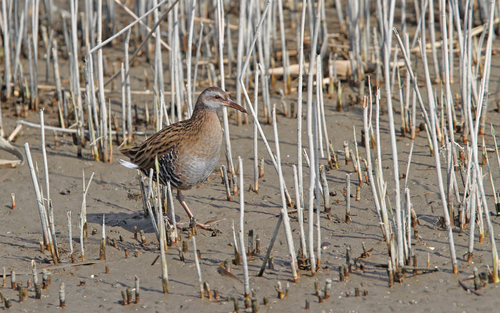 brown-cheeked rail
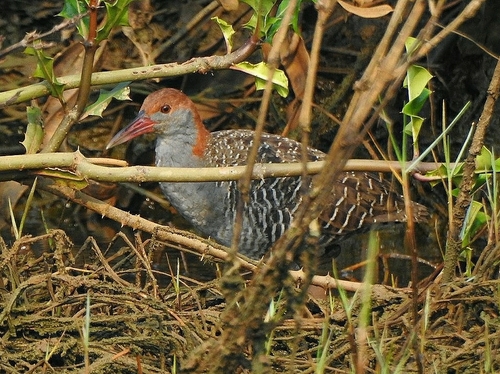 slaty-breasted rail
Em resumo
A marca de campo mais confiável entre o frango-d'água e o slaty-breasted rail é a combinação de cor do rosto e das partes inferiores: o frango-d'água apresenta uma distinta faixa ocular marrom e partes inferiores com tonalidade marrom, enquanto o slaty-breasted rail tem um peito azul-acinzentado e uma coroa/nuca castanha, sem a faixa facial marrom. No campo, o frango-d'água é mais claro acima e mais marrom abaixo, com uma clara faixa marrom através do olho, enquanto o slaty-breasted rail se destaca com seu peito azul-acinzentado e bico avermelhado. Ambos são semelhantes em tamanho, mas sua coloração e padrões faciais são a maneira mais rápida de separá-los. As vocalizações também diferem, mas são menos propensas a serem diagnósticas sem experiência. A sobreposição de habitat é possível no Sudeste Asiático, mas o frango-d'água é mais migratório e de reprodução no norte.
Dicas de identificação
- O padrão facial é a chave: O frango-d'água sempre mostra uma clara faixa ocular marrom atravessando o rosto, enquanto o slaty-breasted rail não possui isso e, em vez disso, tem uma coroa e nuca castanhas. Isso é visível em todas as idades e estações.
- Cor das partes inferiores: O frango-d'água tem partes inferiores com tonalidade marrom e um peito mais marrom, com uma garganta branca; o slaty-breasted rail tem um peito azul-acinzentado (slaty) e partes inferiores mais uniformes, sem a tonalidade marrom.
- Coroa e nuca: A coroa e a nuca castanhas do slaty-breasted rail são distintas e ausentes no frango-d'água, que tem partes superiores mais claras e menos ruivas.
- Cor do bico: O slaty-breasted rail tem um bico longo e avermelhado, que contrasta com seu peito slaty; o bico do frango-d'água é menos distintamente colorido e não se destaca tanto.
- Partes superiores: O frango-d'água é mais claro acima do que o slaty-breasted rail, mas mais escuro do que algumas formas ocidentais do frango-d'água; o slaty-breasted rail é mais uniformemente colorido acima, com menos contraste.
- Sem marcas de padrão de voo fortes: Nenhuma das espécies tem um padrão de asa superior ou de voo distinto descrito para imaturos ou adultos, então não confie em marcas de asas em voo para separação.
- Tamanho não é confiável: Ambas as espécies se sobrepõem em tamanho e massa, então volume ou comprimento aparente não são separadores seguros.
- Vocalizações: Se ouvido, o frango-d'água emite um agudo 'kyu' e notas metálicas 'shrink, shrink'; as chamadas do slaty-breasted rail não são descritas aqui, então use isso apenas se você estiver familiarizado com a voz do frango-d'água.
- Contexto de habitat: No norte da Ásia ou durante a migração, o frango-d'água é mais provável; no subcontinente indiano e em pântanos residentes do Sudeste Asiático, o slaty-breasted rail é mais esperado, mas ambos podem se sobrepor no inverno.
- Comportamento: Ambos se escondem em pântanos densos e raramente são vistos em aberto; o comportamento não é um forte separador.
- Estação: O frango-d'água é um migrante, então em áreas de invernada, considere o tempo, mas não confie apenas nisso.
- Diferenças sexuais: Nenhuma marca de campo específica de sexo é descrita para nenhuma das espécies.
- Plumagem juvenil/imatura: Nenhum padrão distinto de asa superior ou corpo juvenil ou de primeiro inverno é descrito para nenhuma das espécies; use a cor do rosto e das partes inferiores em todas as idades.
- Quando em dúvida: Priorize a combinação de faixa ocular marrom e partes inferiores com tonalidade marrom (frango-d'água) versus coroa/nuca castanha e peito slaty (slaty-breasted).
Tamanho
O frango-d'água mede de 23 a 29 cm de comprimento e pesa de 75 a 190 g, enquanto o slaty-breasted rail é ligeiramente maior em média, medindo de 25 a 30 cm e pesando de 100 a 142 g. Na prática, ambos aparecem como rails de tamanho médio e o tamanho sozinho não é um separador confiável, pois suas distribuições se sobrepõem e a variação individual é considerável. O comprimento do bico e o volume do corpo não são suficientemente diferentes para serem diagnósticos no campo.
Plumagem
Para todas as idades, o frango-d'água apresenta partes superiores mais claras e um peito com tonalidade marrom, com uma proeminente faixa ocular marrom atravessando o rosto. A garganta é branca, contrastando com o peito mais marrom. O slaty-breasted rail, por outro lado, tem uma coroa e nuca castanhas, um peito azul-acinzentado e não possui a faixa ocular marrom; seu bico é avermelhado e se destaca contra as partes inferiores slaty. Nenhuma marca de asa superior ou padrão de voo específico para idade é descrita para nenhuma das espécies, então a separação depende da cor do rosto e das partes inferiores para ambos os adultos e imaturos. O frango-d'água é geralmente mais escuro acima do que formas semelhantes de frango-d'água, mas ainda mais claro do que o slaty-breasted rail. Em aves empoleiradas ou caminhando, a faixa facial marrom e as partes inferiores mais claras e marrons do frango-d'água contrastam com o padrão mais uniforme, azul-acinzentado e castanho do slaty-breasted rail.
Comportamento
Ambas as espécies são secretivas e se escondem na vegetação densa dos pântanos, raramente voando a menos que sejam assustadas. O frango-d'água é conhecido por às vezes estar tão exausto durante a migração que pode ser capturado à mão, mas isso não é uma marca de campo. O comportamento alimentar é semelhante: ambos procuram por invertebrados e sementes. Não há diferença comportamental forte em estilo de forrageamento ou movimento que seja confiavelmente diagnóstica no campo.
Habitat
O frango-d'água se reproduz no norte da Mongólia, leste da Sibéria, nordeste da China, Coreia e norte do Japão, invernando no sudeste da Ásia, e é incomum mais ao sul. O slaty-breasted rail é nativo do subcontinente indiano e do Sudeste Asiático. Ambos podem ser encontrados em pântanos e zonas úmidas, então o habitat sozinho não é um forte separador em áreas de invernada sobrepostas, mas o frango-d'água é mais migratório e de reprodução no norte, enquanto o slaty-breasted rail é mais residente no sul.
Voz
O frango-d'água tem um agudo chamado de cortejo 'kyu', mais longo e claro do que o do frango-d'água europeu, e uma canção de notas metálicas e arrastadas 'shrink, shrink', cerca de duas por segundo. Suas chamadas são bastante diferentes do frango-d'água ocidental e não são respondidas por eles. Nenhuma descrição vocal detalhada é dada para o slaty-breasted rail aqui, então a voz é apenas diagnóstica se os distintos chamados 'kyu' ou 'shrink' forem ouvidos do frango-d'água. Na prática, as vocalizações são úteis apenas se bem conhecidas pelo observador.
brown-cheeked rail · slaty-breasted rail · Minhas aves difíceis