

Brown-cheeked Rail vs Slaty-breasted Rail
Rallus indicus contro Lewinia striata
Fai un quiz con Brown-cheeked Rail e Slaty-breasted Rail
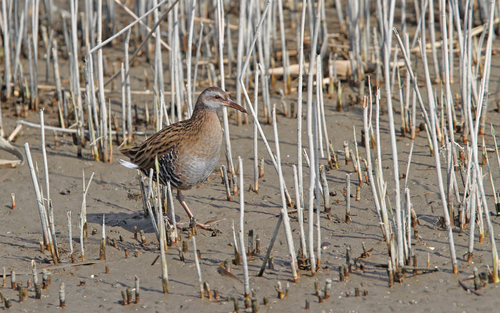 Brown-cheeked Rail
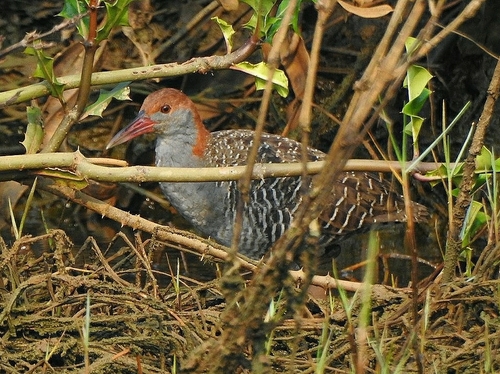 Slaty-breasted Rail
In breve
Il segno di campo più affidabile tra il Porciglione e il Slaty-breasted Rail è la combinazione del colore del viso e delle parti inferiori: il Porciglione mostra una distintiva striscia oculare marrone e parti inferiori con tonalità marroni, mentre il Slaty-breasted Rail ha un petto blu-grigio e una corona/nuca castagna, privo della striscia facciale marrone. Sul campo, il Porciglione è più chiaro sopra e più marrone sotto, con una chiara striscia marrone attraverso l'occhio, mentre il Slaty-breasted Rail si distingue per il suo petto blu-ardesia e il becco rossastro. Entrambi sono simili in dimensioni, ma la loro colorazione e i modelli facciali sono il modo più rapido per separarli. Anche le vocalizzazioni differiscono, ma è meno probabile che siano diagnostiche senza esperienza. È possibile una sovrapposizione degli habitat nel sud-est asiatico, ma il Porciglione è più migratorio e nidificante a nord.
Consigli di identificazione
- Il modello del viso è fondamentale: Il Porciglione mostra sempre una chiara striscia oculare marrone che attraversa il viso, mentre il Slaty-breasted Rail ne è privo e ha invece una corona e una nuca castagna. Questo è visibile in tutte le età e stagioni.
- Colore delle parti inferiori: Il Porciglione ha parti inferiori con tonalità marroni e un petto più marrone, con una gola bianca; il Slaty-breasted Rail ha un petto blu-grigio (ardesia) e parti inferiori più uniformi, prive della tonalità marrone.
- Corona e nuca: La corona e la nuca castagna del Slaty-breasted Rail sono distintive e assenti nel Porciglione, che ha parti superiori più chiare e meno rugginose.
- Colore del becco: Il Slaty-breasted Rail ha un lungo becco rossastro, che contrasta con il suo petto blu-ardesia; il becco del Porciglione è meno distintamente colorato e non si distingue tanto.
- Parti superiori: Il Porciglione è più chiaro sopra rispetto al Slaty-breasted Rail, ma più scuro di alcune forme occidentali del Porciglione; il Slaty-breasted Rail è più uniformemente colorato sopra, con meno contrasto.
- Nessun segno di volo distintivo: Nessuna delle due specie ha un modello di volo o di ala superiore distintivo descritto per immaturi o adulti, quindi non fare affidamento su segni di ali in volo per la separazione.
- Le dimensioni non sono affidabili: Entrambe le specie si sovrappongono in dimensioni e massa, quindi il volume apparente o la lunghezza non sono un separatore sicuro.
- Vocalizzazioni: Se udite, il Porciglione emette un acuto 'kyu' e note metalliche 'shrink, shrink'; le chiamate del Slaty-breasted Rail non sono descritte qui, quindi utilizza solo questo se sei familiare con la voce del Porciglione.
- Contesto dell'habitat: In Asia settentrionale o durante la migrazione, il Porciglione è più probabile; nel subcontinente indiano e nelle paludi residenti del sud-est asiatico, il Slaty-breasted Rail è più atteso, ma entrambi possono sovrapporsi in inverno.
- Comportamento: Entrambi si nascondono in paludi dense e sono raramente visti in aperto; il comportamento non è un forte separatore.
- Stagione: Il Porciglione è un migratore, quindi nelle aree di svernamento, considera il tempismo, ma non fare affidamento solo su questo.
- Differenze sessuali: Non sono descritti segni di campo specifici per sesso per nessuna delle due specie.
- Piumaggio giovanile/immaturo: Non è descritto alcun modello distintivo di ala superiore o corpo per immaturi o giovanili per nessuna delle due specie; utilizza il colore del viso e delle parti inferiori in tutte le età.
- Quando hai dubbi: Dai priorità alla combinazione di striscia oculare marrone e parti inferiori con tonalità marroni (Porciglione) rispetto a corona/nuca castagna e petto blu-ardesia (Slaty-breasted).
Taglia
Il Porciglione è lungo 23–29 cm e pesa 75–190 g, mentre il Slaty-breasted Rail è leggermente più grande in media a 25–30 cm e 100–142 g. In pratica, entrambi appaiono come rail di dimensioni medie e la dimensione da sola non è un separatore affidabile, poiché i loro intervalli si sovrappongono e la variazione individuale è considerevole. La lunghezza del becco e il volume del corpo non sono distintamente diversi abbastanza da essere diagnostici sul campo.
Piumaggio
Per tutte le età, il Porciglione mostra parti superiori più chiare e un petto con tonalità marroni, con una prominente striscia oculare marrone che attraversa il viso. La gola è bianca, in contrasto con il petto più marrone. Il Slaty-breasted Rail, al contrario, ha una corona e una nuca castagna, un petto blu-grigio e priva della striscia oculare marrone; il suo becco è rossastro e si distingue contro le parti inferiori blu-ardesia. Non sono descritti segni specifici di ala superiore o modello di volo per età per nessuna delle due specie, quindi la separazione si basa sul colore del viso e delle parti inferiori per entrambi gli adulti e gli immaturi. Il Porciglione è generalmente più scuro sopra rispetto a forme simili di Porciglione, ma comunque più chiaro del Slaty-breasted Rail. In uccelli in posizione o in cammino, la striscia facciale marrone e le parti inferiori più chiare e marroni del Porciglione contrastano con il modello più uniforme, blu-ardesia e castagna del Slaty-breasted Rail.
Comportamento
Entrambe le specie sono riservate e si nascondono nella vegetazione densa delle paludi, volando raramente a meno che non siano disturbate. Il Porciglione è noto per essere talvolta così esausto durante la migrazione da poter essere catturato a mano, ma questo non è un segno di campo. Il comportamento alimentare è simile: entrambi setacciano per invertebrati e semi. Non c'è una forte differenza comportamentale nello stile di foraggiamento o movimento che sia affidabilmente diagnostica sul campo.
Habitat
Il Porciglione nidifica nel nord della Mongolia, nella Siberia orientale, nel nord-est della Cina, in Corea e nel Giappone settentrionale, svernando nel sud-est asiatico, ed è poco comune più a sud. Il Slaty-breasted Rail è nativo del subcontinente indiano e del sud-est asiatico. Entrambi possono essere trovati in paludi e zone umide, quindi l'habitat da solo non è un forte separatore nei terreni di svernamento sovrapposti, ma il Porciglione è più migratorio e nidificante a nord, mentre il Slaty-breasted Rail è più residente a sud.
Voce
Il Porciglione ha un acuto richiamo di corteggiamento 'kyu', più lungo e chiaro rispetto al Porciglione europeo, e una canzone di note metalliche e slavate 'shrink, shrink', circa due al secondo. Le sue chiamate sono abbastanza diverse da quelle del Porciglione occidentale e non vengono risposte da esse. Non è fornita qui alcuna descrizione vocale dettagliata per il Slaty-breasted Rail, quindi la voce è solo diagnostica se si sentono le distintive chiamate 'kyu' o 'shrink' del Porciglione. In pratica, le vocalizzazioni sono utili solo se ben conosciute dall'osservatore.
Brown-cheeked Rail · Slaty-breasted Rail · I miei uccelli difficili