

Motmot

クイナ 対 ハシナガクイナ

Rallus indicus 対 Lewinia striata

クイナとハシナガクイナのクイズ
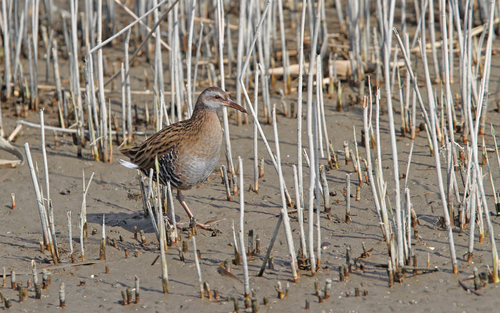
クイナ (Rallus indicus) クイナ
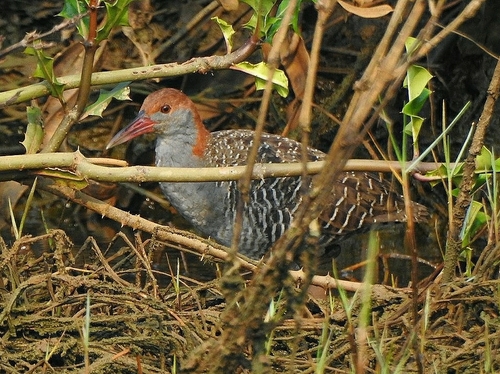
ハシナガクイナ (Lewinia striata) ハシナガクイナ

メディア

読み込み中…

要点

ブラウンチーククイナとハシナガクイナの最も信頼できるフィールドマークは、顔と下部の色の組み合わせです:ブラウンチーククイナは明確な茶色のアイストライプと茶色がかった下部を示し、ハシナガクイナは青灰色の胸と栗色の冠/うなじを持ち、茶色の顔のストライプがありません。フィールドでは、ブラウンチーククイナは上がより淡く、下がより茶色で、目を通る明確な茶色のストライプがありますが、ハシナガクイナはスレートブルーの胸と赤みがかったくちばしで際立っています。両者はサイズが似ていますが、色合いと顔のパターンが最も迅速に区別する方法です。鳴き声も異なりますが、経験がないと診断にはあまり役立ちません。生息地の重複は東南アジアで可能ですが、ブラウンチーククイナはより移動性があり、北で繁殖します。

識別のコツ

  1. 顔のパターンが重要です: ブラウンチーククイナは常に顔を通る明確な茶色のアイストライプを示しますが、ハシナガクイナはこれがなく、代わりに栗色の冠とうなじを持っています。これはすべての年齢と季節で見ることができます。
  2. 下部の色: ブラウンチーククイナは茶色がかった下部とより茶色の胸を持ち、喉は白いです;ハシナガクイナは青灰色(スレート)の胸とより均一な下部を持ち、茶色の色合いがありません。
  3. 冠とうなじ: ハシナガクイナの栗色の冠とうなじは特徴的で、ブラウンチーククイナにはありません。ブラウンチーククイナはより淡く、赤褐色の上部を持っています。
  4. くちばしの色: ハシナガクイナは長い赤みがかったくちばしを持ち、スレートの胸と対照的です;ブラウンチーククイナのくちばしはあまり明確に色付けされておらず、あまり目立ちません。
  5. 上部: ブラウンチーククイナはハシナガクイナよりも上が淡いですが、西部のヨーロッパクイナの形よりも暗いです;ハシナガクイナは上部がより均一に色付けされており、コントラストが少ないです。
  6. 強い飛行パターンのマークはありません: どちらの種も未熟な個体や成鳥に特有の上翼や飛行パターンが記述されていないため、飛行中の翼のマークに頼って区別しないでください。
  7. サイズは信頼できません: 両種はサイズと質量が重複しているため、見かけの体積や長さは安全な区別にはなりません。
  8. 鳴き声: 聞こえた場合、ブラウンチーククイナは鋭い「キュウ」と金属的な「シュリンク、シュリンク」という音を出します;ハシナガクイナの鳴き声はここでは記述されていないので、ブラウンチーククイナの声に慣れている場合のみ使用してください。
  9. 生息地の文脈: 北アジアや移動中はブラウンチーククイナがより可能性が高いです;インド亜大陸や東南アジアの常駐湿地ではハシナガクイナがより期待されますが、冬には両者が重なることがあります。
  10. 行動: 両者は密集した湿地に隠れ、オープンな場所ではめったに見られません;行動は強い区別要因ではありません。
  11. 季節: ブラウンチーククイナは移動性があるため、冬の生息地ではタイミングを考慮してくださいが、これだけに頼らないでください。
  12. 性差: どちらの種にも性特有のフィールドマークは記述されていません。
  13. 幼鳥/未熟な羽毛: どちらの種にも特有の幼鳥や初冬の上翼や体のパターンは記述されていないため、すべての年齢で顔と下部の色を使用してください。
  14. 疑わしい場合: 茶色のアイストライプと茶色がかった下部(ブラウンチーク)対栗色の冠/うなじとスレートの胸(ハシナガクイナ)の組み合わせを優先してください。

大きさ

ブラウンチーククイナは長さ23〜29 cm、体重75〜190 gで、ハシナガクイナは平均してわずかに大きく、25〜30 cm、100〜142 gです。実際には、両者は中型のクイナとして見え、サイズだけでは信頼できる区別にはなりません。範囲が重なり、個体差がかなりあるためです。くちばしの長さと体の体積は、フィールドで診断するには明確に異なりません。

羽色

すべての年齢において、ブラウンチーククイナはより淡い上部と茶色がかった胸を示し、顔を通る目立つ茶色のアイストライプがあります。喉は白く、より茶色の胸と対照的です。対照的に、ハシナガクイナは栗色の冠とうなじ、青灰色の胸を持ち、茶色のアイストライプがありません;そのくちばしは赤みがかっており、スレートの下部に対して目立ちます。どちらの種にも年齢特有の上翼や飛行パターンのマークは記述されていないため、成鳥と未熟な個体の両方で顔と下部の色に頼って区別します。ブラウンチーククイナは一般的に似た水クイナの形よりも上が暗いですが、ハシナガクイナよりもまだ淡いです。止まっているか歩いている鳥では、ブラウンチーククイナの茶色の顔のストライプと淡い茶色の下部が、ハシナガクイナのより均一なスレートブルーと栗色のパターンと対照的です。

行動

両種は秘密主義で、密集した湿地の植生に隠れ、追い立てられない限りめったに飛びません。ブラウンチーククイナは移動中に非常に疲れて手で捕まえられることがあるとされていますが、これはフィールドマークではありません。採餌行動は似ており、両者は無脊椎動物や種子を探ります。採餌や移動スタイルにおいて、フィールドで信頼できる診断のための強い行動の違いはありません。

生息環境

ブラウンチーククイナは北モンゴル、東シベリア、北東中国、韓国、北日本で繁殖し、東南アジアで冬を越し、南では珍しいです。ハシナガクイナはインド亜大陸と東南アジアに生息しています。両者は湿地や水辺に見られるため、生息地だけでは重なる冬の生息地で強い区別にはなりませんが、ブラウンチーククイナはより移動性があり、北で繁殖し、ハシナガクイナは南でより常駐しています。

声

ブラウンチーククイナは鋭い「キュウ」という求愛の鳴き声を持ち、ヨーロッパクイナよりも長く明瞭で、金属的でスラーレッドな「シュリンク、シュリンク」という音の歌を持ち、約2回/秒です。その鳴き声は西部の水クイナとはかなり異なり、彼らからは反応されません。ここではハシナガクイナの詳細な鳴き声の説明はありませんので、ブラウンチーククイナからの特有の「キュウ」または「シュリンク」の呼び声が聞こえた場合のみ声を診断に使用してください。実際には、鳴き声は観察者がよく知っている場合にのみ役立ちます。

より良い説明を送る

比較と同じ項目を使ってください。文章はすぐに公開されます。

The most reliable field mark between Brown-cheeked Rail and Slaty-breasted Rail is the combination of face and underpart color: Brown-cheeked Rail shows a distinct brown eyestripe and brown-tinged underparts, while Slaty-breasted Rail has a blue-grey breast and a chestnut crown/nape, lacking the brown facial stripe. In the field, Brown-cheeked Rail is paler above and browner below, with a clear brown stripe through the eye, whereas Slaty-breasted Rail stands out with its slaty-blue breast and reddish bill. Both are similar in size, but their coloration and face patterns are the quickest way to separate them. Vocalizations also differ, but are less likely to be diagnostic without experience. Habitat overlap is possible in Southeast Asia, but Brown-cheeked Rail is more migratory and northern-breeding.

  1. Face pattern is key: Brown-cheeked Rail always shows a clear brown eyestripe running through the face, while Slaty-breasted Rail lacks this and instead has a chestnut crown and nape. This is visible in all ages and seasons.
  2. Underpart color: Brown-cheeked Rail has brown-tinged underparts and a browner breast, with a white throat; Slaty-breasted Rail has a blue-grey (slaty) breast and more uniform underparts, lacking the brown tinge.
  3. Crown and nape: Slaty-breasted Rail's chestnut crown and nape are distinctive and absent in Brown-cheeked Rail, which has paler, less rufous upperparts.
  4. Bill color: Slaty-breasted Rail has a long, reddish bill, which contrasts with its slaty breast; Brown-cheeked Rail's bill is less distinctly colored and does not stand out as much.
  5. Upperparts: Brown-cheeked Rail is paler above than Slaty-breasted Rail, but darker than some western Water Rail forms; Slaty-breasted Rail is more uniformly colored above, with less contrast.
  6. No strong flight pattern marks: Neither species has a distinctive upperwing or flight pattern described for immatures or adults, so do not rely on in-flight wing markings for separation.
  7. Size is not reliable: Both species overlap in size and mass, so apparent bulk or length is not a safe separator.
  8. Vocalizations: If heard, Brown-cheeked Rail gives a sharp 'kyu' and metallic 'shrink, shrink' notes; Slaty-breasted Rail's calls are not described here, so only use this if you are familiar with Brown-cheeked Rail's voice.
  9. Habitat context: In northern Asia or during migration, Brown-cheeked Rail is more likely; in the Indian subcontinent and resident marshes of Southeast Asia, Slaty-breasted Rail is more expected, but both can overlap in winter.
  10. Behavior: Both skulk in dense marshes and are rarely seen in the open; behavior is not a strong separator.
  11. Season: Brown-cheeked Rail is a migrant, so in wintering areas, consider timing, but do not rely on this alone.
  12. Sex differences: No sex-specific field marks are described for either species.
  13. Juvenile/immature plumage: No distinctive juvenile or first-winter upperwing or body pattern is described for either species; use face and underpart color in all ages.
  14. When in doubt: Prioritize the combination of brown eyestripe and brown-tinged underparts (Brown-cheeked) versus chestnut crown/nape and slaty breast (Slaty-breasted).

Brown-cheeked Rail is 23–29 cm in length and weighs 75–190 g, while Slaty-breasted Rail is slightly larger on average at 25–30 cm and 100–142 g. In practice, both appear as medium-sized rails and size alone is not a reliable separator, as their ranges overlap and individual variation is considerable. Bill length and body bulk are not distinctly different enough to be diagnostic in the field.

For all ages, Brown-cheeked Rail shows paler upperparts and a brown-tinged breast, with a prominent brown eyestripe running through the face. The throat is white, contrasting with the browner breast. Slaty-breasted Rail, by contrast, has a chestnut crown and nape, a blue-grey breast, and lacks the brown eyestripe; its bill is reddish and stands out against the slaty underparts. No age-specific upperwing or flight pattern marks are described for either species, so separation relies on face and underpart color for both adults and immatures. Brown-cheeked Rail is generally darker above than similar water rail forms, but still paler than Slaty-breasted Rail. In perched or walking birds, the brown facial stripe and paler, browner underparts of Brown-cheeked Rail contrast with the more uniform, slaty-blue and chestnut pattern of Slaty-breasted Rail.

Both species are secretive and skulk in dense marsh vegetation, rarely flying unless flushed. Brown-cheeked Rail is noted for sometimes being so exhausted on migration that it can be caught by hand, but this is not a field mark. Feeding behavior is similar: both probe for invertebrates and seeds. There is no strong behavioral difference in foraging or movement style that is reliably diagnostic in the field.

Brown-cheeked Rail breeds in northern Mongolia, eastern Siberia, northeast China, Korea, and northern Japan, wintering in southeast Asia, and is uncommon further south. Slaty-breasted Rail is native to the Indian subcontinent and Southeast Asia. Both can be found in marshes and wetlands, so habitat alone is not a strong separator in overlapping wintering grounds, but Brown-cheeked Rail is more migratory and northern-breeding, while Slaty-breasted Rail is more resident in the south.

Brown-cheeked Rail has a sharp piping 'kyu' courtship call, longer and clearer than the European Water Rail, and a song of metallic, slurred 'shrink, shrink' notes, about two per second. Its calls are quite different from western Water Rail and not responded to by them. No detailed vocal description is given for Slaty-breasted Rail here, so voice is only diagnostic if the distinctive 'kyu' or 'shrink' calls are heard from Brown-cheeked Rail. In practice, vocalizations are useful only if well known to the observer.

変更を破棄しますか?

保存していない編集があります。今離れると失われます。

クイナ · ハシナガクイナ · 苦手な鳥