

blunt-winged warbler vs large-billed reed warbler
Acrocephalus concinens versus Acrocephalus orinus
Jogue um quiz com blunt-winged warbler e large-billed reed warbler
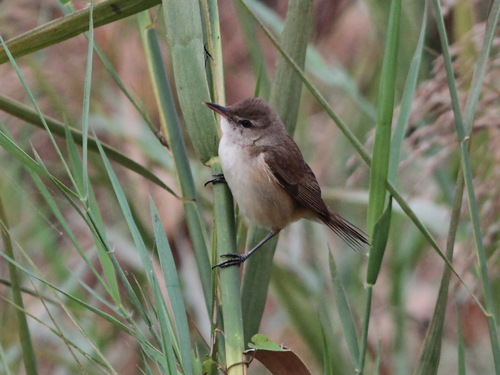 blunt-winged warbler
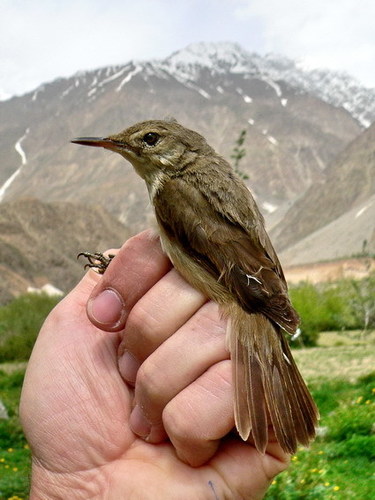 large-billed reed warbler
Em resumo
A marca de campo mais confiável para separar blunt-winged warbler de large-billed reed warbler é a estrutura da cauda e do bico, especialmente em aves empoleiradas ou forrageando: large-billed reed warbler apresenta uma cauda visivelmente mais longa, mais graduada e pontiaguda, e um bico notavelmente maior, com base mais clara. Em voo ou em repouso, large-billed reed warbler também tende a abrir e espalhar sua cauda, acentuando as pontas das penas pontiagudas, enquanto a cauda do blunt-winged warbler parece mais curta e menos graduada. Ambas as espécies são warblers marrons simples, mas large-billed reed warbler tem um ventre mais claro e cremoso e partes superiores mais oliva-marrons. Diferenças específicas no padrão das asas de juvenis ou imaturos não são descritas nas fontes disponíveis, então a estrutura e a forma da cauda são suas melhores pistas. Ambas são raras e locais no campo, então o contexto raramente é útil.
Dicas de identificação
- Forma e Graduação da Cauda: Large-billed reed warbler tem uma cauda visivelmente mais longa e graduada com pontas lanceoladas. Quando empoleirada ou abrindo sua cauda, essa característica é óbvia; a cauda do blunt-winged warbler é mais curta e menos graduada, com pontas mais arredondadas. Isso é confiável em todos os plumagens.
- Comportamento de Abertura da Cauda: Observe large-billed reed warbler abrindo e espalhando ativamente sua cauda enquanto forrageia—isso acentua as penas da cauda pontiagudas e irregulares e não é típico do blunt-winged warbler.
- Estrutura do Bico: O bico de large-billed reed warbler é mais longo, robusto e tem uma mandíbula inferior e bordas de corte mais claras, dando uma impressão de cabeça mais pesada. O bico do blunt-winged warbler é mais fino e mais típico de um marsh-warbler.
- Tamanho Geral e Jizz: Large-billed reed warbler é ligeiramente maior e mais robusto, com uma cauda e bico mais longos, enquanto o blunt-winged warbler é mais compacto. Em comparação direta, a diferença é sutil, mas pode ser percebida com experiência.
- Cor das Partes Superiores: Large-billed reed warbler tem partes superiores oliva-marrons, enquanto o blunt-winged warbler é mais uniformemente marrom, mas essa diferença é sutil e pode ser afetada pela luz e desgaste.
- Cor das Partes Inferiores: A parte inferior de large-billed reed warbler é distintamente clara e cremosa, com partes inferiores e axilas ainda mais claras. As partes inferiores do blunt-winged warbler são menos contrastantes, mais buff ou marrons.
- Forma da Ponta da Cauda: As penas da cauda de large-billed reed warbler são agudamente pontiagudas; as do blunt-winged warbler são mais arredondadas. Isso é melhor visto em aves na mão ou com excelentes vistas.
- Estrutura da Asa: Large-billed reed warbler tem asas curtas e arredondadas, o que pode dar uma silhueta de voo ligeiramente diferente, mas isso é sutil e nem sempre confiável no campo.
- Postura Empoleirada: Large-billed reed warbler frequentemente parece ter uma cauda mais longa e um bico mais pesado quando empoleirada verticalmente, enquanto o blunt-winged warbler é mais compacto e menos 'pesado na cabeça'.
- Cor do Bico: Procure pela mandíbula inferior clara e bordas de corte em large-billed reed warbler, especialmente em boa luz; o bico do blunt-winged warbler é mais uniformemente escuro.
- Contexto do Habitat: Ambas as espécies ocorrem em habitats de pântano ou canavial, mas large-billed reed warbler é extremamente rara e localizada; se vista fora da faixa ou estação conhecida, considere a probabilidade de confusão.
- Sem Padrão Distintivo de Asa Juvenil: Não há marcas de padrão de asa ou de voo específicas para idade descritas para separar juvenis ou imaturos dessas espécies, então confie na estrutura e forma da cauda em todas as idades.
- Sem Diferenças Vocais Confiáveis: Nenhuma vocalização é descrita nas notas disponíveis, então não use canto ou chamada para separação.
- Cuidado com a Iluminação: Tons de plumagem (olive-brown vs. plain brown) podem ser enganosos em luz fraca; características estruturais são mais confiáveis.
- Comparação Direta é Melhor: Se ambas as espécies estiverem presentes, a comparação direta da graduação da cauda, tamanho do bico e jizz geral é a abordagem mais confiável; caso contrário, concentre-se na combinação de cauda longa e pontiaguda e bico pesado para large-billed reed warbler.
Tamanho
Large-billed reed warbler é ligeiramente maior em geral, com um comprimento total de cerca de 130 mm (5 in), uma cauda de 58 mm (2.3 in) e uma asa de 61 mm (2.4 in) [wikipedia]. As medidas do blunt-winged warbler não são especificadas nas notas disponíveis, mas geralmente é considerado menor e mais compacto dentro de Acrocephalus. O bico de large-billed reed warbler é notavelmente mais longo (20 mm da abertura) e mais robusto, dando-lhe uma aparência de cabeça mais pesada em comparação com o blunt-winged warbler, que tem um bico mais típico e fino.
Plumagem
- Plumagem Juvenil e Imatura: Nenhuma diferença de padrão de asa ou de voo específica para idade é descrita nas fontes disponíveis para qualquer uma das espécies.
- Plumagem Adulta: Large-billed reed warbler tem partes superiores oliva-marrons e porções visíveis de asas e cauda, com uma parte inferior distintamente clara e cremosa e axilas e partes inferiores ainda mais claras. As penas da cauda são pontiagudas e mais agudamente lanceoladas do que no blunt-winged warbler, e a cauda é mais obviamente graduada (a diferença entre as penas da cauda mais longa e mais curta é de cerca de 10 mm). O bico é escuro na parte superior, mas claro nas bordas de corte e na mandíbula inferior. O blunt-winged warbler é descrito apenas como um marsh-warbler típico, sugerindo partes superiores marrons simples e menos contraste entre partes superiores e inferiores. Nenhum painel de asa distintivo, bordas terciárias ou marcas de voo contrastantes são notados para qualquer uma das espécies.
Comportamento
Large-billed reed warbler é notado por seu hábito de abrir e espalhar sua cauda enquanto forrageia, o que acentua as penas da cauda pontiagudas e graduadas. Esse comportamento não é descrito para o blunt-winged warbler, que provavelmente se comporta mais como um Acrocephalus típico, movendo-se através de canaviais e vegetação baixa sem uma abertura óbvia da cauda. Nenhuma diferença específica de estilo de voo é descrita, mas as asas curtas e arredondadas de large-billed reed warbler podem dar-lhe um voo mais agitado e menos direto em comparação com outros reed warblers.
Habitat
Ambas as espécies estão associadas a habitats de pântano ou canavial, mas preferências de habitat detalhadas não são descritas nas notas fornecidas. Large-billed reed warbler é extremamente rara e localizada, com locais de reprodução confirmados na Ásia Central e migração através do Himalaia, hibernando no norte da Índia e no Sudeste Asiático. O blunt-winged warbler é um marsh-warbler típico, provavelmente encontrado em habitats úmidos semelhantes, mas não é tão globalmente raro ou restrito quanto large-billed reed warbler.
blunt-winged warbler · large-billed reed warbler · Minhas aves difíceis