

Motmot

コバネヨシキリ 対 オオハシヨシキリ

Acrocephalus concinens 対 Acrocephalus orinus

コバネヨシキリとオオハシヨシキリのクイズ
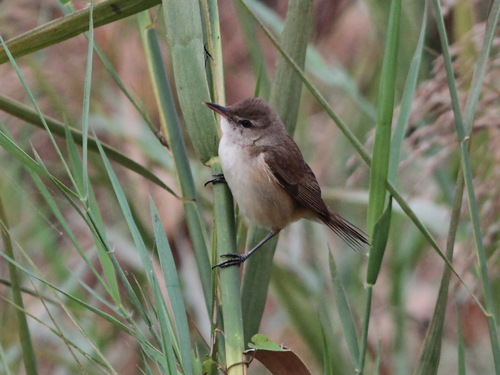
コバネヨシキリ (Acrocephalus concinens) コバネヨシキリ
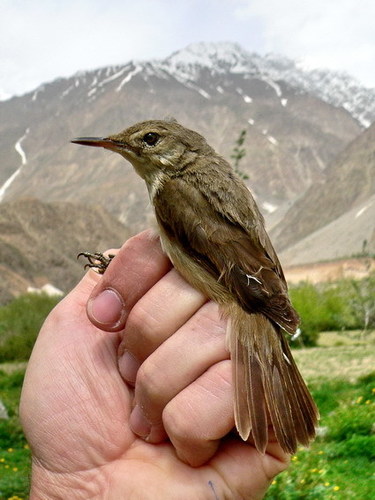
オオハシヨシキリ (Acrocephalus orinus) オオハシヨシキリ

メディア

読み込み中…

要点

コバネヨシキリとオオハシヨシキリを区別する最も信頼できるフィールドマークは、特に止まっているか採餌している鳥における尾とくちばしの構造です:オオハシヨシキリは明らかに長く、より段階的で尖った尾と、目立って大きく、基部が淡いくちばしを示します。飛んでいるときや休んでいるとき、オオハシヨシキリは尾を扇いで広げる傾向があり、尖った羽の先端を強調しますが、コバネヨシキリの尾は短く、段階的ではないように見えます。両種は地味な茶色のヨシキリですが、オオハシヨシキリは淡いクリーム色の腹部とよりオリーブブラウンの上面を持っています。幼鳥や未成熟の特定の翼のパターンの違いは利用可能な情報源には記載されていないため、構造と尾の形状が最良の手がかりです。両種はフィールドでは珍しく、局所的であるため、文脈はほとんど役に立ちません。

識別のコツ

  1. Tail Shape and Graduation: オオハシヨシキリは明らかに長く、より段階的な尾を持ち、尖った槍形の先端があります。止まっているときや尾を扇いでいるとき、この特徴は明らかです;コバネヨシキリの尾は短く、段階的ではなく、より丸い先端を持っています。これはすべての羽色で信頼できます。
  2. Tail Fanning Behavior: 採餌中にオオハシヨシキリが積極的に尾を扇いで広げるのを観察してください—これは尖った不均一な尾羽を強調し、コバネヨシキリには典型的ではありません。
  3. Bill Structure: オオハシヨシキリのくちばしは長く、太く、基部が淡い下顎と切断面を持ち、重い頭の印象を与えます。コバネヨシキリのくちばしは細く、典型的な湿地ヨシキリのものです。
  4. Overall Size and Jizz: オオハシヨシキリはわずかに大きく、よりがっしりしており、尾とくちばしが長いのに対し、コバネヨシキリはよりコンパクトです。直接比較すると、違いは微妙ですが、経験によって見分けられます。
  5. Upperpart Color: オオハシヨシキリはオリーブブラウンの上面を持ち、コバネヨシキリはより均一に茶色ですが、この違いは微妙で、光や摩耗によって影響を受けることがあります。
  6. Underpart Color: オオハシヨシキリの腹部は明らかに淡いクリーム色で、さらに淡い下翼と腋羽を持っています。コバネヨシキリの腹部は対照が少なく、よりバフ色または茶色がかっています。
  7. Tail Tip Shape: オオハシヨシキリの尾羽は鋭く尖っています;コバネヨシキリの尾羽はより丸いです。これは手に持っている鳥や優れた視界で最もよく見られます。
  8. Wing Structure: オオハシヨシキリは短く丸い翼を持ち、わずかに異なる飛行シルエットを与えることがありますが、これは微妙でフィールドでは常に信頼できるわけではありません。
  9. Perched Posture: オオハシヨシキリは直立して止まっているとき、尾が長く、くちばしが重いように見えることが多いですが、コバネヨシキリはよりコンパクトで「重い頭」ではありません。
  10. Bill Color: 良い光の下でオオハシヨシキリの淡い下顎と切断面を探してください;コバネヨシキリのくちばしはより均一に暗いです。
  11. Habitat Context: 両種は湿地やヨシ原の生息地に生息しますが、オオハシヨシキリは非常に珍しく局所的です;知られている範囲や季節外で見られた場合は、混同の可能性を考慮してください。
  12. No Distinctive Juvenile Wing Pattern: 幼鳥や未成熟のこれらの種を区別するための年齢特有の上翼や飛行パターンのマークは記載されていないため、すべての年齢で構造と尾の形状に頼ってください。
  13. No Reliable Vocal Differences: 利用可能なメモには音声は記載されていないため、歌や鳴き声を区別に使用しないでください。
  14. Beware of Lighting: 羽毛の色調(オリーブブラウン対単純な茶色)は、悪い光の中で誤解を招くことがあります;構造的特徴の方が信頼できます。
  15. Direct Comparison is Best: 両種が存在する場合、尾の段階、くちばしのサイズ、全体的な印象の直接比較が最も信頼できるアプローチです;そうでない場合は、オオハシヨシキリのために長く尖った尾と重いくちばしの組み合わせに焦点を当ててください。

大きさ

オオハシヨシキリは全体的にわずかに大きく、全長約130 mm(5インチ)、尾58 mm(2.3インチ)、翼61 mm(2.4インチ)です [wikipedia]。コバネヨシキリの測定値は利用可能なメモには記載されていませんが、一般的にAcrocephalus内では小さく、よりコンパクトであると考えられています。オオハシヨシキリのくちばしは特に長く(開口部から20 mm)、太く、より典型的で細いコバネヨシキリと比較して重い頭の外観を与えます。

羽色

行動

オオハシヨシキリは採餌中に尾を扇いで広げる習性があり、これは尖った段階的な尾羽を強調します。この行動はコバネヨシキリには記載されておらず、典型的なAcrocephalusのように、ヨシや低い植生の中を明らかな尾の扇ぎなしに移動する可能性があります。特定の飛行スタイルの違いは記載されていませんが、オオハシヨシキリの短く丸い翼は、他のヨシキリと比較してよりひらひらとした、直接的でない飛行を与える可能性があります。

生息環境

両種は湿地やヨシ原の生息地に関連していますが、提供されたメモには詳細な生息地の好みは記載されていません。オオハシヨシキリは非常に珍しく局所的であり、中央アジアで繁殖地が確認され、ヒマラヤを通って移動し、北インドと東南アジアで越冬します。コバネヨシキリは典型的な湿地ヨシキリであり、同様の湿地生息地で見られる可能性がありますが、オオハシヨシキリほど世界的に珍しいわけではありません。

より良い説明を送る

比較と同じ項目を使ってください。文章はすぐに公開されます。

The most reliable field mark to separate Blunt-winged Warbler from Large-billed Reed Warbler is the tail and bill structure, especially in perched or foraging birds: Large-billed Reed Warbler shows a distinctly longer, more graduated and pointed tail, and a noticeably larger, paler-based bill. In flight or at rest, Large-billed Reed Warbler also tends to fan and spread its tail, accentuating the pointed feather tips, while Blunt-winged Warbler’s tail appears shorter and less graduated. Both species are plain brownish warblers, but Large-billed Reed Warbler has a paler, creamier underside and more olive-brown upperparts. Juvenile or immature-specific wing pattern differences are not described in available sources, so structure and tail shape are your best clues. Both are rare and local in the field, so context is rarely helpful.

  1. Tail Shape and Graduation: Large-billed Reed Warbler has a noticeably longer, more graduated tail with pointed, lanceolate tips. When perched or fanning its tail, this feature is obvious; Blunt-winged Warbler’s tail is shorter and less graduated, with more rounded tips. This is reliable in all plumages.
  2. Tail Fanning Behavior: Watch for Large-billed Reed Warbler actively fanning and spreading its tail while foraging—this accentuates the pointed, uneven tail feathers and is not typical of Blunt-winged Warbler.
  3. Bill Structure: The bill of Large-billed Reed Warbler is longer, stouter, and has a paler lower mandible and cutting edges, giving a heavier-headed impression. Blunt-winged Warbler’s bill is finer and more typical for a marsh-warbler.
  4. Overall Size and Jizz: Large-billed Reed Warbler is slightly larger and bulkier, with a longer tail and bill, while Blunt-winged Warbler is more compact. In direct comparison, the difference is subtle but can be seen with experience.
  5. Upperpart Color: Large-billed Reed Warbler has olive-brown upperparts, while Blunt-winged Warbler is more uniformly brown, but this difference is subtle and can be affected by light and wear.
  6. Underpart Color: The underside of Large-billed Reed Warbler is distinctly pale creamy, with even paler underwing and axillaries. Blunt-winged Warbler’s underparts are less contrasting, more buff or brownish.
  7. Tail Tip Shape: The tail feathers of Large-billed Reed Warbler are sharply pointed; Blunt-winged Warbler’s are more rounded. This is best seen on birds in the hand or with excellent views.
  8. Wing Structure: Large-billed Reed Warbler has short, rounded wings, which may give a slightly different flight silhouette, but this is subtle and not always reliable in the field.
  9. Perched Posture: Large-billed Reed Warbler often appears longer-tailed and heavier-billed when perched upright, while Blunt-winged Warbler is more compact and less 'heavy-headed.'
  10. Bill Color: Look for the pale lower mandible and cutting edges on Large-billed Reed Warbler, especially in good light; Blunt-winged Warbler’s bill is more uniformly dark.
  11. Habitat Context: Both species occur in marshy or reedbed habitats, but Large-billed Reed Warbler is extremely rare and localized; if seen outside known range or season, consider the likelihood of confusion.
  12. No Distinctive Juvenile Wing Pattern: There are no described age-specific upperwing or flight pattern marks to separate juveniles or immatures of these species, so rely on structure and tail shape at all ages.
  13. No Reliable Vocal Differences: No vocalizations are described in the available notes, so do not use song or call for separation.
  14. Beware of Lighting: Plumage tones (olive-brown vs. plain brown) can be misleading in poor light; structural features are more reliable.
  15. Direct Comparison is Best: If both species are present, direct comparison of tail graduation, bill size, and overall jizz is the most reliable approach; otherwise, focus on the combination of long, pointed tail and heavy bill for Large-billed Reed Warbler.

Large-billed Reed Warbler is slightly larger overall, with a total length of about 130 mm (5 in), a tail of 58 mm (2.3 in), and a wing of 61 mm (2.4 in) [wikipedia]. Blunt-winged Warbler’s measurements are not specified in the available notes, but it is generally considered smaller and more compact within Acrocephalus. The bill of Large-billed Reed Warbler is notably longer (20 mm from gape) and stouter, giving it a heavier-headed look compared to the more typical, finer-billed Blunt-winged Warbler.

  • Juvenile and Immature Plumage: No age-specific upperwing or flight pattern differences are described in the available sources for either species.
  • Adult Plumage: Large-billed Reed Warbler has olive-brown upperparts and visible portions of wings and tail, with a distinctly pale creamy underside and even paler underwing and axillaries. The tail feathers are pointed and more acutely lanceolate than in Blunt-winged Warbler, and the tail is more obviously graduated (difference between longest and shortest tail feathers is about 10 mm). The bill is dark above but pale on the cutting edges and lower mandible. Blunt-winged Warbler is described only as a typical marsh-warbler, suggesting plain brownish upperparts and less contrast between upper and underparts. No distinctive wing panels, tertial edges, or contrasting flight marks are noted for either species.

Large-billed Reed Warbler is noted for its habit of fanning and spreading its tail while foraging, which accentuates the pointed, graduated tail feathers. This behavior is not described for Blunt-winged Warbler, which is likely to behave more like a typical Acrocephalus, moving through reeds and low vegetation without obvious tail fanning. No specific flight style differences are described, but the short and rounded wings of Large-billed Reed Warbler may give it a more fluttery, less direct flight compared to other reed warblers.

Both species are associated with marshy or reedbed habitats, but detailed habitat preferences are not described in the provided notes. Large-billed Reed Warbler is extremely rare and localized, with breeding sites confirmed in Central Asia and migration through the Himalayas, wintering in northern India and Southeast Asia. Blunt-winged Warbler is a typical marsh-warbler, likely to be found in similar wetland habitats but is not as globally rare or restricted as Large-billed Reed Warbler.

変更を破棄しますか?

保存していない編集があります。今離れると失われます。

コバネヨシキリ · オオハシヨシキリ · 苦手な鳥