

blue-and-white flycatcher vs hainan blue flycatcher
Cyanoptila cyanomelana versus Cyornis hainanus
Jogue um quiz com blue-and-white flycatcher e hainan blue flycatcher
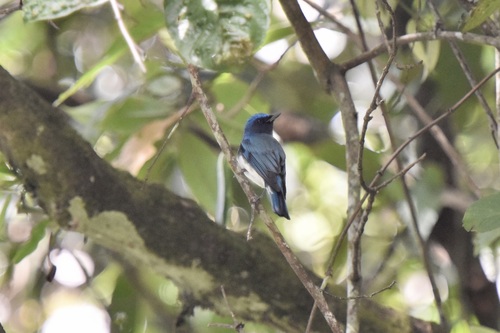 blue-and-white flycatcher
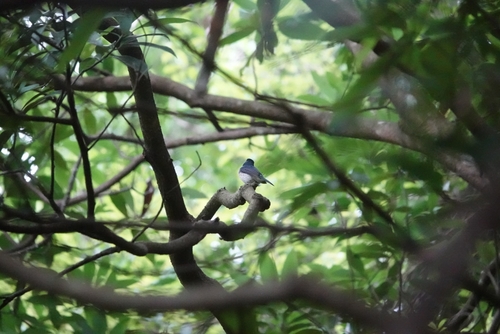 hainan blue flycatcher
Em resumo
A marca de campo mais confiável entre blue-and-white flycatcher e hainan blue flycatcher é a plumagem do macho: Machos de blue-and-white flycatcher exibem partes superiores de um azul cobalto profundo com um rosto e peito superiores pretos nítidos, contrastando com uma barriga branca limpa e uma mancha branca proeminente na base das penas da cauda externa. Machos de hainan blue flycatcher também são azuis acima, mas não têm o forte rosto e peito pretos, e suas partes inferiores são mais uniformemente coloridas, sem a barriga branca marcante. Fêmeas e imaturos de ambas as espécies são marrons, mas fêmeas de blue-and-white flycatcher são maiores e têm uma aparência de cabeça menor. Em voo ou empoleirados, concentre-se no padrão da cauda e na extensão do azul e branco nas partes inferiores para a melhor separação.
Dicas de identificação
- Mancha branca na cauda (todas as idades): Blue-and-white flycatcher apresenta uma base branca proeminente nas penas da cauda externa, especialmente visível em voo ou quando a cauda está aberta. Hainan blue flycatcher não possui essa característica.
- Rosto e peito do macho adulto: Machos de blue-and-white têm um rosto e peito superiores pretos, nitidamente destacados das partes superiores azuis profundas e partes inferiores brancas. Machos de hainan blue são azuis acima, mas não têm rosto ou peito pretos, e suas partes inferiores são menos nitidamente divididas.
- Contraste das partes inferiores (machos adultos): A barriga e o ventre brancos limpos e brilhantes de blue-and-white flycatcher contrastam com o azul e o preto acima. Machos de hainan blue têm partes inferiores mais uniformemente coloridas, sem o branco marcante de blue-and-white.
- Cor das asas do macho imaturo: Machos imaturos de blue-and-white mostram asas azuis em um corpo marrom, semelhante ao de fêmeas. Hainan blue imaturos são overall marrons e não mostram essa mancha azul nas asas.
- Estrutura da fêmea: Fêmeas de blue-and-white flycatcher são maiores e têm um perfil mais delicado e de cabeça menor em comparação com outros flycatchers marrons, incluindo hainan blue. Isso é sutil, mas pode ajudar com a experiência.
- Tamanho e aparência: Blue-and-white é mais robusto e de cauda mais longa, enquanto hainan blue é menor e mais compacto. Isso é mais aparente quando ambas as espécies são vistas na mesma área, mas pode ser útil para observadores experientes.
- Formato do bico e da cabeça: Blue-and-white flycatcher tem um bico proporcionalmente maior e asas mais longas, mas esses são sutis no campo e melhor usados como marcas de apoio.
- Contexto do habitat: Blue-and-white é esperado em florestas temperadas do nordeste da Ásia, enquanto hainan blue é um pássaro de florestas subtropicais/tropicais mais ao sul. Registros fora da área devem exigir cautela extra e verificação cuidadosa dos detalhes da plumagem.
- Canto: Se ouvido, o canto de blue-and-white flycatcher é um assobio curto e melancólico. O canto de hainan blue não é descrito aqui, então não confie nessa marca a menos que esteja familiarizado com ambos.
- Armadilhas com imaturos: Machos imaturos de blue-and-white podem ser confusos, pois combinam asas azuis com uma plumagem marrom. Sempre verifique a mancha branca na cauda e o tamanho geral.
- Visões empoleiradas vs. em voo: A mancha branca na cauda de blue-and-white é mais óbvia em voo ou quando a cauda está aberta. Se apenas visões empoleiradas estiverem disponíveis, concentre-se no padrão do rosto e no contraste das partes inferiores.
- Contexto sazonal: Blue-and-white é migratório e pode aparecer fora de sua área de reprodução durante a migração. Hainan blue é mais residente em sua área. Considere a época do ano ao avaliar vagantes.
- Confusão das fêmeas: As fêmeas de ambas as espécies são marrons e pálidas por baixo, mas as fêmeas de blue-and-white são maiores e têm uma aparência mais delicada e de cabeça pequena. Use tamanho e estrutura como marcas de apoio.
- Sem painel de asa ou padrão de asa superior confiável: Nenhuma das espécies é descrita como tendo um painel de asa diagnóstico ou padrão de asa superior nessas notas, então concentre-se no contraste da cauda e das partes inferiores.
- Quando em dúvida: Se o pássaro não tiver uma mancha branca na cauda e for pequeno e compacto, é mais provável que seja hainan blue. Se mostrar uma mancha branca na cauda e for maior com um rosto preto (macho), é blue-and-white.
Tamanho
Blue-and-white flycatcher é a espécie maior, com uma média de cerca de 23 g de massa corporal e medindo 16–17 cm de comprimento [wikidata][wikipedia]. Hainan blue flycatcher é distintamente menor e mais delicado, embora medições precisas não sejam fornecidas aqui. No campo, blue-and-white frequentemente parece mais robusto e de cauda mais longa, especialmente em comparação com o mais compacto hainan blue.
Plumagem
-
Machos adultos: Machos de blue-and-white flycatcher são de um azul cobalto profundo acima, com um rosto e peito pretos, e uma barriga e ventres brancos limpos. Eles também apresentam uma mancha branca proeminente na base das penas da cauda externa, que pode ser visível em voo ou quando a cauda está aberta. Machos de hainan blue flycatcher são azuis acima, mas não têm o rosto e peito pretos, e suas partes inferiores são mais uniformemente coloridas, com menos contraste entre a garganta/peito e a barriga.
-
Fêmeas e imaturos: As fêmeas de ambas as espécies são marrons acima e pálidas abaixo, mas as fêmeas de blue-and-white flycatcher são maiores e têm um perfil de cabeça menor. Machos imaturos de blue-and-white têm asas azuis, mas são de outra forma marrons como as fêmeas, enquanto jovens hainan blue flycatchers também são marrons, mas não têm a distinta mancha azul nas asas dos machos imaturos de blue-and-white. A mancha branca na cauda é uma marca confiável para blue-and-white em todas as idades, especialmente em voo.
-
Padrão de voo/asa: A base branca das penas da cauda externa é uma característica única de blue-and-white flycatcher, visível em voo ou quando a cauda está aberta. Hainan blue não possui essa marca.
Comportamento
Ambas as espécies são típicos flycatchers, frequentemente saltando de poleiros para capturar insetos. Blue-and-white flycatcher pode parecer mais robusto e deliberado em seus movimentos, enquanto hainan blue flycatcher é geralmente mais ativo e ágil, refletindo seu tamanho menor. No entanto, as diferenças comportamentais são sutis e geralmente não são diagnósticas sem uma comparação próxima.
Habitat
Blue-and-white flycatcher se reproduz em florestas temperadas do Japão, Coreia, nordeste da China e Extremo Oriente Russo, frequentemente em matas maduras. Hainan blue flycatcher é nativo do sul da China, Hainan e Indochina, preferindo habitats florestais subtropicais ou tropicais. A sobreposição é mínima, mas vagantes podem ocorrer, então o habitat sozinho nem sempre é conclusivo.
Voz
Blue-and-white flycatcher tem uma curta e melancólica série de assobios. Nenhum detalhe vocal é fornecido para hainan blue flycatcher nessas notas, então a voz não é um separador confiável aqui.
blue-and-white flycatcher · hainan blue flycatcher · Minhas aves difíceis