

Motmot

オオルリ 対 ハイナンヒメアオヒタキ

Cyanoptila cyanomelana 対 Cyornis hainanus

オオルリとハイナンヒメアオヒタキのクイズ
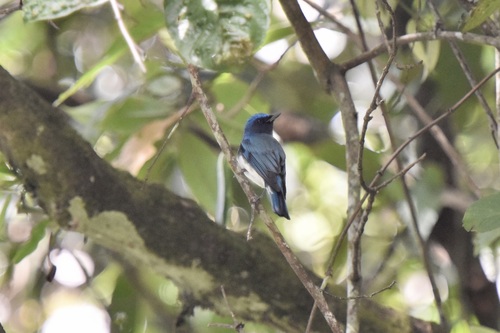
オオルリ (Cyanoptila cyanomelana) オオルリ
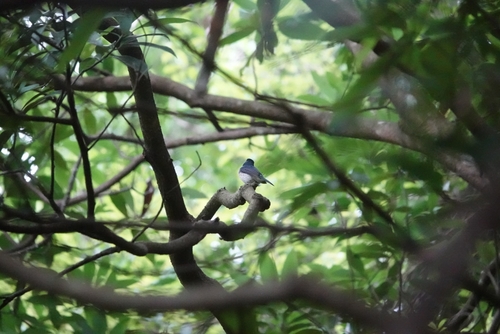
ハイナンヒメアオヒタキ (Cyornis hainanus) ハイナンヒメアオヒタキ

メディア

読み込み中…

要点

オオルリとハイナンヒメアオヒタキの最も信頼できるフィールドマークはオスの羽毛です:オオルリのオスは深いコバルトブルーの上面を持ち、鋭い黒い顔と上胸があり、清潔な白い腹部と外尾羽の基部に目立つ白い斑点が対照的です。ハイナンヒメアオヒタキのオスも上面は青いですが、強い黒い顔と胸が欠けており、下部はより均一な色合いで、はっきりとした白い腹部がありません。両種の雌と幼鳥は茶色がかっていますが、オオルリの雌はより大きく、頭が小さく見えます。飛んでいる時や止まっている時は、尾のパターンと下部の青と白の範囲に注目して、最良の識別を行ってください。

識別のコツ

  1. 白い尾の斑点(全ての年齢): オオルリは外尾羽の基部に目立つ白い斑点を示し、特に飛んでいる時や尾が広がっている時に見えます。ハイナンヒメアオヒタキはこの特徴が全くありません。
  2. 成鳥オスの顔と胸: オオルリのオスは黒い顔と上胸を持ち、深い青の上面と白い下部からはっきりと区別されます。ハイナンヒメアオヒタキのオスは上面が青いですが、黒い顔や胸がなく、下部はそれほどはっきりと分かれていません。
  3. 下部のコントラスト(成鳥オス): オオルリの清潔で明るい白い腹部と肛門は、上の青と黒と対照的です。ハイナンヒメアオヒタキのオスはより均一な色合いの下部を持ち、オオルリのはっきりとした白が欠けています。
  4. 幼鳥オスの翼の色: 幼鳥のオオルリのオスは、他は茶色の雌のような体に青い翼を示します。ハイナンヒメアオヒタキの幼鳥は全体的に茶色がかっており、この青い翼の斑点は示しません。
  5. 雌の構造: オオルリの雌はより大きく、他の茶色のヒタキ類、特にハイナンヒメアオヒタキに比べて頭が小さく、より繊細なプロファイルを持っています。これは微妙ですが、経験によって役立つことがあります。
  6. サイズと印象: オオルリはよりがっしりとしており尾が長いですが、ハイナンヒメアオヒタキはより小さく、コンパクトです。これは両種が同じ地域で見られるときに最も明らかですが、経験豊富な観察者には役立つことがあります。
  7. くちばしと頭の形: オオルリは相対的に大きなくちばしと長い翼を持っていますが、これらはフィールドでは微妙で、補助的なマークとして使用するのが最適です。
  8. 生息地の文脈: オオルリは北東アジアの温帯林で期待されますが、ハイナンヒメアオヒタキは南の亜熱帯/熱帯林の鳥です。範囲外の記録は特別な注意を促し、羽毛の詳細を慎重に確認する必要があります。
  9. 歌: 聞こえた場合、オオルリの歌は短く、メランコリックな口笛です。ハイナンヒメアオヒタキの歌はここでは説明されていないので、両方に精通していない限り、このマークに頼らないでください。
  10. 幼鳥に関する落とし穴: 幼鳥のオオルリのオスは混乱を招くことがあります。青い翼を持ちながら、他は茶色の羽毛を持っています。常に白い尾の斑点と全体のサイズを確認してください。
  11. 止まっている時と飛んでいる時の視点: オオルリの白い尾の斑点は、飛んでいる時や尾が広がっている時に最も明らかです。止まっている視点しかない場合は、顔のパターンと下部のコントラストに注目してください。
  12. 季節的文脈: オオルリは渡り鳥であり、渡りの際に繁殖範囲外に現れることがあります。ハイナンヒメアオヒタキはその範囲内でより常駐しています。迷鳥を評価する際には、時期を考慮してください。
  13. 雌の混乱: 両種の雌は茶色がかっており、下部は淡いですが、オオルリの雌はより大きく、より繊細で小さな頭の外観を持っています。サイズと構造を補助的なマークとして使用してください。
  14. 信頼できる翼のパネルや上翼のパターンがない: どちらの種もこれらのメモでは診断的な翼のパネルや上翼のパターンを持っているとは説明されていないので、尾と下部のコントラストに注目してください。
  15. 疑問がある場合: 鳥が白い尾の斑点を欠き、小さくてコンパクトであれば、ハイナンヒメアオヒタキの可能性が高いです。白い尾の斑点を示し、黒い顔(オス)で大きければ、オオルリです。

大きさ

オオルリはより大きな種で、体重は平均約23g、長さは16〜17cmです [wikidata][wikipedia]。ハイナンヒメアオヒタキは明らかに小さく、より繊細ですが、ここでは正確な測定値は提供されていません。フィールドでは、オオルリはしばしばよりがっしりとしており、尾が長く見え、特によりコンパクトなハイナンヒメアオヒタキと比較して顕著です。

羽色

行動

両種は典型的なヒタキ類であり、しばしば止まり木から昆虫を捕まえるために飛び出します。オオルリはその動きがより頑丈で意図的に見えることがありますが、ハイナンヒメアオヒタキは一般的により活発で敏捷であり、その小さなサイズを反映しています。しかし、行動の違いは微妙であり、近接比較なしでは通常診断的ではありません。

生息環境

オオルリは日本、韓国、北東中国、ロシア極東の温帯林で繁殖し、成熟した森林に生息します。ハイナンヒメアオヒタキは南中国、海南、インドシナに自生し、亜熱帯または熱帯の森林生息地を好みます。重複は最小限ですが、迷鳥が発生することがあるため、生息地だけでは常に決定的ではありません。

声

オオルリは短く、メランコリックな口笛のシリーズを持っています。ハイナンヒメアオヒタキの音声に関する詳細はこれらのメモには提供されていないため、声はここでは信頼できる区別要因ではありません。

より良い説明を送る

比較と同じ項目を使ってください。文章はすぐに公開されます。

The most reliable field mark between Blue-and-white Flycatcher and Hainan Blue Flycatcher is the male's plumage: Blue-and-white Flycatcher males show deep cobalt blue upperparts with a sharp black face and upper breast, contrasting with a clean white belly and a prominent white patch at the base of the outer tail feathers. Hainan Blue Flycatcher males are also blue above, but lack the strong black face and breast, and their underparts are more uniformly colored without the stark white belly. Females and immatures of both species are brownish, but Blue-and-white Flycatcher females are larger and have a smaller-headed look. In flight or perched, focus on the tail pattern and the extent of blue and white on the underparts for the best separation.

  1. White tail patch (all ages): Blue-and-white Flycatcher shows a prominent white base to the outer tail feathers, especially visible in flight or when the tail is spread. Hainan Blue Flycatcher lacks this feature entirely.
  2. Adult male face and breast: Blue-and-white males have a black face and upper breast, sharply set off from the deep blue upperparts and white underparts. Hainan Blue males are blue above but do not have a black face or breast, and their underparts are less sharply divided.
  3. Underpart contrast (adult males): The clean, bright white belly and vent of Blue-and-white Flycatcher contrasts with the blue and black above. Hainan Blue males have more uniformly colored underparts, lacking the stark white of Blue-and-white.
  4. Immature male wing color: Immature Blue-and-white males show blue wings on an otherwise brown, female-like body. Hainan Blue immatures are brownish overall and do not show this blue wing patch.
  5. Female structure: Blue-and-white Flycatcher females are larger and have a smaller-headed, more delicate profile compared to other brown flycatchers, including Hainan Blue. This is subtle but can help with experience.
  6. Size and jizz: Blue-and-white is bulkier and longer-tailed, while Hainan Blue is smaller and more compact. This is most apparent when both species are seen in the same area, but can be useful for experienced observers.
  7. Bill and head shape: Blue-and-white Flycatcher has a proportionally larger bill and longer wings, but these are subtle in the field and best used as supporting marks.
  8. Habitat context: Blue-and-white is expected in temperate forests of northeast Asia, while Hainan Blue is a bird of subtropical/tropical forests further south. Out-of-range records should prompt extra caution and careful checking of plumage details.
  9. Song: If heard, Blue-and-white Flycatcher's song is a short, melancholic whistle. Hainan Blue's song is not described here, so do not rely on this mark unless familiar with both.
  10. Pitfalls with immatures: Immature Blue-and-white males can be confusing, as they combine blue wings with an otherwise brown plumage. Always check for the white tail patch and overall size.
  11. Perched vs. flight views: The white tail patch of Blue-and-white is most obvious in flight or when the tail is spread. If only perched views are available, focus on face pattern and underpart contrast.
  12. Seasonal context: Blue-and-white is migratory and may appear outside its breeding range during migration. Hainan Blue is more resident in its range. Consider time of year when assessing vagrants.
  13. Female confusion: Both species' females are brownish and pale below, but Blue-and-white females are larger and have a more delicate, small-headed look. Use size and structure as supporting marks.
  14. No reliable wing panel or upperwing pattern: Neither species is described as having a diagnostic wing panel or upperwing pattern in these notes, so focus on tail and underpart contrast.
  15. When in doubt: If the bird lacks a white tail patch and is small and compact, it is more likely Hainan Blue. If it shows a white tail patch and is larger with a black face (male), it is Blue-and-white.

Blue-and-white Flycatcher is the larger species, averaging about 23 g in body mass and measuring 16–17 cm in length [wikidata][wikipedia]. Hainan Blue Flycatcher is distinctly smaller and more delicate, though precise measurements are not provided here. In the field, Blue-and-white often appears bulkier and longer-tailed, especially compared to the more compact Hainan Blue.

  • Adult males: Blue-and-white Flycatcher males are deep cobalt blue above, with a black face and upper breast, and a clean white belly and vent. They also show a prominent white patch at the base of the outer tail feathers, which can be visible in flight or when the tail is spread. Hainan Blue Flycatcher males are blue above but lack the black face and breast, and their underparts are more uniformly colored, with less contrast between the throat/chest and belly.

  • Females and immatures: Both species' females are brownish above and pale below, but Blue-and-white Flycatcher females are larger and have a smaller-headed profile. Immature Blue-and-white males have blue wings but are otherwise brown like females, while young Hainan Blue Flycatchers are also brownish but lack the distinctive blue wing patch of immature Blue-and-white males. The white tail patch is a reliable mark for Blue-and-white at all ages, especially in flight.

  • Flight/wing pattern: The white base to the outer tail feathers is a unique feature of Blue-and-white Flycatcher, visible in flight or when the tail is fanned. Hainan Blue lacks this mark.

Both species are typical flycatchers, often sallying from perches to catch insects. Blue-and-white Flycatcher may appear more robust and deliberate in its movements, while Hainan Blue Flycatcher is generally more active and agile, reflecting its smaller size. However, behavioral differences are subtle and not usually diagnostic without close comparison.

Blue-and-white Flycatcher breeds in temperate forests of Japan, Korea, northeastern China, and the Russian Far East, often in mature woodland. Hainan Blue Flycatcher is native to southern China, Hainan, and Indochina, preferring subtropical or tropical forest habitats. Overlap is minimal, but vagrants can occur, so habitat alone is not always conclusive.

Blue-and-white Flycatcher has a short, melancholic series of whistles. No vocal details are provided for Hainan Blue Flycatcher in these notes, so voice is not a reliable separator here.

変更を破棄しますか?

保存していない編集があります。今離れると失われます。

オオルリ · ハイナンヒメアオヒタキ · 苦手な鳥