

airo-d'asa-branca vs airo
Cepphus grylle versus Uria aalge
Jogue um quiz com airo-d'asa-branca e airo
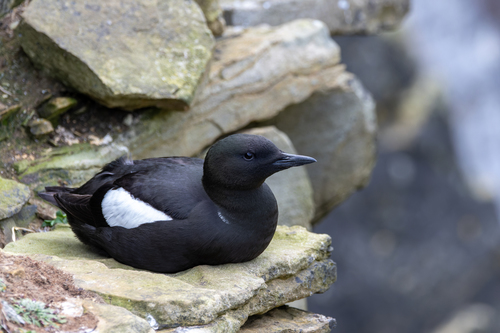 airo-d'asa-branca
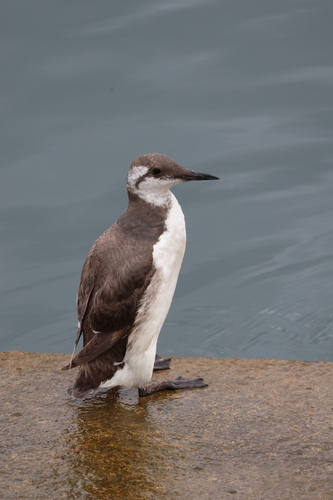 airo
Em resumo
A marca de campo mais confiável entre airo-d'asa-branca e airo é a ousada mancha branca na asa do airo-d'asa-branca, que está presente em todas as idades e estações e se destaca em voo ou em repouso. Aves juvenis e imaturas de airo-d'asa-branca apresentam manchas cinzas ou marrons dentro dessa mancha branca, enquanto airo nunca apresenta uma mancha branca sólida na asa em qualquer idade. Estruturalmente, o airo-d'asa-branca é muito menor e mais compacto, com pernas e pés vermelhos-corais brilhantes (especialmente no verão), em comparação com o airo, que é muito maior, com corpo mais longo e pernas mais escuras. No inverno, o airo-d'asa-branca torna-se pálido e manchado por cima, mas sempre mantém a mancha branca na asa, enquanto o airo apresenta um rosto e garganta brancos com uma faixa ocular escura, mas sem branco nas asas. Ambas as espécies podem ser vistas em costas rochosas, mas o airo-d'asa-branca é mais frequentemente solitário ou em pares, enquanto o airo forma colônias densas.
Dicas de identificação
- Mancha branca na asa (todas as idades, todas as estações): O airo-d'asa-branca sempre mostra uma grande e ousada mancha branca na asa superior, visível em voo e em repouso. O airo nunca mostra essa marca em qualquer idade.
- Juvenil/imatura de airo-d'asa-branca: Procure por manchas cinzas ou marrons dentro da mancha branca na asa—isso é único e visível mesmo à distância. Os juvenis de airo têm asas uniformemente escuras.
- Tamanho e forma: O airo-d'asa-branca é muito menor, mais compacto e com pescoço mais curto. O airo é maior, mais pesado e mais alongado, com um bico e corpo mais longos.
- Cor das pernas e pés: No verão, o airo-d'asa-branca tem pernas e pés vermelhos-corais brilhantes, que são impressionantes se vistos bem. As pernas do airo são cinzas-escuras ou negras e nunca vermelhas brilhantes.
- Bico: O airo-d'asa-branca tem um bico fino e preto; o bico do airo também é fino e escuro, mas parece proporcionalmente mais longo e pesado devido à cabeça e corpo maiores.
- Plumagem de reprodução: O airo-d'asa-branca é todo preto com uma mancha branca na asa; o airo é preto (ou marrom-escuro no sul) por cima e branco por baixo, sem branco nas asas.
- Plumagem não reprodutiva/invernal: O airo-d'asa-branca torna-se cinza pálido e branco por cima com padrão listrado, mas sempre mantém a mancha branca na asa. O airo mostra um rosto e garganta brancos com uma faixa ocular escura, sem branco nas asas, e às vezes um anel ocular branco e linha 'bridled'.
- Silhueta em voo: O airo-d'asa-branca parece compacto com asas arredondadas e pescoço curto; o airo parece mais longo, mais esbelto e mais pontudo em voo.
- Habitat e contexto: O airo-d'asa-branca é frequentemente visto sozinho ou em pares perto de costas rochosas ou entre rochas; o airo geralmente está em colônias densas em penhascos durante a estação de reprodução.
- Comportamento: O airo-d'asa-branca pode ser visto carregando peixes transversalmente no bico por longos períodos; o airo carrega um único peixe longitudinalmente.
- Vocalização: Ouça o assobio agudo do airo-d'asa-branca (especialmente a curta distância na estação de reprodução) em comparação com o rosnado 'murrrr' das colônias de airo.
- Confusão de primeiro inverno: O airo-d'asa-branca de primeiro inverno ainda mostra a mancha branca na asa; o airo de primeiro inverno se parece com o adulto no inverno, com rosto branco e faixa ocular escura, mas sem mancha na asa.
- Morfologia bridled: Se você ver um anel ocular branco e linha em um airo, é a morfologia 'bridled' (aves do norte), mas isso é limitado à cabeça e não envolve as asas.
- Boca/gape vermelha: No verão, o airo-d'asa-branca mostra um gape vermelho brilhante ao chamar; a boca do airo não é notavelmente colorida.
- Armadilhas: À longa distância ou em luz fraca, o tamanho pode ser enganoso, mas a presença ou ausência da mancha branca na asa é sempre diagnóstica se vista bem.
Tamanho
O airo-d'asa-branca é significativamente menor e mais leve, com uma massa corporal média de 381 g [wikidata], em comparação com o airo, que normalmente pesa entre 775–1.250 g e mede 38–46 cm de comprimento com uma envergadura de 61–73 cm [wikipedia]. O airo-d'asa-branca é uma ave compacta e de pescoço curto, enquanto o airo é mais longo, mais pesado e mais alongado em perfil. No campo, essa diferença de tamanho é óbvia quando ambos são vistos juntos, mas menos à distância ou individualmente.
Plumagem
- Juvenil/Imatura (airo-d'asa-branca): Sempre mostra uma grande mancha branca na asa, muitas vezes com manchas cinzas ou marrons dentro da mancha—isso é visível mesmo à distância e é único entre os auks. As partes inferiores são mais claras, e o resto do corpo é escuro.
- Juvenil/Imatura (airo): Nunca mostra uma mancha branca na asa; as asas superiores são uniformemente escuras. As aves de primeiro inverno se parecem com adultos na plumagem de inverno, com rosto e garganta brancos, faixa ocular escura e sem branco nas asas.
- Adulto de Reprodução (airo-d'asa-branca): Notavelmente preto no geral com uma ousada mancha branca na asa superior; pernas, pés e interior da boca são vermelhos-corais brilhantes. O bico é preto e fino.
- Adulto de Reprodução (airo): Preto (ou marrom-escuro em aves do sul) por cima, branco por baixo, com um bico fino e escuro e pernas escuras. Sem branco nas asas. Algumas aves do norte mostram um anel ocular branco e linha (morfologia "bridled"), mas isso é limitado à cabeça.
- Adulto Não-Reprodutivo/Invernal (airo-d'asa-branca): Cinza pálido e branco por cima com padrão listrado, partes inferiores brancas, pernas/pés vermelhos pálidos, mas sempre retém a mancha branca na asa.
- Adulto Não-Reprodutivo/Invernal (airo): Rosto e garganta brancos com uma espinha escura atrás do olho, partes superiores escuras e sem branco nas asas. Listras nas flancos podem estar presentes. As aves de primeiro ano são semelhantes, muitas vezes retendo mais branco ao redor da garganta.
Comportamento
O airo-d'asa-branca é tipicamente visto sozinho ou em pares, frequentemente perto de costas rochosas ou entre rochas, e é menos gregário que o airo. Ele se alimenta mergulhando perto do fundo do mar e pode ser visto carregando peixes transversalmente no bico por longos períodos. O airo é altamente colonial, formando agregações de reprodução densas em penhascos, e raramente é visto sozinho durante a estação de reprodução. Ele também carrega peixes no bico, mas apenas um de cada vez, segurando-o longitudinalmente. Ambas as espécies mergulham em busca de presas, mas o airo-d'asa-branca está mais associado a presas bentônicas (que habitam o fundo) e florestas de algas, enquanto o airo se alimenta mais em águas abertas.
Habitat
Ambas as espécies se reproduzem em costas e ilhas rochosas, mas o airo-d'asa-branca é mais provável de ser visto em pares solitários ou pequenos grupos, frequentemente nidificando em fendas ou entre rochas acima da linha da maré alta. É residente em grande parte de sua área de distribuição, com algumas populações árticas migrando para o sul no inverno. O airo se reproduz em grandes colônias densas em penhascos íngremes ou ilhas e passa a maior parte de sua vida não reprodutiva no mar, apenas vindo à terra para reproduzir. No inverno, ambos podem ser vistos em alto-mar, mas o airo-d'asa-branca é mais provável de ser encontrado perto da costa durante todo o ano.
Voz
O airo-d'asa-branca emite um assobio agudo durante a estação de reprodução, e o gape vermelho é proeminente ao chamar. O chamado principal do airo é um "murrrr" alto e rosnado nas colônias, enquanto os filhotes emitem um assobio agudo "willee". No campo, o chamado do airo-d'asa-branca é mais musical e menos áspero do que o ruído da colônia do airo.