

Arao Aliblanco vs Arao Común
Cepphus grylle frente a Uria aalge
Juega un quiz con Arao Aliblanco y Arao Común
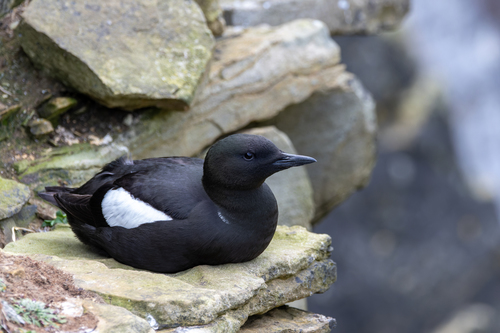 Arao Aliblanco
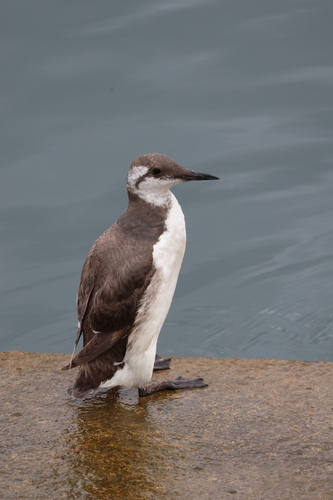 Arao Común
En breve
La marca de campo más confiable entre el Arao Aliblanco y el Arao Común es la audaz mancha blanca en el ala del Arao Aliblanco, que está presente en todas las edades y estaciones y se destaca en vuelo o en reposo. Los Araos Aliblancos juveniles e inmaduros muestran manchas grises o marrones dentro de esta mancha blanca, mientras que los Araos Comunes nunca muestran una mancha blanca sólida en el ala a ninguna edad. Estructuralmente, el Arao Aliblanco es mucho más pequeño y compacto, con patas y pies de un brillante color rojo coral (especialmente en verano), en comparación con el Arao Común, que es mucho más grande, de cuerpo más largo y con patas más oscuras. En invierno, el Arao Aliblanco se vuelve pálido y moteado por encima, pero siempre mantiene la mancha blanca en el ala, mientras que el Arao Común muestra una cara y garganta blancas con una franja ocular oscura, pero sin blanco en las alas. Ambas especies pueden verse en costas rocosas, pero el Arao Aliblanco es más a menudo solitario o en parejas, mientras que el Arao Común forma colonias densas.
Consejos de identificación
- Mancha blanca en el ala (todas las edades, todas las estaciones): El Arao Aliblanco siempre muestra una gran y audaz mancha blanca en el ala superior, visible en vuelo y en reposo. El Arao Común nunca muestra esta marca a ninguna edad.
- Juvenil/inmaduro Arao Aliblanco: Busca manchas grises o marrones dentro de la mancha blanca en el ala; esto es único y visible incluso a distancia. Los juveniles de Arao Común tienen alas uniformemente oscuras.
- Tamaño y forma: El Arao Aliblanco es mucho más pequeño, más compacto y con cuello más corto. El Arao Común es más grande, más pesado y más alargado, con un pico y cuerpo más largos.
- Color de patas y pies: En verano, el Arao Aliblanco tiene patas y pies de un brillante color rojo coral, que son llamativos si se ven bien. Las patas del Arao Común son de color gris oscuro o negruzco y nunca son de un rojo brillante.
- Pico: El Arao Aliblanco tiene un pico delgado y negro; el pico del Arao Común también es delgado y oscuro, pero parece proporcionalmente más largo y pesado debido a la cabeza y el cuerpo más grandes.
- Plumaje de cría: El Arao Aliblanco es completamente negro con una mancha blanca en el ala; el Arao Común es negro (o marrón oscuro en el sur) por encima y blanco por debajo, sin blanco en las alas.
- Plumaje no reproductor/invernal: El Arao Aliblanco se vuelve gris pálido y blanco por encima con un patrón de rayas, pero siempre mantiene la mancha blanca en el ala. El Arao Común muestra una cara y garganta blancas con una franja ocular oscura, sin blanco en las alas, y a veces un anillo ocular blanco y línea 'bridada'.
- Silhouette de vuelo: El Arao Aliblanco se ve compacto con alas redondeadas y un cuello corto; el Arao Común parece más largo, más delgado y más puntiagudo en vuelo.
- Hábitat y contexto: El Arao Aliblanco se ve a menudo solo o en parejas cerca de costas rocosas o entre rocas; el Arao Común suele estar en colonias densas en acantilados durante la temporada de cría.
- Comportamiento: El Arao Aliblanco puede ser visto llevando peces de lado en el pico durante largos períodos; el Arao Común lleva un solo pez a lo largo.
- Vocalización: Escucha el silbido agudo del Arao Aliblanco (especialmente a corta distancia en la temporada de cría) frente al gruñido 'murrrr' de las colonias de Arao Común.
- Confusión de primer invierno: El Arao Aliblanco de primer invierno aún muestra la mancha blanca en el ala; el Arao Común de primer invierno se parece al adulto invernal, con cara blanca y franja ocular oscura, pero sin mancha en el ala.
- Morfología bridada: Si ves un anillo ocular blanco y línea en un Arao Común, es la morfología 'bridada' (pájaros del norte), pero esto está limitado a la cabeza y no involucra las alas.
- Boca/grieta roja: En verano, el Arao Aliblanco muestra una grieta roja brillante al llamar; la boca del Arao Común no tiene un color notable.
- Trampas: A larga distancia o en mala luz, el tamaño puede ser engañoso, pero la presencia o ausencia de la mancha blanca en el ala siempre es diagnóstica si se ve bien.
Tamaño
El Arao Aliblanco es significativamente más pequeño y ligero, con una masa corporal promedio de 381 g [wikidata], en comparación con el Arao Común, que típicamente pesa entre 775 y 1,250 g y mide entre 38 y 46 cm de largo con una envergadura de 61 a 73 cm [wikipedia]. El Arao Aliblanco es un pájaro compacto y de cuello corto, mientras que el Arao Común es más largo, más pesado y más alargado en perfil. En el campo, esta diferencia de tamaño es obvia cuando ambos se ven juntos, pero menos a distancia o individualmente.
Plumaje
- Juvenil/Inmaduro (Arao Aliblanco): Siempre muestra una gran mancha blanca en el ala, a menudo con manchas grises o marrones dentro de la mancha; esto es visible incluso a distancia y es único entre los alcas. Las partes inferiores son más pálidas y el resto del cuerpo es oscuro.
- Juvenil/Inmaduro (Arao Común): Nunca muestra una mancha blanca en el ala; las alas superiores son uniformemente oscuras. Los pájaros de primer invierno se parecen a los adultos en plumaje invernal, con cara y garganta blancas, franja ocular oscura y sin blanco en las alas.
- Adulto en Cría (Arao Aliblanco): Notablemente negro en general con una audaz mancha blanca en el ala superior; patas, pies y el interior de la boca son de un brillante color rojo coral. El pico es negro y delgado.
- Adulto en Cría (Arao Común): Negro (o marrón oscuro en pájaros del sur) por encima, blanco por debajo, con un pico delgado y oscuro y patas oscuras. Sin blanco en las alas. Algunos pájaros del norte muestran un anillo ocular blanco y línea (morfología "bridada"), pero esto está limitado a la cabeza.
- Adulto No Reproductor/Invernal (Arao Aliblanco): Gris pálido y blanco por encima con un patrón de rayas, partes inferiores blancas, patas/pies de color rojo pálido, pero siempre retiene la mancha blanca en el ala.
- Adulto No Reproductor/Invernal (Arao Común): Cara y garganta blancas con un espolón oscuro detrás del ojo, partes superiores oscuras y sin blanco en las alas. Puede haber rayas en los flancos. Los pájaros de primer año son similares, a menudo reteniendo más blanco alrededor de la garganta.
Comportamiento
El Arao Aliblanco se ve típicamente solo o en parejas, a menudo cerca de costas rocosas o entre rocas, y es menos gregario que el Arao Común. Busca alimento buceando cerca del fondo marino y puede ser visto llevando peces de lado en el pico durante largos períodos. El Arao Común es altamente colonial, formando agregaciones de cría densas en acantilados, y rara vez se ve solo durante la temporada de cría. También lleva peces en el pico, pero solo uno a la vez, sostenido a lo largo. Ambas especies bucean en busca de presas, pero el Arao Aliblanco está más asociado con presas bentónicas (de fondo) y bosques de algas, mientras que el Arao Común busca más en aguas abiertas.
Hábitat
Ambas especies crían en costas y islas rocosas, pero el Arao Aliblanco es más probable que se vea en parejas solitarias o grupos pequeños, a menudo anidando en grietas o entre rocas por encima de la línea de marea alta. Es residente en gran parte de su rango, con algunas poblaciones árticas migrando al sur en invierno. El Arao Común cría en grandes colonias densas en acantilados o islas y pasa la mayor parte de su vida no reproductiva en el mar, solo llegando a tierra para reproducirse. En invierno, ambos pueden verse en alta mar, pero el Arao Aliblanco es más probable que se encuentre cerca de la costa durante todo el año.
Voz
El Arao Aliblanco emite un silbido agudo durante la temporada de cría, y la grieta roja es prominente al llamar. El llamado principal del Arao Común es un fuerte y gruñido "murrrr" en las colonias, mientras que los polluelos emiten un silbido agudo "willee". En el campo, el llamado del Arao Aliblanco es más musical y menos áspero que el ruido de la colonia del Arao Común.