

Motmot

ハジロウミバト 対 ウミガラス

Cepphus grylle 対 Uria aalge

ハジロウミバトとウミガラスのクイズ
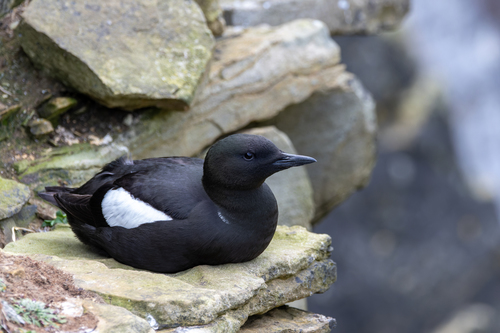
ハジロウミバト (Cepphus grylle) ハジロウミバト
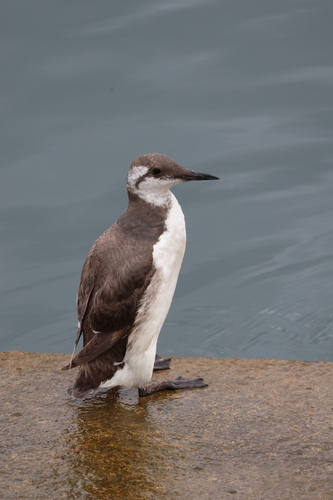
ウミガラス (Uria aalge) ウミガラス

メディア

読み込み中…

要点

ハジロウミバトとウミガラスの最も信頼できるフィールドマークは、ハジロウミバトの大胆な白い翼の斑点で、これはすべての年齢と季節に存在し、飛行中または静止中に目立ちます。幼鳥や未成熟のハジロウミバトは、この白い斑点内に灰色または茶色の斑点を示しますが、ウミガラスはどの年齢でも固体の白い翼の斑点を示しません。構造的には、ハジロウミバトははるかに小さく、よりコンパクトで、明るいコーラルレッドの脚と足(特に夏に)を持ち、対してウミガラスははるかに大きく、体が長く、脚が暗いです。冬には、ハジロウミバトは上面が淡く斑点状になりますが、常に白い翼の斑点を保持し、ウミガラスは白い顔と喉に暗い目のストライプを示しますが、翼には白がありません。両種は岩の多い海岸で見ることができますが、ハジロウミバトはより孤立しているかペアでいることが多く、ウミガラスは密なコロニーを形成します。

識別のコツ

  1. 白い翼の斑点(すべての年齢、すべての季節): ハジロウミバトは常に上翼に大きく大胆な白い斑点を示し、飛行中および静止中に見えます。ウミガラスはどの年齢でもこのマークを示しません。
  2. 幼鳥/未成熟のハジロウミバト: 白い翼の斑点内に灰色または茶色の斑点を探してください—これはユニークで、遠くからでも見えます。ウミガラスの幼鳥は均一に暗い翼を持っています。
  3. サイズと形: ハジロウミバトははるかに小さく、よりコンパクトで、首が短いです。ウミガラスは大きく、重く、より細長く、くちばしと体が長いです。
  4. 脚と足の色: 夏には、ハジロウミバトは明るいコーラルレッドの脚と足を持ち、よく見えると印象的です。ウミガラスの脚は暗い灰色または黒っぽく、決して明るい赤ではありません。
  5. くちばし: ハジロウミバトは細長い黒いくちばしを持っています。ウミガラスのくちばしも細く暗いですが、頭と体が大きいため、相対的に長く重く見えます。
  6. 繁殖羽: ハジロウミバトは全体が黒で白い翼の斑点があります。ウミガラスは上面が黒(または南部の鳥は暗い茶色)で、下面が白で、翼には白がありません。
  7. 非繁殖/冬羽: ハジロウミバトは上面が淡い灰色と白で、縞模様があり、常に白い翼の斑点を保持します。ウミガラスは白い顔と喉に暗い目のストライプを示し、翼には白がなく、時々「ブライドル」白い目のリングとラインが見られます。
  8. 飛行シルエット: ハジロウミバトは丸い翼と短い首を持つコンパクトに見えます。ウミガラスは飛行中に長く、スリムで、より尖った印象を与えます。
  9. 生息地と文脈: ハジロウミバトは岩の多い海岸や岩の間でしばしば一人またはペアで見られます。ウミガラスは繁殖シーズン中に崖の密なコロニーにいることが多いです。
  10. 行動: ハジロウミバトは長時間にわたり、くちばしで魚を横に持っているのが見られることがあります。ウミガラスは一度に一匹の魚を縦に持ちます。
  11. 鳴き声: ハジロウミバトの高音の笛(特に繁殖シーズン中の近距離で)とウミガラスのコロニーのうなり声「ムルル」を聞いてください。
  12. 初冬の混乱: 初冬のハジロウミバトはまだ白い翼の斑点を示します。初冬のウミガラスは成鳥の冬羽のように見え、白い顔と暗い目のストライプがありますが、翼の斑点はありません。
  13. ブライドル型: ウミガラスに白い目のリングとラインが見られた場合、それは「ブライドル」型(北部の鳥)ですが、これは頭に限られ、翼には関与しません。
  14. 赤い口/開口部: 夏には、ハジロウミバトは呼ぶときに明るい赤い開口部を示します。ウミガラスの口は特に色が目立ちません。
  15. 落とし穴: 遠距離または悪い光の中では、サイズが誤解を招くことがありますが、白い翼の斑点の有無は、よく見れば常に診断的です。

大きさ

ハジロウミバトは平均体重381 g [wikidata]で、ウミガラスは通常775–1,250 gで、38–46 cmの長さと61–73 cmの翼幅を持つため、はるかに小さく軽いです [wikipedia]。ハジロウミバトはコンパクトで短い首の鳥ですが、ウミガラスは長く、重く、プロファイルがより細長いです。フィールドでは、両者が一緒に見られるとこのサイズの違いは明らかですが、遠くからや単独で見るとそれほどではありません。

羽色

行動

ハジロウミバトは通常、一人またはペアで見られ、岩の多い海岸や岩の間に近いことが多く、ウミガラスよりも社交的ではありません。海底近くで潜水して餌を探し、長時間にわたり、くちばしで魚を横に持っているのが見られることがあります。ウミガラスは非常にコロニアルで、崖に密な繁殖集団を形成し、繁殖シーズン中はめったに一人で見られません。ウミガラスもくちばしで魚を持ちますが、一度に一匹だけ、縦に持ちます。両種は獲物を求めて潜水しますが、ハジロウミバトは底生(底に生息する)獲物や海藻の森により関連しており、ウミガラスはより開けた水域で餌を探します。

生息環境

両種は岩の多い海岸や島で繁殖しますが、ハジロウミバトは孤立したペアや小さな群れで見られる可能性が高く、高潮線の上の隙間や岩の間に巣を作ることが多いです。多くの範囲で常駐しており、一部の北極の個体群は冬に南に移動します。ウミガラスは急な崖や島に大きな密なコロニーで繁殖し、非繁殖期のほとんどを海で過ごし、繁殖のためにのみ陸に来ます。冬には、両者は沖合で見ることができますが、ハジロウミバトは年間を通じて海岸近くで見られる可能性が高いです。

声

ハジロウミバトは繁殖シーズン中に高音の笛を出し、呼ぶときに赤い開口部が目立ちます。ウミガラスの主な鳴き声は、コロニーでの大きなうなり声「ムルル」であり、雛は高音の「ウィリー」という笛を出します。フィールドでは、ハジロウミバトの鳴き声はウミガラスのコロニーの音よりも音楽的で、あまり厳しくありません。

より良い説明を送る

比較と同じ項目を使ってください。文章はすぐに公開されます。

The most reliable field mark between Black Guillemot and Common Guillemot is the bold white wing patch of Black Guillemot, which is present in all ages and seasons and stands out in flight or at rest. Juvenile and immature Black Guillemots show grey or brown spotting within this white patch, while Common Guillemots never show a solid white wing patch at any age. Structurally, Black Guillemot is much smaller and more compact, with bright coral-red legs and feet (especially in summer), versus the much larger, longer-bodied, and darker-legged Common Guillemot. In winter, Black Guillemot becomes pale and mottled above but always keeps the white wing patch, while Common Guillemot shows a white face and throat with a dark eye-stripe but no white on the wings. Both species may be seen on rocky coasts, but Black Guillemot is more often solitary or in pairs, while Common Guillemot forms dense colonies.

  1. White wing patch (all ages, all seasons): Black Guillemot always shows a large, bold white patch on the upperwing, visible in flight and at rest. Common Guillemot never shows this mark at any age.
  2. Juvenile/immature Black Guillemot: Look for grey or brown spotting within the white wing patch—this is unique and visible even at a distance. Common Guillemot juveniles have uniformly dark wings.
  3. Size and shape: Black Guillemot is much smaller, more compact, and shorter-necked. Common Guillemot is larger, heavier, and more elongated, with a longer bill and body.
  4. Leg and foot color: In summer, Black Guillemot has bright coral-red legs and feet, which are striking if seen well. Common Guillemot's legs are dark grey or blackish and never bright red.
  5. Bill: Black Guillemot has a slender, black bill; Common Guillemot's bill is also thin and dark but appears proportionally longer and heavier due to the larger head and body.
  6. Breeding plumage: Black Guillemot is all black with a white wing patch; Common Guillemot is black (or dark brown in the south) above and white below, with no white on the wings.
  7. Non-breeding/winter plumage: Black Guillemot becomes pale grey and white above with barred patterning but always keeps the white wing patch. Common Guillemot shows a white face and throat with a dark eye-stripe, no white on wings, and sometimes a 'bridled' white eye-ring and line.
  8. Flight silhouette: Black Guillemot looks compact with rounded wings and a short neck; Common Guillemot appears longer, slimmer, and more pointed in flight.
  9. Habitat and context: Black Guillemot is often seen alone or in pairs near rocky shores or among boulders; Common Guillemot is usually in dense colonies on cliffs during breeding season.
  10. Behavior: Black Guillemot may be seen carrying fish crosswise in the bill for long periods; Common Guillemot carries a single fish lengthwise.
  11. Vocalization: Listen for Black Guillemot's high-pitched whistle (especially at close range in breeding season) versus the growling 'murrrr' of Common Guillemot colonies.
  12. First-winter confusion: First-winter Black Guillemot still shows the white wing patch; first-winter Common Guillemot looks like adult winter, with white face and dark eye-stripe but no wing patch.
  13. Bridled morph: If you see a white eye-ring and line on a Common Guillemot, it's the 'bridled' morph (northern birds), but this is limited to the head and does not involve the wings.
  14. Red mouth/gape: In summer, Black Guillemot shows a bright red gape when calling; Common Guillemot's mouth is not notably colored.
  15. Pitfalls: At long range or in poor light, size can be deceptive, but the presence or absence of the white wing patch is always diagnostic if seen well.

Black Guillemot is significantly smaller and lighter, with an average body mass of 381 g [wikidata], compared to Common Guillemot, which typically weighs 775–1,250 g and is 38–46 cm long with a 61–73 cm wingspan [wikipedia]. Black Guillemot is a compact, short-necked bird, while Common Guillemot is longer, heavier, and more elongated in profile. In the field, this size difference is obvious when both are seen together, but less so at a distance or singly.

  • Juvenile/Immature (Black Guillemot): Always shows a large white wing patch, often with grey or brown spotting within the patch—this is visible even at a distance and is unique among auks. Underparts are paler, and the rest of the body is dark.
  • Juvenile/Immature (Common Guillemot): Never shows a white wing patch; upperwings are uniformly dark. First-winter birds look like adults in winter plumage, with white face and throat, dark eye-stripe, and no white on the wings.
  • Adult Breeding (Black Guillemot): Strikingly black overall with a bold white upperwing patch; legs, feet, and mouth interior are bright coral-red. Bill is black and slender.
  • Adult Breeding (Common Guillemot): Black (or dark brown in southern birds) above, white below, with a thin dark bill and dark legs. No white on the wings. Some northern birds show a white eye-ring and line ("bridled" morph), but this is limited to the head.
  • Adult Non-breeding/Winter (Black Guillemot): Pale grey and white above with barred pattern, white underparts, pale red legs/feet, but always retains the white wing patch.
  • Adult Non-breeding/Winter (Common Guillemot): White face and throat with a dark spur behind the eye, dark upperparts, and no white on the wings. Flank streaking may be present. First-year birds are similar, often retaining more white around the throat.

Black Guillemot is typically seen singly or in pairs, often close to rocky shores or among boulders, and is less gregarious than Common Guillemot. It forages by diving near the sea floor and may be seen carrying fish crosswise in the bill for long periods. Common Guillemot is highly colonial, forming dense breeding aggregations on cliffs, and is rarely seen alone during the breeding season. It also carries fish in the bill but only one at a time, held lengthwise. Both species dive for prey, but Black Guillemot is more associated with benthic (bottom-dwelling) prey and kelp forests, while Common Guillemot forages more in open water.

Both species breed on rocky coasts and islands, but Black Guillemot is more likely to be seen in solitary pairs or small groups, often nesting in crevices or among boulders above the high tide line. It is a resident in much of its range, with some Arctic populations migrating south in winter. Common Guillemot breeds in large, dense colonies on sheer cliffs or islands and spends most of its non-breeding life at sea, only coming to land to breed. In winter, both may be seen offshore, but Black Guillemot is more likely to be found near the coast year-round.

Black Guillemot gives a high-pitched whistle during the breeding season, and the red gape is prominent when calling. Common Guillemot's main call is a loud, growling "murrrr" at colonies, while chicks give a high-pitched "willee" whistle. In the field, Black Guillemot's call is more musical and less harsh than Common Guillemot's colony noise.

変更を破棄しますか?

保存していない編集があります。今離れると失われます。

ハジロウミバト · ウミガラス · 苦手な鳥