

Black Guillemot vs Uria
Cepphus grylle contro Uria aalge
Fai un quiz con Black Guillemot e Uria
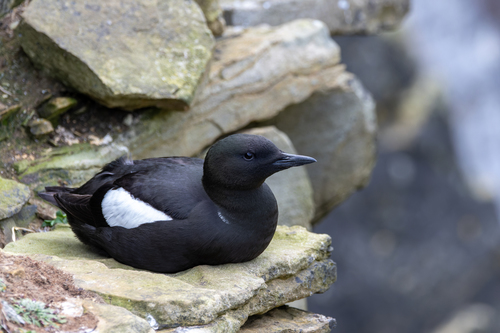 Black Guillemot
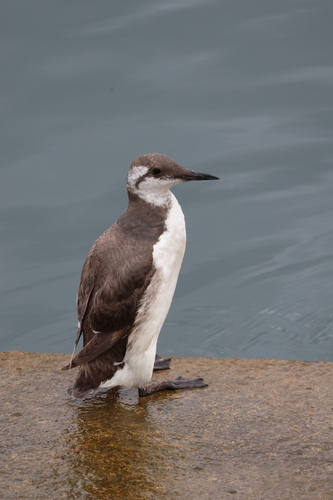 Uria
In breve
Il segno distintivo più affidabile tra Black Guillemot e Uria è la grande macchia bianca sulle ali del Black Guillemot, presente in tutte le età e stagioni e che si distingue in volo o a riposo. I Black Guillemot giovani e immaturi mostrano macchie grigie o marroni all'interno di questa macchia bianca, mentre gli Uria non mostrano mai una macchia bianca solida sulle ali a nessuna età. Strutturalmente, il Black Guillemot è molto più piccolo e compatto, con gambe e piedi di un brillante rosso corallo (soprattutto in estate), rispetto all'Uria, che è molto più grande, con un corpo più lungo e gambe più scure. In inverno, il Black Guillemot diventa pallido e maculato sopra ma mantiene sempre la macchia bianca sulle ali, mentre l'Uria mostra un volto e una gola bianchi con una striscia scura attorno all'occhio ma senza bianco sulle ali. Entrambe le specie possono essere viste su coste rocciose, ma il Black Guillemot è più spesso solitario o in coppie, mentre l'Uria forma colonie dense.
Consigli di identificazione
- Macchia bianca sulle ali (tutte le età, tutte le stagioni): Il Black Guillemot mostra sempre una grande e audace macchia bianca sulla parte superiore dell'ala, visibile in volo e a riposo. L'Uria non mostra mai questo segno a nessuna età.
- Giovane/immaturo Black Guillemot: Cerca macchie grigie o marroni all'interno della macchia bianca—questo è unico e visibile anche da lontano. I giovani Uria hanno ali uniformemente scure.
- Dimensione e forma: Il Black Guillemot è molto più piccolo, più compatto e con un collo più corto. L'Uria è più grande, più pesante e più allungato, con un becco e un corpo più lunghi.
- Colore delle gambe e dei piedi: In estate, il Black Guillemot ha gambe e piedi di un brillante rosso corallo, che sono sorprendenti se visti bene. Le gambe dell'Uria sono grigie scure o nerastre e mai di un rosso brillante.
- Becco: Il Black Guillemot ha un becco snello e nero; il becco dell'Uria è anch'esso sottile e scuro ma appare proporzionalmente più lungo e pesante a causa della testa e del corpo più grandi.
- Piumaggio di riproduzione: Il Black Guillemot è completamente nero con una macchia bianca sulle ali; l'Uria è nera (o marrone scuro nei soggetti meridionali) sopra e bianca sotto, senza bianco sulle ali.
- Piumaggio non riproduttivo/invernale: Il Black Guillemot diventa grigio pallido e bianco sopra con un motivo a barre ma mantiene sempre la macchia bianca sulle ali. L'Uria mostra un volto e una gola bianchi con una striscia scura attorno all'occhio, senza bianco sulle ali, e a volte un anello e una linea bianca 'bridled'.
- Silhouette in volo: Il Black Guillemot appare compatto con ali arrotondate e un collo corto; l'Uria appare più lungo, più snello e più appuntito in volo.
- Habitat e contesto: Il Black Guillemot è spesso visto solo o in coppie vicino a coste rocciose o tra massi; l'Uria è solitamente in colonie dense su scogliere durante la stagione di riproduzione.
- Comportamento: Il Black Guillemot può essere visto trasportare pesci in modo trasversale nel becco per lunghi periodi; l'Uria trasporta un singolo pesce in modo longitudinale.
- Vocalizzazione: Ascolta il fischio acuto del Black Guillemot (soprattutto a distanza ravvicinata durante la stagione di riproduzione) rispetto al ringhiare 'murrrr' delle colonie di Uria.
- Confusione del primo inverno: Il Black Guillemot di primo inverno mostra ancora la macchia bianca sulle ali; l'Uria di primo inverno assomiglia a un adulto in piumaggio invernale, con volto bianco e striscia scura attorno all'occhio ma senza macchia sulle ali.
- Forma bridled: Se vedi un anello e una linea bianca su un Uria, è la forma 'bridled' (uccelli settentrionali), ma questo è limitato alla testa e non coinvolge le ali.
- Bocca/gola rossa: In estate, il Black Guillemot mostra una gola rossa brillante quando chiama; la bocca dell'Uria non è particolarmente colorata.
- Trappole: A lunga distanza o in scarsa illuminazione, la dimensione può essere ingannevole, ma la presenza o l'assenza della macchia bianca sulle ali è sempre diagnostica se vista bene.
Taglia
Il Black Guillemot è significativamente più piccolo e leggero, con una massa corporea media di 381 g [wikidata], rispetto all'Uria, che pesa tipicamente 775–1.250 g ed è lungo 38–46 cm con un'apertura alare di 61–73 cm [wikipedia]. Il Black Guillemot è un uccello compatto e con collo corto, mentre l'Uria è più lungo, più pesante e più allungato nel profilo. Sul campo, questa differenza di dimensione è ovvia quando entrambi sono visti insieme, ma meno evidente a distanza o singolarmente.
Piumaggio
- Giovane/Immaturo (Black Guillemot): Mostra sempre una grande macchia bianca sulle ali, spesso con macchie grigie o marroni all'interno della macchia—questo è visibile anche da lontano ed è unico tra le urie. Le parti inferiori sono più chiare, e il resto del corpo è scuro.
- Giovane/Immaturo (Uria): Non mostra mai una macchia bianca sulle ali; le ali superiori sono uniformemente scure. Gli uccelli di primo inverno assomigliano agli adulti in piumaggio invernale, con volto e gola bianchi, striscia scura attorno all'occhio e senza bianco sulle ali.
- Adulto in riproduzione (Black Guillemot): Completamente nero con una grande macchia bianca sulla parte superiore dell'ala; gambe, piedi e interno della bocca sono di un brillante rosso corallo. Il becco è nero e snello.
- Adulto in riproduzione (Uria): Nero (o marrone scuro negli uccelli meridionali) sopra, bianco sotto, con un becco scuro sottile e gambe scure. Nessun bianco sulle ali. Alcuni uccelli settentrionali mostrano un anello e una linea bianca (forma "bridled"), ma questo è limitato alla testa.
- Adulto non in riproduzione/invernale (Black Guillemot): Grigio pallido e bianco sopra con un motivo a barre, parti inferiori bianche, gambe/piedi rossi pallidi, ma mantiene sempre la macchia bianca sulle ali.
- Adulto non in riproduzione/invernale (Uria): Volto e gola bianchi con una sporgenza scura dietro l'occhio, parti superiori scure e senza bianco sulle ali. La striatura laterale può essere presente. Gli uccelli di primo anno sono simili, spesso mantenendo più bianco attorno alla gola.
Comportamento
Il Black Guillemot è tipicamente visto singolarmente o in coppie, spesso vicino a coste rocciose o tra massi, ed è meno gregario rispetto all'Uria. Si nutre immergendosi vicino al fondo del mare e può essere visto trasportare pesci in modo trasversale nel becco per lunghi periodi. L'Uria è altamente coloniale, formando aggregazioni di riproduzione dense su scogliere, e raramente è visto solo durante la stagione di riproduzione. Trasporta anche pesci nel becco ma solo uno alla volta, tenuto in modo longitudinale. Entrambe le specie si immergono per cercare prede, ma il Black Guillemot è più associato a prede bentoniche (che vivono sul fondo) e foreste di alghe, mentre l'Uria si nutre più in acque aperte.
Habitat
Entrambe le specie nidificano su coste e isole rocciose, ma il Black Guillemot è più probabile che venga visto in coppie solitarie o piccoli gruppi, spesso nidificando in fessure o tra massi sopra la linea di alta marea. È residente in gran parte del suo areale, con alcune popolazioni artiche che migrano a sud in inverno. L'Uria nidifica in grandi colonie dense su scogliere ripide o isole e trascorre la maggior parte della sua vita non riproduttiva in mare, venendo a terra solo per riprodursi. In inverno, entrambe possono essere viste al largo, ma il Black Guillemot è più probabile che venga trovato vicino alla costa tutto l'anno.
Voce
Il Black Guillemot emette un fischio acuto durante la stagione di riproduzione, e la gola rossa è prominente quando chiama. Il richiamo principale dell'Uria è un forte ringhiare "murrrr" nelle colonie, mentre i pulcini emettono un fischio acuto "willee". Sul campo, il richiamo del Black Guillemot è più musicale e meno aspro rispetto al rumore della colonia dell'Uria.