

diablotim vs hawaiian petrel
Pterodroma hasitata versus Pterodroma sandwichensis
Jogue um quiz com diablotim e hawaiian petrel
 diablotim
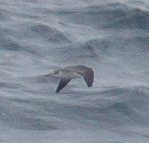 hawaiian petrel
Em resumo
The most reliable field mark to separate Black-capped Petrel from Hawaiian Petrel is the presence of a distinct black cap on the Black-capped Petrel, which often extends to or below the eye, contrasting with its otherwise white nape and rump. Hawaiian Petrel lacks this sharply defined cap, instead showing a more uniformly dark gray-brown head and upperparts. Both are large, long-winged gadfly petrels with similar proportions, but the Black-capped Petrel tends to show a brighter white rump and nape in flight, while the Hawaiian Petrel appears overall duskier and more uniform above. In the field, focus on the head pattern and contrast between upperparts and rump for the best separation, especially in distant or fast-moving birds.
Dicas de identificação
- Black cap (Black-capped Petrel): Look for a sharply defined black cap that may extend below the eye, contrasting with a white nape and rump. This is the most reliable field mark for all ages and morphs of Black-capped Petrel.
- Head pattern (Hawaiian Petrel): Hawaiian Petrel lacks a distinct black cap; its head and upperparts are more uniformly dark gray-brown, blending into the back without strong contrast.
- Rump and nape contrast: Black-capped Petrel shows a bright white rump and nape, especially obvious in flight, while Hawaiian Petrel's rump is less distinctly white and blends more with the back.
- Underwing markings: Both species have some dark underwing markings, but these are not described as diagnostic between the two in the sources.
- Upperparts color: Black-capped Petrel has a grey-brown back and wings with a white rump, creating a strong contrast; Hawaiian Petrel is duskier and more uniform above, with sooty wings and tail.
- Facial pattern: Even in the white-faced morph of Black-capped Petrel, the cap is present; Hawaiian Petrel's face is never as crisply marked.
- Flight silhouette: Both are long-winged and glide in high arcs; silhouette alone is not a reliable separator.
- Size: Black-capped Petrel is slightly heavier, but this is not field-detectable; both appear similarly large and long-winged.
- Bill and feet: No diagnostic differences noted in the available sources.
- Vocalizations: Calls are not useful for separation at sea; both are mostly silent away from breeding grounds.
- Habitat and range: If seen in the Caribbean or western Atlantic, Black-capped Petrel is expected; in the central Pacific or near Hawaii, expect Hawaiian Petrel. Out-of-range records are extremely rare but possible.
- Behavior at nest: Both are nocturnal and secretive at breeding sites, shuffling to burrows; this is not a separator.
- Color morphs: Black-capped Petrel has dark-faced and white-faced morphs, but both retain the black cap. Hawaiian Petrel does not show such variation.
- Juvenile/immature confusion: No age-specific upperwing or flight pattern marks are described for either species; focus on head and rump contrast for all ages.
- Pitfalls: Distant or poor-light views may obscure the cap or rump contrast; in such cases, range and overall impression (crisp vs. uniform) become more important.
Tamanho
Both species are large Pterodroma petrels with long, narrow wings and similar wingspans (Black-capped Petrel: ~94 cm, Hawaiian Petrel: ~91 cm). The Black-capped Petrel is slightly heavier (body mass ~455 g), but this difference is not reliably discernible in the field. Structurally, both appear long-winged and robust, with no strong differences in jizz or silhouette noted in the available sources.
Plumagem
- Juvenile/immature plumage: No specific age-related upperwing patterns or juvenile/first-winter distinctions are described for either species in the sources, so focus remains on adult-type plumage.
- Black-capped Petrel: Shows a striking black cap that may reach below the eye, a white nape and rump, and mostly white underparts with some dark underwing markings. The back and wings are grey-brown, creating strong contrast with the white rump and nape in flight. Two color morphs exist (dark-faced and white-faced), but both retain the black cap feature.
- Hawaiian Petrel: Lacks a sharply defined black cap; the head and upperparts are more uniformly dark gray-brown, with the wings and tail described as sooty. The rump is not as distinctly white, and the overall impression is duskier and less contrasting than Black-capped. Underparts are white, but the head blends more gradually into the upperparts.
- Key contrast: The Black-capped Petrel's black cap and bright white rump/nape are the best field marks; Hawaiian Petrel is more uniform and lacks the crisp head pattern.
Comportamento
Both species are nocturnal at breeding sites and spend most of their time at sea. In flight, both show high, steeply banked arcs and glides typical of Pterodroma petrels. There is no mention of differences in foraging or flight style between the two in the available sources. On land, both are awkward and shuffle to their burrows, not walking well.
Habitat
Black-capped Petrel breeds in the West Indies, mainly Hispaniola, and is seen at sea in the Caribbean and western Atlantic. Hawaiian Petrel is endemic to the Hawaiian Islands, breeding on high volcanic slopes and foraging widely across the North Pacific. Range is the main habitat separator: Black-capped is never expected in the central Pacific, and Hawaiian Petrel is not found in the Caribbean. Both nest in burrows or rock crevices on remote, forested or mountainous islands.
Voz
Both species are mostly silent at sea. On breeding grounds, Black-capped Petrel is known for odd-sounding croaks and calls at night, while Hawaiian Petrel gives a distinctive moaning "oo-ah-oo" and a variety of yaps, barks, and squeals at burrows. These vocalizations are unlikely to be heard at sea and are not useful for separation in most field situations.