

boininha vs white-throated cacholote
Spartonoica maluroides versus Pseudoseisura gutturalis
Jogue um quiz com boininha e white-throated cacholote
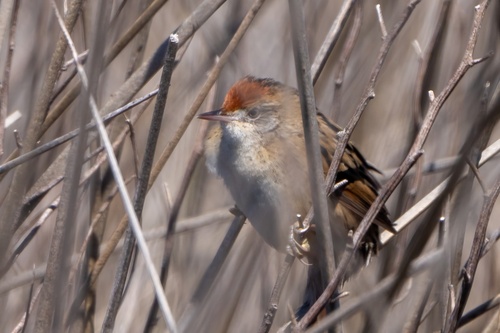 boininha
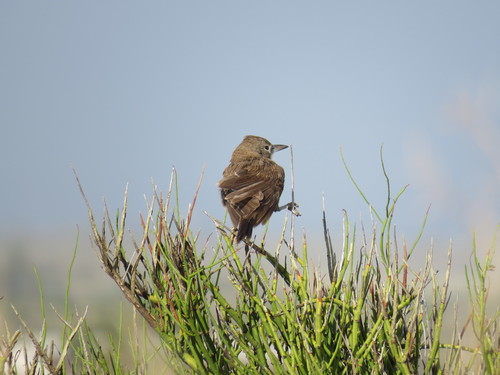 white-throated cacholote
Em resumo
A maneira mais confiável de separar a boininha do white-throated cacholote é pelo tamanho e estrutura: o cacholote é vastamente maior e mais robusto, com uma crista proeminente e um bico pesado, enquanto a boininha é pequena, esbelta e não possui crista. Na plumagem, a boininha apresenta uma coroa ruiva e listras pretas ousadas na nuca e parte superior das costas, contrastando com as partes superiores uniformes de um cinza-marrom escuro do cacholote e sua impressionante garganta branca. Em voo ou empoleirada, o tamanho e a robustez do cacholote são inconfundíveis, enquanto a boininha é delicada e frequentemente vista baixa na vegetação de pântano. O habitat também ajuda: o cacholote prefere florestas secas e arbustos, enquanto a boininha é restrita a pântanos.
Dicas de identificação
- O tamanho é a primeira verificação: O white-throated cacholote é mais de seis vezes mais pesado e quase duas vezes mais longo que a boininha. Se o pássaro parecer grande, robusto e com bico pesado, é o cacholote; se for pequeno e esbelto, é a boininha.
- Com crista vs. sem crista: O cacholote tem uma pequena, mas óbvia crista, visível tanto quando empoleirado quanto às vezes em voo. A boininha não possui crista.
- Cor da coroa: A boininha apresenta uma coroa ruiva distinta, contrastando com seu rosto marrom-areia e supercílios brancos ousados. A coroa do cacholote é do mesmo cinza-marrom escuro que suas costas, sem ruivo ou forte contraste.
- Padrão facial: A boininha tem um supercílios branco e rosto marrom-areia; o cacholote tem um anel ocular branco e lore, mas de outra forma um rosto cinza-marrom escuro.
- Partes superiores: As partes superiores da boininha são de marrom-areia a marrom-oliva com listras pretas ousadas na nuca e parte superior das costas—procure por essas listras em boa luz. O cacholote é uniformemente cinza-marrom escuro acima, sem listras.
- Asas e cauda: As asas da boininha são marrons com canela na base das penas de voo, e a cauda é graduada e pontuda, com um pouco de preto nas penas centrais. As asas e a cauda do cacholote são cinza-fuscous escuro, com bordas mais claras e uma cauda menos pontuda, mais robusta.
- Partes inferiores: A boininha é branca por baixo com um tom de buff ou canela no peito e flancos. O cacholote tem um queixo e garganta brancos, contornados por preto na parte inferior da garganta, com o restante das partes inferiores de um cinza-marrom claro e uma aparência gelada devido às pontas das penas cinza-brancas.
- Confusão juvenil: Os cacholotes juvenis podem apresentar algumas manchas ou listras claras por baixo, mas nunca as listras ousadas ou a coroa ruiva da boininha. Não há padrões de asas juvenis distintivos em nenhuma das espécies.
- Estrutura do bico: O bico do cacholote é grosso, forte e pesado—visivelmente maior que o bico fino e esbelto da boininha.
- Cor das pernas: A boininha tem pernas e pés de um tom claro; as do cacholote são cinzas.
- Comportamento: A boininha é secreta, forrageando baixo em pântanos, raramente empoleirando-se em aberto. O cacholote é mais ousado, frequentemente empoleirando-se no topo de arbustos ou árvores em habitats secos.
- Habitat: Pântanos (boininha) vs. florestas secas e arbustos (cacholote) é um forte separador. Se você ver um pássaro pequeno em um pântano, é quase nunca um cacholote.
- Voz: Se você ouvir um longo zumbido semelhante a um inseto, é provavelmente a boininha. As vocalizações do cacholote não são descritas aqui, mas é improvável que sejam confundidas com um zumbido semelhante a um inseto.
- Sobreposição geográfica: Ambas as espécies ocorrem na Argentina, mas suas preferências de habitat raramente se sobrepõem. Sempre considere o contexto.
- Sexos semelhantes: Ambas as espécies têm sexos semelhantes em plumagem, então todas as marcas de campo se aplicam tanto a machos quanto a fêmeas.
Tamanho
O white-throated cacholote é dramaticamente maior, pesando cerca de 71 g e medindo 22–23 cm de comprimento, tornando-se um dos maiores furnariídeos. Em contraste, a boininha é um pássaro pequeno e leve, pesando apenas 11 g e medindo 13–14,5 cm de comprimento. Essa diferença de tamanho é óbvia em campo, mesmo à distância. O corpo do cacholote é robusto, com um bico grosso e pernas fortes, enquanto a boininha é esbelta e delicada.
Plumagem
- Padrão de asa superior juvenil/imaturo: Nenhum padrão de asa superior ou de voo específico para a idade é descrito para nenhuma das espécies; ambas carecem de painéis ousados ou bordas contrastantes que se destacariam em voo em qualquer idade.
- Plumagem adulta: A boininha tem uma coroa ruiva, listras pretas ousadas na nuca e parte superior das costas, partes superiores de marrom-areia a marrom-oliva, e um supercílios branco. Suas asas são marrons com canela na base das penas de voo, e a cauda é graduada e pontuda. As partes inferiores são brancas com buff ou canela no peito e flancos. Em contraste, o white-throated cacholote é uniformemente cinza-marrom escuro acima, com uma pequena crista, anel ocular branco, e um queixo e garganta brancos impressionantes, contornados por preto na parte inferior da garganta. As partes inferiores do cacholote são de um cinza-marrom mais claro com pontas de penas cinza-brancas geladas, e a cauda é cinza-fuscous escuro com bordas mais claras. Os cacholotes juvenis podem mostrar algumas manchas ou listras claras por baixo, mas não o suficiente para se assemelhar ao padrão da boininha.
Comportamento
A boininha é tipicamente vista forrageando sozinha, movendo-se ágilmente através de gramíneas e juncos densos em pântanos, frequentemente baixa ao chão. Seus movimentos são rápidos e semelhantes aos de um rato. O white-throated cacholote, por outro lado, é um pássaro muito mais conspícuo, frequentemente empoleirando-se em aberto no topo de arbustos ou pequenas árvores em habitats secos. Pode ser visto em pares ou pequenos grupos, e seu comportamento é mais ousado e menos secreto do que o da boininha.
Habitat
A boininha é estritamente um especialista em pântanos, encontrada em canaviais e juncos em pântanos de água doce, salobra ou salgada do sul do Brasil até o Uruguai e o norte da Argentina. O white-throated cacholote é endêmico da Argentina e prefere florestas secas, arbustos e habitats áridos, evitando pântanos. Se você encontrar um pássaro pequeno e ativo em vegetação densa de pântano, é quase certamente uma boininha; um pássaro grande e com crista em um país seco e aberto é o cacholote.
Voz
A canção principal da boininha é descrita como um zumbido semelhante a um gafanhoto, longo e semelhante a um inseto. Não há descrição vocal detalhada para o cacholote aqui, mas é improvável que os dois sejam confundidos pela voz, dado o tamanho maior do cacholote e suas chamadas provavelmente mais altas e variadas, típicas do gênero.