

Bay-capped Wren-Spinetail vs White-throated Cacholote
Spartonoica maluroides contro Pseudoseisura gutturalis
Fai un quiz con Bay-capped Wren-Spinetail e White-throated Cacholote
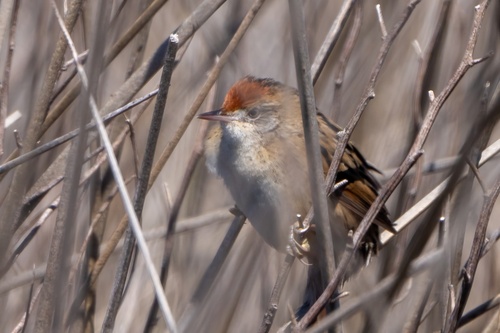 Bay-capped Wren-Spinetail
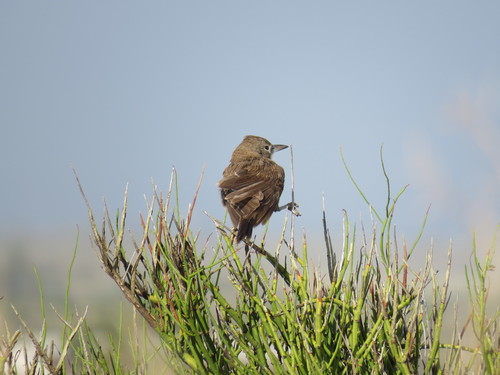 White-throated Cacholote
In breve
Il modo più affidabile per separare il Bay-capped Wren-Spinetail dal White-throated Cacholote è attraverso le dimensioni e la struttura: il cacholote è notevolmente più grande e massiccio, con una cresta prominente e un becco pesante, mentre il wren-spinetail è piccolo, snello e privo di cresta. Nella livrea, il wren-spinetail mostra una corona rugginosa e audaci strisce nere sulla nuca e sulla parte superiore della schiena, in contrasto con la parte superiore uniforme di un grigio-bruno scuro del cacholote e la sua gola bianca e sorprendente. In volo o posato, le dimensioni e l'aspetto robusto del cacholote sono inconfondibili, mentre il wren-spinetail è delicato e spesso visto basso nella vegetazione palustre. L'habitat aiuta anche: il cacholote preferisce le foreste secche e la macchia, mentre il wren-spinetail è limitato alle paludi.
Consigli di identificazione
- La dimensione è il primo controllo: Il White-throated Cacholote è oltre sei volte più pesante e quasi due volte più lungo del Bay-capped Wren-Spinetail. Se l'uccello appare grande, robusto e con un becco pesante, è il cacholote; se è piccolo e snello, è il wren-spinetail.
- Con cresta vs. senza cresta: Il cacholote ha una piccola ma evidente cresta, visibile sia quando è posato che a volte in volo. Il wren-spinetail non ha alcuna cresta.
- Colore della corona: Il wren-spinetail mostra una corona rugginosa distintiva, in contrasto con il suo volto bruno sabbioso e un audace supercilio biancastro. La corona del cacholote è dello stesso grigio-bruno scuro della sua schiena, senza ruggine o forti contrasti.
- Schema facciale: Il wren-spinetail ha un supercilio biancastro e un volto bruno sabbioso; il cacholote ha un anello oculare bianco e lore, ma altrimenti un volto grigio-bruno scuro.
- Parte superiore: Le parti superiori del wren-spinetail sono da sabbia a bruno oliva con audaci strisce nere sulla nuca e sulla parte superiore della schiena: cerca queste strisce in buona luce. Il cacholote è uniformemente grigio-bruno scuro sopra, privo di strisce.
- Ali e coda: Le ali del wren-spinetail sono marroni con cannella alla base delle penne di volo, e la coda è graduata e appuntita, con un po' di nero sulle penne centrali. Le ali e la coda del cacholote sono di un grigio fuscous scuro, con bordi più chiari e una coda meno appuntita e più robusta.
- Parte inferiore: Il wren-spinetail è biancastro sotto con un lavaggio color crema o cannella sul petto e sui fianchi. Il cacholote ha un mento e una gola bianchi bordati di nero nella parte inferiore della gola, con il resto delle parti inferiori di un grigio-bruno pallido e un aspetto gelido dalle punte delle piume grigio-biancastre.
- Confusione giovanile: I cacholote giovanili possono mostrare alcune macchie chiare o striature sotto, ma mai le audaci strisce o la corona rugginosa del wren-spinetail. Non ci sono schemi distintivi delle ali giovanili in nessuna delle due specie.
- Struttura del becco: Il becco del cacholote è spesso, forte e pesante, notevolmente più grande del fine e snello becco del wren-spinetail.
- Colore delle gambe: Il wren-spinetail ha gambe e piedi di un color sabbia chiaro; quelli del cacholote sono grigi.
- Comportamento: Il wren-spinetail è riservato, cerca cibo basso nelle paludi, raramente posandosi in aperto. Il cacholote è più audace, spesso posandosi in cima a cespugli o alberi in habitat secchi.
- Habitat: Paludi (wren-spinetail) vs. foreste secche e macchia (cacholote) è un forte separatore. Se vedi un piccolo uccello in una palude, è quasi mai un cacholote.
- Voce: Se senti un lungo ronzio simile a un insetto, è probabile che sia il wren-spinetail. Le vocalizzazioni del cacholote non sono descritte qui, ma è improbabile che siano confuse con un ronzio simile a un insetto.
- Sovrapposizione geografica: Entrambe le specie si trovano in Argentina, ma le loro preferenze di habitat raramente si sovrappongono. Considera sempre il contesto.
- Sessi simili: Entrambe le specie hanno sessi simili nella livrea, quindi tutti i segni sul campo si applicano sia ai maschi che alle femmine.
Taglia
Il White-throated Cacholote è notevolmente più grande, pesando circa 71 g e misurando 22–23 cm di lunghezza, rendendolo uno dei più grandi furnariidi. Al contrario, il Bay-capped Wren-Spinetail è un piccolo uccello leggero di soli 11 g e lungo 13–14,5 cm. Questa differenza di dimensioni è evidente sul campo, anche a distanza. Il corpo del cacholote è robusto, con un becco spesso e gambe forti, mentre il wren-spinetail è snello e delicato.
Piumaggio
- Schema delle ali superiori giovanili/immaturi: Non è descritto alcun schema delle ali superiori o di volo specifico per età per nessuna delle due specie; entrambe mancano di pannelli audaci o bordi contrastanti che si distinguerebbero in volo a qualsiasi età.
- Livrea adulta: Il Bay-capped Wren-Spinetail ha una corona rugginosa, audaci strisce nere sulla nuca e sulla parte superiore della schiena, parti superiori da bruno sabbioso a bruno oliva e un supercilio biancastro. Le sue ali sono marroni con cannella alla base delle penne di volo, e la coda è graduata e appuntita. Le parti inferiori sono bianche con un lavaggio color crema o cannella sul petto e sui fianchi. Al contrario, il White-throated Cacholote è uniformemente grigio-bruno scuro sopra, con una piccola cresta, un anello oculare bianco e un sorprendente mento e gola bianchi bordati di nero nella parte inferiore della gola. Le parti inferiori del cacholote sono di un grigio-bruno più chiaro con punte di piume grigio-biancastre, e la coda è di un grigio fuscous scuro con bordi più chiari. I cacholote giovanili possono mostrare alcune macchie chiare o striature sotto, ma non abbastanza da somigliare al pattern del wren-spinetail.
Comportamento
Il Bay-capped Wren-Spinetail è tipicamente visto cercare cibo da solo, muovendosi agilmente attraverso le dense erbe palustri e le giunchiglie, spesso basso a terra. I suoi movimenti sono rapidi e simili a quelli di un topo. Il White-throated Cacholote, d'altra parte, è un uccello molto più evidente, spesso posandosi in aperto in cima a cespugli o piccoli alberi in habitat secchi. Può essere visto in coppie o piccoli gruppi, e il suo comportamento è più audace e meno riservato rispetto al wren-spinetail.
Habitat
Il Bay-capped Wren-Spinetail è strettamente un specialista delle paludi, trovato in letti di canne e giunchi in paludi d'acqua dolce, salmastre o salate dal sud del Brasile attraverso l'Uruguay fino al nord dell'Argentina. Il White-throated Cacholote è endemico dell'Argentina e preferisce le foreste secche, la macchia e habitat aridi, evitando le paludi. Se trovi un piccolo uccello attivo nella densa vegetazione palustre, è quasi certamente un wren-spinetail; un grande uccello con cresta in un paese secco e aperto è il cacholote.
Voce
Il canto principale del wren-spinetail è descritto come un ronzio simile a un grillo, lungo e simile a un insetto. Non c'è una descrizione vocale dettagliata per il cacholote qui, ma è improbabile che i due siano confusi dalla voce data la maggiore dimensione del cacholote e le sue probabilmente chiamate più forti e varie tipiche del genere.
Bay-capped Wren-Spinetail · White-throated Cacholote · I miei uccelli difficili