

bahama yellowthroat vs mariquita-de-mascarilha
Geothlypis rostrata versus Geothlypis trichas
Jogue um quiz com bahama yellowthroat e mariquita-de-mascarilha
 bahama yellowthroat
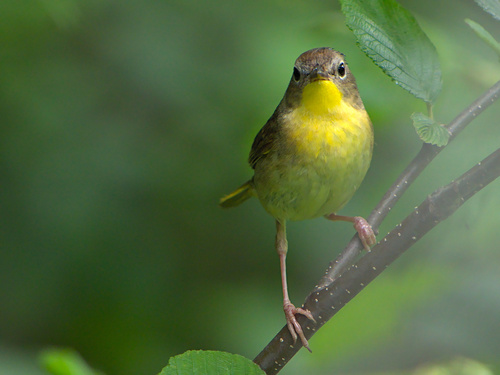 mariquita-de-mascarilha
Em resumo
A marca de campo mais confiável entre bahama yellowthroat e mariquita-de-mascarilha é o tamanho geral e a espessura do bico: bahama yellowthroat é visivelmente maior e tem um bico mais pesado e robusto, enquanto mariquita-de-mascarilha é menor e tem um bico mais delicado. Machos adultos de ambas as espécies exibem uma máscara facial preta, mas a máscara do bahama yellowthroat é mais larga e extensa, com uma coroa e nuca mais cinzentas e com um toque de oliva, e partes inferiores amarelas mais uniformes. Fêmeas e imaturos são mais complicados, mas as fêmeas de bahama yellowthroat mostram uma coroa mais simples e marrons e um bico mais pesado, enquanto as fêmeas de mariquita-de-mascarilha são menores, com partes inferiores mais claras e um rosto mais delicado. O habitat pode ajudar: bahama yellowthroat prefere áreas secas, enquanto mariquita-de-mascarilha é encontrada em áreas mais úmidas e pantanosas. Os movimentos também são uma pista—bahama yellowthroat se move mais devagar e deliberadamente do que a frequentemente furtiva e rápida mariquita-de-mascarilha.
Dicas de identificação
- Tamanho e estrutura do bico: bahama yellowthroat é distintamente maior e mais robusto, com um bico notavelmente mais pesado e grosso. Isso é frequentemente visível mesmo à distância ou quando os pássaros estão lado a lado. mariquita-de-mascarilha é menor e mais delicada em geral.
- Máscara do macho adulto: Machos de bahama yellowthroat têm uma ampla e extensa máscara preta que envolve a testa ao redor do olho até o lado do pescoço, bordada por uma fina linha cinza-clara. Machos de mariquita-de-mascarilha têm uma máscara mais estreita, bordada acima por branco ou cinza, e a máscara não se estende tão para trás.
- Cor da coroa e nuca (machos adultos): bahama yellowthroat apresenta uma coroa e nuca cinza médio com um toque de oliva amarelada, enquanto machos de mariquita-de-mascarilha têm uma coroa oliva mais uniforme sem o contraste cinza.
- Cor das partes inferiores: bahama yellowthroat tem partes inferiores amarelas mais uniformes, com apenas uma leve lavagem oliva nas flancos. mariquita-de-mascarilha tem amarelo na garganta e no peito, mas branco na barriga, criando uma aparência mais bicolor.
- Rosto de fêmeas e imaturos: Fêmeas de bahama yellowthroat têm uma coroa marrom simples, um supercílium fino cinza-claro e coberturas auriculares cinzentas, com um bico mais pesado. Fêmeas e imaturos de mariquita-de-mascarilha são mais simples, menores e têm partes inferiores mais claras, com um rosto mais delicado e sem máscara.
- Machos de primeiro ano: Machos de primeiro ano de mariquita-de-mascarilha podem mostrar uma leve máscara preta, mas nunca é tão larga ou ousada quanto a dos machos de bahama yellowthroat.
- Cor das pernas e íris: Ambas as espécies têm íris escuras e pernas rosadas, então essas características não são úteis para separação.
- Variação de subespécies: Subespécies de bahama yellowthroat podem mostrar diferenças na cor da borda da máscara (por exemplo, amarelo em G. r. coryi) e brilho geral, mas todas são maiores e com bico mais robusto do que mariquita-de-mascarilha.
- Comportamento: bahama yellowthroat se move mais devagar e deliberadamente, frequentemente pousando em locais abertos por mais tempo. mariquita-de-mascarilha é rápida, inquieta e furtiva, raramente ficando parada por muito tempo.
- Habitat: Nas Bahamas, bahama yellowthroat é encontrado em áreas secas, enquanto mariquita-de-mascarilha prefere áreas mais úmidas e pantanosas. A preferência de habitat é uma pista forte quando ambas as espécies estão presentes.
- Vocalizações: A canção de bahama yellowthroat é mais lenta e rica, enquanto a canção de mariquita-de-mascarilha é mais aguda e rápida. O chamado de bahama yellowthroat é menos áspero do que o de mariquita-de-mascarilha.
- Contexto geográfico: bahama yellowthroat é endêmico das Bahamas e é residente, enquanto mariquita-de-mascarilha é um migrante e visitante de inverno nas ilhas. A estação e a localização podem fornecer um contexto importante para a identificação.
- Jizz em voo: Nenhuma diferença distintiva de padrão de asa superior ou de voo é descrita, então confie em tamanho, estrutura e comportamento quando os pássaros estão em movimento.
- Bandos mistos: Se ambas as espécies estiverem presentes, procure o pássaro maior e com bico mais robusto com partes inferiores amarelas mais uniformes (bahama yellowthroat) em comparação com a menor e de barriga mais clara mariquita-de-mascarilha.
- Armadilhas: Fêmeas e imaturos de ambas as espécies são sutis e podem ser muito semelhantes. Use tamanho, estrutura do bico e habitat como suas melhores pistas quando a plumagem não é definitiva.
Tamanho
Bahama yellowthroat é distintamente maior, com cerca de 15 cm de comprimento e 15,1–17,3 g de massa [wikipedia], em comparação com a menor mariquita-de-mascarilha (sem números precisos nas notas fornecidas, mas descrita como menor e com bico mais delicado). O bico do bahama yellowthroat é notavelmente mais pesado e robusto, uma característica estrutural que se destaca em comparação direta. Ambas as espécies são pequenos pássaros, mas essa diferença de tamanho e bico é frequentemente aparente com boas vistas ou em bandos mistos.
Plumagem
Nenhuma diferença de padrão de asa superior ou de voo específica para a idade é descrita para qualquer uma das espécies, então o foco está na plumagem facial e corporal.
- Machos adultos: Ambos têm uma máscara facial preta, mas a máscara do bahama yellowthroat é mais larga, estendendo-se da testa ao redor do olho até o lado do pescoço, e é bordada por uma fina linha cinza-clara. Sua coroa e nuca são cinza médio com um toque de oliva amarelada, e as partes superiores, asas e cauda são verde-oliva amarelada. As partes inferiores são um amarelo rico e uniforme, com apenas uma leve lavagem oliva nas flancos. Machos de mariquita-de-mascarilha têm uma máscara preta mais estreita, bordada acima com branco ou cinza, e suas partes inferiores são amarelas na garganta e no peito, mas brancas na barriga, com menos uniformidade.
- Fêmeas: Fêmeas de bahama yellowthroat têm uma coroa marrom simples, um supercílium fino cinza-claro e coberturas auriculares cinzentas, com partes superiores verde-oliva amareladas e partes inferiores amarelas. Fêmeas de mariquita-de-mascarilha não têm a máscara preta, têm partes inferiores mais claras e são geralmente mais simples, com um rosto mais delicado e menos contraste entre a coroa e o rosto. Imaturos de mariquita-de-mascarilha se assemelham a fêmeas adultas, com machos de primeiro ano mostrando apenas uma máscara leve.
- Subespécies: Subespécies de bahama yellowthroat variam na cor da borda da máscara e brilho, mas todas são maiores e mais robustas do que qualquer mariquita-de-mascarilha.
Comportamento
Bahama yellowthroat tende a se mover mais devagar e deliberadamente através da vegetação, frequentemente parecendo menos inquieto do que mariquita-de-mascarilha. A mariquita-de-mascarilha é conhecida por seus movimentos rápidos e furtivos em vegetação densa e baixa, frequentemente balançando a cauda e mudando de posição rapidamente. Essas diferenças comportamentais podem ser sutis, mas são úteis ao observar pássaros por longos períodos.
Habitat
Bahama yellowthroat é tipicamente encontrado em habitats de upland mais secos dentro das Bahamas, frequentemente em áreas arbustivas ou de mato longe da água. Em contraste, mariquita-de-mascarilha favorece fortemente ambientes mais úmidos e pantanosos, incluindo leitos de junco, prados úmidos e as margens de lagoas e riachos. Nas Bahamas, a mariquita-de-mascarilha é um visitante de inverno e geralmente é encontrada em habitats mais úmidos do que o residente bahama yellowthroat.
Voz
Ambas as espécies têm canções semelhantes, mas a canção de bahama yellowthroat é descrita como mais lenta e rica ('wichety wichety wichit'), enquanto a canção de mariquita-de-mascarilha é mais aguda e rápida ('twichety twichety twichety twich'). O chamado de bahama yellowthroat é um 'tuck' agudo que é menos áspero do que o 'jip' suave de mariquita-de-mascarilha. Bahama yellowthroat também emite um estalido seco e uma 'canção sussurrante' silenciosa com trilos e notas estaladas, que podem ser menos familiares para aqueles acostumados com vocalizações de mariquita-de-mascarilha.
bahama yellowthroat · mariquita-de-mascarilha · Minhas aves difíceis