

Bahama Yellowthroat vs Common Yellowthroat
Geothlypis rostrata contro Geothlypis trichas
Fai un quiz con Bahama Yellowthroat e Common Yellowthroat
 Bahama Yellowthroat
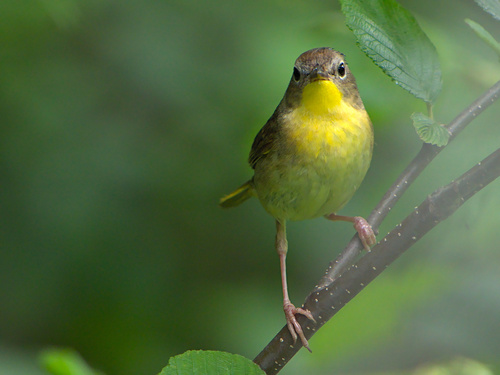 Common Yellowthroat
In breve
Il segno distintivo più affidabile tra Bahama Yellowthroat e Common Yellowthroat è la dimensione complessiva e lo spessore del becco: Bahama Yellowthroat è notevolmente più grande e ha un becco più pesante e robusto, mentre Common Yellowthroat è più piccolo e ha un becco più delicato. I maschi adulti di entrambe le specie presentano una maschera facciale nera, ma la maschera di Bahama Yellowthroat è più ampia e più estesa, con una corona e un nuca più grigie e tendenti all'oliva, e parti inferiori gialle più uniformi. Le femmine e gli immaturi sono più difficili da distinguere, ma le femmine di Bahama Yellowthroat mostrano una corona più semplice e marrone e un becco più pesante, mentre le femmine di Common Yellowthroat sono più piccole, con parti inferiori più chiare e un viso più delicato. L'habitat può aiutare: Bahama Yellowthroat preferisce le zone asciutte, mentre Common Yellowthroat si trova in aree più umide e paludose. Anche i movimenti sono un indizio: Bahama Yellowthroat si muove più lentamente e deliberatamente rispetto al Common Yellowthroat, che è spesso furtivo e veloce.
Consigli di identificazione
- Size and bill structure: Bahama Yellowthroat è distintamente più grande e robusto, con un becco notevolmente più pesante e tozzo. Questo è spesso visibile anche a distanza o quando gli uccelli sono affiancati. Common Yellowthroat è più piccolo e più delicato nel complesso.
- Adult male mask: I maschi di Bahama Yellowthroat hanno una maschera nera ampia ed estesa che avvolge dalla fronte attorno all'occhio fino al lato del collo, bordata da una sottile linea grigio-bianca. I maschi di Common Yellowthroat hanno una maschera più stretta, bordata sopra da bianco o grigio, e la maschera non si estende così indietro.
- Crown and nape color (adult males): Bahama Yellowthroat mostra una corona e un nuca grigio medio con una sfumatura giallo-oliva, mentre i maschi di Common Yellowthroat hanno una corona oliva più uniforme senza il contrasto grigio.
- Underparts color: Bahama Yellowthroat ha parti inferiori gialle più uniformi, con solo una leggera sfumatura oliva sui fianchi. Common Yellowthroat ha giallo sulla gola e sul petto ma bianco sull'addome, creando un aspetto più bicolore.
- Female and immature face: Le femmine di Bahama Yellowthroat hanno una corona marrone semplice, un sottile supercilio grigio-bianco e copritrici auricolari grigie, con un becco più pesante. Le femmine e gli immaturi di Common Yellowthroat sono più semplici, più piccoli e hanno parti inferiori più chiare, con un viso più delicato e senza maschera.
- First-year males: I maschi di Common Yellowthroat al primo anno possono mostrare una leggera maschera nera, ma non è mai così ampia o audace come nei maschi di Bahama Yellowthroat.
- Leg and iris color: Entrambe le specie hanno iridi scure e zampe rosa scure, quindi queste caratteristiche non sono utili per la separazione.
- Subspecies variation: Le sottospecie di Bahama Yellowthroat possono mostrare differenze nel colore del bordo della maschera (ad es., giallo in G. r. coryi) e nella luminosità complessiva, ma tutte sono più grandi e con becco più pesante rispetto a Common Yellowthroat.
- Behavior: Bahama Yellowthroat si muove più lentamente e deliberatamente, spesso posandosi in modo aperto per più tempo. Common Yellowthroat è veloce, irrequieto e furtivo, raramente rimane fermo a lungo.
- Habitat: Nelle Bahamas, Bahama Yellowthroat si trova in zone asciutte, mentre Common Yellowthroat preferisce aree più umide e paludose. La preferenza per l'habitat è un forte indizio quando entrambe le specie sono presenti.
- Vocalizations: Il canto di Bahama Yellowthroat è più lento e ricco, mentre quello di Common Yellowthroat è più acuto e rapido. Il richiamo di Bahama Yellowthroat è meno duro rispetto a quello di Common Yellowthroat.
- Geographic context: Bahama Yellowthroat è endemico delle Bahamas ed è residente, mentre Common Yellowthroat è un migrante e visitatore invernale delle isole. La stagione e la posizione possono fornire un contesto importante per l'identificazione.
- Jizz in flight: Non sono descritte differenze distintive nel pattern di volo o nelle ali superiori, quindi fare affidamento su dimensioni, struttura e comportamento quando gli uccelli sono in movimento.
- Mixed flocks: Se entrambe le specie sono presenti, cercare l'uccello più grande e con becco più pesante con parti inferiori gialle più uniformi (Bahama Yellowthroat) rispetto al Common Yellowthroat, più piccolo e con ventre più chiaro.
- Pitfalls: Le femmine e gli immaturi di entrambe le specie sono sottili e possono essere molto simili. Utilizzare dimensioni, struttura del becco e habitat come i migliori indizi quando il piumaggio non è definitivo.
Taglia
Bahama Yellowthroat è distintamente più grande, con una lunghezza di circa 15 cm e una massa di 15.1–17.3 g [wikipedia], rispetto al più piccolo Common Yellowthroat (non ci sono numeri precisi nelle note fornite, ma descritto come più piccolo e con becco più delicato). Il becco di Bahama Yellowthroat è notevolmente più pesante e tozzo, una caratteristica strutturale che si distingue in confronto diretto. Entrambe le specie sono piccoli scriccioli, ma questa differenza di dimensioni e becco è spesso evidente con buone visuali o in stormi misti.
Piumaggio
Non sono descritte differenze specifiche per età nel pattern di volo o nelle ali superiori per nessuna delle due specie, quindi ci si concentra sul piumaggio facciale e corporeo.
- Adult males: Entrambi hanno una maschera facciale nera, ma la maschera di Bahama Yellowthroat è più ampia, estendendosi dalla fronte attorno all'occhio fino al lato del collo, ed è bordata da una sottile linea grigio-bianca. La sua corona e nuca sono grigie medie con una sfumatura giallo-oliva, e le parti superiori, le ali e la coda sono giallo-oliva-verde. Le parti inferiori sono di un giallo ricco e uniforme con solo una leggera sfumatura oliva sui fianchi. I maschi di Common Yellowthroat hanno una maschera nera più stretta, bordata sopra da bianco o grigio, e le loro parti inferiori sono gialle sulla gola e sul petto ma bianche sull'addome, con meno uniformità.
- Females: Le femmine di Bahama Yellowthroat hanno una corona marrone semplice, un sottile supercilio grigio-bianco e copritrici auricolari grigie, con parti superiori giallo-oliva-verdi e parti inferiori gialle. Le femmine di Common Yellowthroat mancano della maschera nera, hanno parti inferiori più chiare e sono generalmente più semplici, con un viso più delicato e meno contrasto tra corona e viso. Gli immaturi di Common Yellowthroat assomigliano alle femmine adulte, con i maschi al primo anno che mostrano solo una leggera maschera.
- Subspecies: Le sottospecie di Bahama Yellowthroat variano nel colore del bordo della maschera e nella luminosità, ma tutte sono più grandi e più robuste di qualsiasi Common Yellowthroat.
Comportamento
Bahama Yellowthroat tende a muoversi più lentamente e deliberatamente attraverso la vegetazione, apparendo spesso meno irrequieto rispetto a Common Yellowthroat. Common Yellowthroat è noto per i suoi movimenti rapidi e furtivi nella vegetazione densa e bassa, frequentemente muovendo la coda e cambiando posizione rapidamente. Queste differenze comportamentali possono essere sottili ma sono utili quando si osservano gli uccelli per periodi prolungati.
Habitat
Bahama Yellowthroat si trova tipicamente in habitat upland asciutti all'interno delle Bahamas, spesso in aree cespugliose o arbustive lontano dall'acqua. Al contrario, Common Yellowthroat favorisce fortemente ambienti più umidi e paludosi, inclusi letti di canne, prati umidi e i bordi di stagni e corsi d'acqua. Nelle Bahamas, Common Yellowthroat è un visitatore invernale e si trova solitamente in habitat più umidi rispetto al residente Bahama Yellowthroat.
Voce
Entrambe le specie hanno canti simili, ma il canto di Bahama Yellowthroat è descritto come più lento e ricco ('wichety wichety wichit'), mentre il canto di Common Yellowthroat è più acuto e rapido ('twichety twichety twichety twich'). Il richiamo di Bahama Yellowthroat è un 'tuck' acuto che è meno duro rispetto al 'jip' morbido di Common Yellowthroat. Bahama Yellowthroat emette anche un secco rattling e un 'whisper-song' silenzioso con trilli e note sussultanti, che potrebbero essere meno familiari a coloro che sono abituati alle vocalizzazioni di Common Yellowthroat.
Bahama Yellowthroat · Common Yellowthroat · I miei uccelli difficili