

Motmot

バハマカオグロムシクイ 対 カオグロアメリカムシクイ

Geothlypis rostrata 対 Geothlypis trichas

バハマカオグロムシクイとカオグロアメリカムシクイのクイズ

バハマカオグロムシクイ (Geothlypis rostrata) バハマカオグロムシクイ
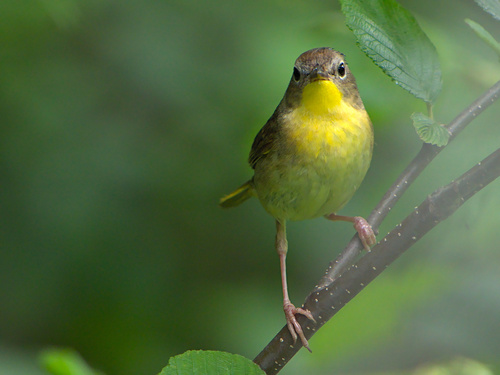
カオグロアメリカムシクイ (Geothlypis trichas) カオグロアメリカムシクイ

メディア

読み込み中…

要点

バハマカオグロムシクイとカオグロアメリカムシクイの最も信頼できるフィールドマークは、全体のサイズとくちばしの太さです:バハマカオグロムシクイは明らかに大きく、より重く、頑丈なくちばしを持っていますが、カオグロアメリカムシクイは小さく、より繊細なくちばしです。両種の成鳥オスは黒い顔のマスクを持っていますが、バハマカオグロムシクイのマスクはより広く、より広範囲にわたっており、灰色がかったオリーブ色の冠と後頭部を持ち、より均一な黄色の腹部があります。雌と幼鳥はより難しいですが、バハマカオグロムシクイの雌は地味で茶色がかった冠とより重いくちばしを示し、カオグロアメリカムシクイの雌は小さく、腹部が淡い色で、より繊細な顔を持っています。生息地も手助けになります:バハマカオグロムシクイは乾燥した高地を好み、カオグロアメリカムシクイは湿った湿地帯に見られます。動きも手がかりです—バハマカオグロムシクイは、しばしば隠れて素早いカオグロアメリカムシクイよりもゆっくりと意図的に動きます。

識別のコツ

  1. Size and bill structure: バハマカオグロムシクイは明らかに大きく、より頑丈で、重いくちばしを持っています。これは、距離があっても、または鳥が並んでいるときでも、しばしば目に見えます。カオグロアメリカムシクイは全体的に小さく、より繊細です。
  2. Adult male mask: バハマカオグロムシクイのオスは、額から目を回って首の側面まで広がる広くて広範囲な黒いマスクを持ち、薄い灰色がかった白い線で縁取られています。カオグロアメリカムシクイのオスは、上部が白または灰色で縁取られた狭いマスクを持ち、マスクはそれほど後ろまで伸びません。
  3. Crown and nape color (adult males): バハマカオグロムシクイは、黄色がかったオリーブ色の色合いを持つ中程度の灰色の後頭部と後頭部を示し、カオグロアメリカムシクイのオスは灰色のコントラストのないより均一なオリーブ色の冠を持っています。
  4. Underparts color: バハマカオグロムシクイは、側面にわずかなオリーブ色の洗いがあるだけで、より均一な黄色の腹部を持っています。カオグロアメリカムシクイは喉と胸に黄色があり、腹部は白で、より二色の外観を作り出します。
  5. Female and immature face: バハマカオグロムシクイの雌は、地味な茶色がかった冠、薄い灰色がかった白い眉、灰色がかった耳の覆いを持ち、より重いくちばしを持っています。カオグロアメリカムシクイの雌と幼鳥はより地味で小さく、腹部が淡く、より繊細な顔を持ち、マスクはありません。
  6. First-year males: カオグロアメリカムシクイの初年度のオスは、わずかな黒いマスクを示すことがありますが、それはバハマカオグロムシクイのオスのように広くも大胆でもありません。
  7. Leg and iris color: 両種は暗い虹彩とくすんだピンク色の脚を持っているため、これらの特徴は区別には役立ちません。
  8. Subspecies variation: バハマカオグロムシクイの亜種は、マスクの縁取りの色(例:G. r. coryiの黄色)や全体の明るさに違いを示すことがありますが、すべてカオグロアメリカムシクイよりも大きく、くちばしが重いです。
  9. Behavior: バハマカオグロムシクイは、よりゆっくりと意図的に動き、しばしば長く開けた場所に止まります。カオグロアメリカムシクイは素早く、落ち着きがなく、隠れていて、長く静止することはめったにありません。
  10. Habitat: バハマでは、バハマカオグロムシクイは乾燥した高地に見られ、カオグロアメリカムシクイは湿った湿地帯を好みます。両種が存在する場合、生息地の好みは強力な手がかりです。
  11. Vocalizations: バハマカオグロムシクイの歌はより遅く、豊かであり、カオグロアメリカムシクイの歌はより鋭く、迅速です。バハマカオグロムシクイの「タック」という呼び声は、カオグロアメリカムシクイの「ジップ」よりも穏やかです。
  12. Geographic context: バハマカオグロムシクイはバハマ特産であり、常駐していますが、カオグロアメリカムシクイは移動性で、島々への冬の訪問者です。季節と場所は、識別のための重要な文脈を提供できます。
  13. Jizz in flight: 特徴的な上翼や飛行パターンの違いは記述されていないため、鳥が動いているときはサイズ、構造、行動に頼ってください。
  14. Mixed flocks: 両種が存在する場合、より均一な黄色の腹部を持つ大きく、くちばしが重い鳥(バハマカオグロムシクイ)と、より小さく、腹部が淡いカオグロアメリカムシクイを探してください。
  15. Pitfalls: 両種の雌と幼鳥は微妙で非常に似ていることがあります。羽毛が決定的でない場合は、サイズ、くちばしの構造、生息地を最良の手がかりとして使用してください。

大きさ

バハマカオグロムシクイは明らかに大きく、約15 cmの長さと15.1–17.3 gの質量を持っています [wikipedia]。これに対して、より小さなカオグロアメリカムシクイ(提供されたメモには正確な数値はありませんが、小さく、より繊細なくちばしであると説明されています)。バハマカオグロムシクイのくちばしは明らかに重く、頑丈であり、直接比較すると際立った構造的特徴です。両種は小さなウグイスですが、このサイズとくちばしの違いは、良い視界や混合群でしばしば明らかです。

羽色

いずれの種についても年齢特有の上翼や飛行パターンの違いは記述されていないため、顔と体の羽毛に焦点を当てます。

行動

バハマカオグロムシクイは、植生の中をよりゆっくりと意図的に動く傾向があり、カオグロアメリカムシクイよりも落ち着きがないように見えることがよくあります。カオグロアメリカムシクイは、密な低い植生の中で素早く隠れる動きで知られ、頻繁に尾を振ったり、急速に位置を変えたりします。これらの行動の違いは微妙ですが、長時間鳥を観察する際に役立ちます。

生息環境

バハマカオグロムシクイは通常、バハマの乾燥した高地の生息地に見られ、水から離れた茂みや低木の多い地域に生息しています。対照的に、カオグロアメリカムシクイは湿った湿地環境を強く好み、葦の生えた場所、湿った草地、池や小川の縁に見られます。バハマでは、カオグロアメリカムシクイは冬の訪問者であり、通常、常駐のバハマカオグロムシクイよりも湿った生息地に見られます。

声

両種は似たような歌を持っていますが、バハマカオグロムシクイの歌はより遅く、豊かであり(「ウィチェティ ウィチェティ ウィチット」)、カオグロアメリカムシクイの歌はより鋭く、迅速です(「ツイチェティ ツイチェティ ツイチェティ ツイッチ」)。バハマカオグロムシクイの呼び声は鋭い「タック」で、カオグロアメリカムシクイの柔らかい「ジップ」よりも穏やかです。バハマカオグロムシクイはまた、乾いたラトルやトリルとスプラッタリングノートを含む静かな「ウィスパーソング」を発しますが、これはカオグロアメリカムシクイの声に慣れた人にはあまり馴染みがないかもしれません。

より良い説明を送る

比較と同じ項目を使ってください。文章はすぐに公開されます。

The most reliable field mark between Bahama Yellowthroat and Common Yellowthroat is overall size and bill thickness: Bahama Yellowthroat is noticeably larger and has a heavier, more robust bill, while Common Yellowthroat is smaller and more delicate-billed. Adult males of both species sport a black facial mask, but Bahama Yellowthroat’s mask is broader and more extensive, with a grayer, more olive-tinged crown and nape, and more uniform yellow underparts. Females and immatures are trickier, but Bahama Yellowthroat females show a plainer, browner crown and a heavier bill, while Common Yellowthroat females are smaller, with paler underparts and a more delicate face. Habitat can help: Bahama Yellowthroat prefers drier uplands, while Common Yellowthroat is found in wetter, marshy areas. Movements are also a clue—Bahama Yellowthroat moves more slowly and deliberately than the often skulking, quick Common Yellowthroat.

  1. Size and bill structure: Bahama Yellowthroat is distinctly larger and bulkier, with a noticeably heavier, stouter bill. This is often visible even at a distance or when birds are side by side. Common Yellowthroat is smaller and more delicate overall.
  2. Adult male mask: Bahama Yellowthroat males have a broad, extensive black mask that wraps from the forehead around the eye to the side of the neck, bordered by a thin grayish-white line. Common Yellowthroat males have a narrower mask, bordered above by white or gray, and the mask does not extend as far back.
  3. Crown and nape color (adult males): Bahama Yellowthroat shows a medium gray hindcrown and nape with a yellowish olive tinge, while Common Yellowthroat males have a more uniform olive crown without the gray contrast.
  4. Underparts color: Bahama Yellowthroat has more uniform yellow underparts, with only a faint olive wash on the flanks. Common Yellowthroat has yellow on the throat and chest but white on the belly, creating a more two-toned look.
  5. Female and immature face: Bahama Yellowthroat females have a plain brownish crown, thin grayish-white supercilium, and grayish ear coverts, with a heavier bill. Common Yellowthroat females and immatures are plainer, smaller, and have paler underparts, with a more delicate face and no mask.
  6. First-year males: Common Yellowthroat first-year males may show a faint black mask, but it is never as broad or bold as in Bahama Yellowthroat males.
  7. Leg and iris color: Both species have dark irises and dusky pinkish legs, so these features are not helpful for separation.
  8. Subspecies variation: Bahama Yellowthroat subspecies may show differences in mask border color (e.g., yellow in G. r. coryi) and overall brightness, but all are larger and heavier-billed than Common Yellowthroat.
  9. Behavior: Bahama Yellowthroat moves more slowly and deliberately, often perching in the open for longer. Common Yellowthroat is quick, restless, and skulking, rarely staying still for long.
  10. Habitat: In the Bahamas, Bahama Yellowthroat is found in drier uplands, while Common Yellowthroat prefers wetter, marshy areas. Habitat preference is a strong clue when both species are present.
  11. Vocalizations: Bahama Yellowthroat’s song is slower and richer, while Common Yellowthroat’s is sharper and more rapid. The Bahama Yellowthroat’s 'tuck' call is less harsh than the Common Yellowthroat’s 'jip'.
  12. Geographic context: Bahama Yellowthroat is endemic to the Bahamas and is resident, while Common Yellowthroat is a migrant and winter visitor to the islands. Season and location can provide important context for identification.
  13. Jizz in flight: No distinctive upperwing or flight pattern differences are described, so rely on size, structure, and behavior when birds are in motion.
  14. Mixed flocks: If both species are present, look for the larger, heavier-billed bird with more uniform yellow underparts (Bahama Yellowthroat) versus the smaller, paler-bellied Common Yellowthroat.
  15. Pitfalls: Females and immatures of both species are subtle and can be very similar. Use size, bill structure, and habitat as your best clues when plumage is not definitive.

Bahama Yellowthroat is distinctly larger, at about 15 cm in length and 15.1–17.3 g in mass [wikipedia], compared to the smaller Common Yellowthroat (no precise numbers in the provided notes, but described as smaller and more delicate-billed). The Bahama Yellowthroat’s bill is noticeably heavier and stouter, a structural feature that stands out in direct comparison. Both species are small warblers, but this size and bill difference is often apparent with good views or in mixed flocks.

No age-specific upperwing or flight pattern differences are described for either species, so focus is on facial and body plumage.

  • Adult males: Both have a black facial mask, but Bahama Yellowthroat’s mask is broader, extending from the forehead around the eye to the side of the neck, and is bordered by a thin grayish-white line. Its hindcrown and nape are medium gray with a yellowish olive tinge, and the upperparts, wings, and tail are yellowish olive-green. Underparts are a rich, uniform yellow with only a faint olive wash on the flanks. Common Yellowthroat males have a narrower black mask, bordered above with white or gray, and their underparts are yellow on the throat and chest but white on the belly, with less uniformity.
  • Females: Bahama Yellowthroat females have a plain, brownish crown, a thin grayish-white supercilium, and grayish ear coverts, with yellowish olive-green upperparts and yellow underparts. Common Yellowthroat females lack the black mask, have paler underparts, and are generally plainer, with a more delicate face and less contrast between crown and face. Immature Common Yellowthroats resemble adult females, with first-year males showing only a faint mask.
  • Subspecies: Bahama Yellowthroat subspecies vary in mask border color and brightness, but all are larger and more robust than any Common Yellowthroat.

Bahama Yellowthroat tends to move more slowly and deliberately through vegetation, often appearing less restless than Common Yellowthroat. Common Yellowthroat is known for its quick, skulking movements in dense, low vegetation, frequently flicking its tail and changing position rapidly. These behavioral differences can be subtle but are useful when watching birds for extended periods.

Bahama Yellowthroat is typically found in drier upland habitats within the Bahamas, often in brushy or scrubby areas away from water. In contrast, Common Yellowthroat strongly favors wetter, marshy environments, including reed beds, wet meadows, and the edges of ponds and streams. In the Bahamas, Common Yellowthroat is a winter visitor and is usually found in wetter habitats than the resident Bahama Yellowthroat.

Both species have similar songs, but Bahama Yellowthroat’s song is described as slower and richer ('wichety wichety wichit'), while Common Yellowthroat’s song is sharper and more rapid ('twichety twichety twichety twich'). The Bahama Yellowthroat’s call is a sharp 'tuck' that is less harsh than the Common Yellowthroat’s soft 'jip'. Bahama Yellowthroat also gives a dry rattle and a quiet 'whisper-song' with trills and spluttering notes, which may be less familiar to those used to Common Yellowthroat vocalizations.

変更を破棄しますか?

保存していない編集があります。今離れると失われます。

バハマカオグロムシクイ · カオグロアメリカムシクイ · 苦手な鳥