

australian shelduck vs paradise shelduck
Tadorna tadornoides versus Tadorna variegata
Jogue um quiz com australian shelduck e paradise shelduck
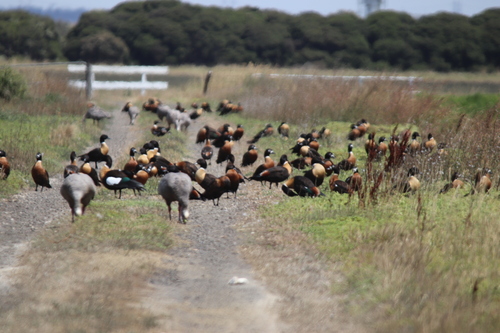 australian shelduck
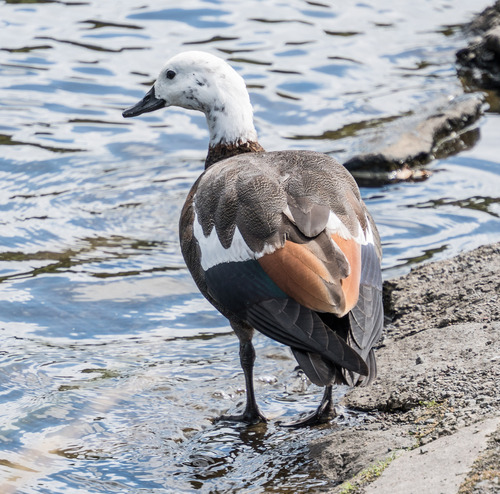 paradise shelduck
Em resumo
A marca de campo mais confiável entre australian shelduck e paradise shelduck é o padrão da cabeça e do peito dos adultos: machos de australian shelduck têm uma cabeça verde escura com um colar branco no pescoço e um peito castanho rico, enquanto machos de paradise shelduck têm uma cabeça azul-preta sem colar e um corpo listrado, principalmente escuro. Fêmeas adultas de paradise shelduck são inconfundíveis com sua cabeça totalmente branca e corpo castanho, uma combinação que nunca é mostrada por australian shelduck. Em voo, ambas as espécies mostram branco nas asas e um especulum verde, mas a extensão e a colocação do branco diferem. Juvenis de ambas as espécies são semelhantes quando estão com penugem, mas à medida que amadurecem, fêmeas de paradise shelduck desenvolvem rapidamente uma cabeça branca, enquanto juvenis de australian shelduck permanecem mais apagados e carecem dos padrões nítidos dos adultos. O tamanho é amplamente semelhante, mas paradise shelduck é, em média, ligeiramente mais pesado.
Dicas de identificação
- A fêmea adulta de Paradise Shelduck é única: Procure por uma cabeça e pescoço totalmente brancos com um corpo castanho—isso nunca é mostrado por australian shelduck de qualquer idade ou sexo.
- Cabeça e colar do macho adulto: Machos de australian shelduck têm uma cabeça verde escura com um colar branco nítido no pescoço e um peito castanho. Machos de paradise shelduck têm uma cabeça azul-preta sem colar e um corpo listrado, principalmente escuro.
- Branco ao redor do olho: Fêmeas de australian shelduck têm branco ao redor dos olhos, mas não uma cabeça totalmente branca. Fêmeas de paradise shelduck têm uma cabeça e pescoço totalmente brancos.
- Cor do peito: Machos de australian shelduck têm uma faixa de peito castanho rica, enquanto machos de paradise shelduck têm um peito cinza escuro salpicado de amarelo pálido, sem uma faixa sólida de castanho.
- Separação de juvenis: Os jovens com penugem de ambas as espécies são semelhantes, mas à medida que as fêmeas de paradise shelduck amadurecem, elas rapidamente desenvolvem uma cabeça branca. Machos juvenis de australian shelduck são mais apagados que os adultos e carecem do colar branco; fêmeas juvenis têm mais branco na cabeça, mas nunca uma cabeça totalmente branca.
- Padrão da asa superior em voo: Ambas mostram branco nas asas e um especulum verde, mas paradise shelduck tem coberturas de asa superior brancas mais extensas, enquanto o branco de australian shelduck é mais restrito. Isso é sutil e melhor usado com outras marcas.
- Cor do bico e das pernas: Ambas têm bicos e pernas escuros; não é um separador útil.
- Tamanho e estrutura do corpo: Ambas são patos grandes e robustos com estrutura semelhante. Paradise shelduck é, em média, ligeiramente mais pesado, mas isso não é confiável sem comparação direta.
- Vocalizações: Machos de australian shelduck grasnam profundamente; fêmeas emitem um 'zeek' alto. Fêmeas de paradise shelduck também têm chamadas agudas, mas as diferenças nem sempre são claras em campo.
- Habitat e distribuição: Australian shelduck é nativo da Austrália, paradise shelduck da Nova Zelândia. Se vistos fora dessas áreas, considere a vagância, mas priorize as marcas de plumagem.
- Comportamento de creche: Grandes grupos de jovens com penugem são mais típicos de australian shelduck, mas não são diagnósticos.
- Exibições de ameaça e distração: Paradise shelduck é mais propenso a mostrar exibições elaboradas de ameaça ou de asa quebrada se perturbado perto dos jovens.
- Dimorfismo sexual: Paradise shelduck mostra um dimorfismo sexual mais forte (fêmea de cabeça branca vs. macho de cabeça escura), enquanto os sexos de australian shelduck são mais semelhantes, com fêmeas mostrando apenas branco ao redor do olho.
- Efeitos da muda e idade: A tonalidade do corpo castanho da fêmea de paradise shelduck varia com a idade e a muda, mas a cabeça branca é consistente após a primeira muda.
- Armadilhas: Fêmeas imaturas de ambas as espécies podem ser confusas; concentre-se na extensão do branco na cabeça e na presença/ausência de um colar no pescoço para melhores resultados.
Tamanho
Ambas as espécies são grandes, patos semelhantes a gansos, mas paradise shelduck é, em média, mais pesado (média do macho 1.549,5 g vs. 1.425 g para australian shelduck) e é descrito como o maior Tadorna. O comprimento se sobrepõe (australian shelduck: 56–72 cm; paradise shelduck: 63–71 cm), então o tamanho sozinho não é confiável em campo. Ambas têm asas largas e uma construção robusta. Fêmeas de ambas as espécies são menores que os machos, mas isso é sutil sem comparação direta.
Plumagem
-
Juvenis e Jovens com Penugem: Os jovens com penugem de ambas as espécies são brancos com uma coroa marrom e listras marrons da coroa até a cauda, tornando-os difíceis de separar nesta fase. À medida que os juvenis amadurecem, machos de australian shelduck são mais apagados que os adultos e carecem do colar branco, enquanto fêmeas juvenis têm mais branco, especialmente ao redor da cabeça, mas não uma cabeça totalmente branca. Machos juvenis de paradise shelduck se assemelham a machos adultos, mas fêmeas juvenis mostram uma mancha branca na base do bico e desenvolvem rapidamente uma cabeça branca após o voo.
-
Machos Adultos: Machos de australian shelduck têm uma cabeça verde escura, colar branco nítido no pescoço e um peito castanho rico, com corpo preto e asas castanho/preto mostrando um especulum verde e algum branco em voo. Machos de paradise shelduck têm uma cabeça e pescoço azul-preto, sem colar, um corpo preto listrado e um peito cinza escuro salpicado de amarelo pálido. Suas asas têm coberturas superiores brancas contrastantes e remiges pretas, com um especulum verde e tertiais enferrujados.
-
Fêmeas Adultas: Fêmeas de australian shelduck são semelhantes aos machos, mas menores, com branco ao redor dos olhos (não uma cabeça totalmente branca). Fêmeas de paradise shelduck são distintas com uma cabeça e pescoço totalmente brancos, corpo castanho escuro ou claro (dependendo da idade/muda) e um dorso cinza escuro salpicado de amarelo pálido. Esta cabeça branca é única entre essas duas espécies.
-
Voo: Ambas as espécies mostram branco nas asas e um especulum verde, mas o branco de paradise shelduck é mais extenso nas coberturas da asa superior, enquanto australian shelduck mostra manchas brancas, mas não tanto nas coberturas. Em ambas, o padrão de asa castanho e preto é visível, mas o padrão da cabeça e do pescoço permanece o melhor separador.
Comportamento
Ambas as espécies são amplamente terrestres e frequentemente pastam, mas paradise shelduck é notado por laços fortes entre pares e defesa territorial, com exibições elaboradas de ameaça e distração (por exemplo, exibição de asa quebrada). Australian shelduck também forma grandes creches de jovens, às vezes até 100 aves. Ambas são boas voadoras e nadam bem, mas os comportamentos de ameaça e distração de paradise shelduck são mais frequentemente descritos.
Habitat
Australian shelduck é nativo da Austrália e prefere áreas úmidas abertas, lagos e, às vezes, áreas costeiras. Paradise shelduck é endêmico da Nova Zelândia e utiliza uma ampla gama de habitats abertos, incluindo terras agrícolas, lagos e rios. A sobreposição é rara, exceto como vagantes, então a localização é uma pista forte, exceto em casos excepcionais.
Voz
Machos de australian shelduck emitem um grasnido profundo, semelhante ao de gansos, enquanto fêmeas têm um 'zeek, zeek' agudo e penetrante. Fêmeas de paradise shelduck também emitem chamadas agudas, especialmente quando alarmadas, enquanto machos chamam rapidamente em exibições de ameaça. Ambos os sexos de paradise shelduck são vocais, especialmente durante interações territoriais ou de ameaça. As diferenças são sutis e nem sempre diagnósticas em campo.
australian shelduck · paradise shelduck · Minhas aves difíceis