

ash-colored tapaculo vs large-footed tapaculo
Myornis senilis versus Scytalopus macropus
Jogue um quiz com ash-colored tapaculo e large-footed tapaculo
 ash-colored tapaculo
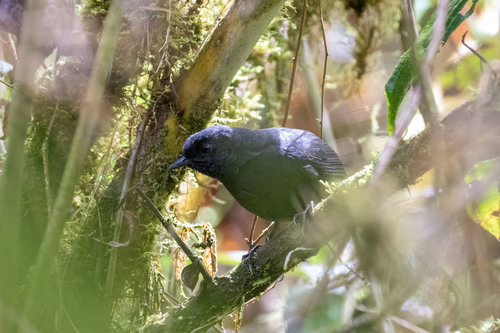 large-footed tapaculo
Em resumo
A marca de campo mais confiável para separar o tapaculo ash-colored do tapaculo large-footed é o tom geral da plumagem: os adultos do tapaculo ash-colored são cinza médio a claro com um pouco de canela nas flancos e crissum, enquanto os adultos do tapaculo large-footed são uniformemente muito escuros. Os juvenis também são distintos: os juvenis do tapaculo ash-colored são marrons avermelhados por cima e marrons ocre por baixo, enquanto os juvenis do tapaculo large-footed ainda são cinza escuro, com pontas de penas marrons e buff/off-white. O tamanho também é uma pista—o tapaculo large-footed é muito mais pesado e robusto, embora ambos tenham o mesmo comprimento. A distribuição pode ajudar: o tapaculo large-footed é endêmico do Peru, enquanto o tapaculo ash-colored varia da Colômbia ao Peru.
Dicas de identificação
- A plumagem juvenil é a marca mais decisiva: Se o pássaro é marrons avermelhados por cima e marrons ocre por baixo, é um juvenil do tapaculo ash-colored. Se ainda for cinza escuro no geral com partes superiores com pontas marrons e buff/off-white por baixo, é um juvenil do tapaculo large-footed. Isso é especialmente útil no final da temporada de reprodução ou quando grupos familiares estão presentes.
- Escuridão geral em adultos: O adulto do tapaculo large-footed é sempre muito escuro, quase negro, sem manchas claras ou quentes. O tapaculo ash-colored é cinza médio por cima e mais claro por baixo, muitas vezes com canela nas flancos/crissum. Em luz fraca, o tapaculo large-footed parecerá um bloco escuro, enquanto o tapaculo ash-colored mostrará mais contraste.
- Cor das flancos e crissum: Tons de canela ou ruivos nas flancos e na parte inferior (crissum) apontam para o tapaculo ash-colored. O tapaculo large-footed nunca mostra esses tons quentes.
- Uniformidade: O tapaculo large-footed é uniformemente cinza escuro por toda parte, sem contraste entre partes superiores e inferiores. O tapaculo ash-colored é visivelmente mais claro por baixo.
- Volume e estrutura: O tapaculo large-footed é muito mais pesado e robusto para o mesmo comprimento. Se você ver um tapaculo que parece especialmente robusto ou corpulento, suspeite do tapaculo large-footed, especialmente no Peru.
- Diferenças sexuais: Ambas as espécies são semelhantes entre os sexos, mas as fêmeas do tapaculo ash-colored podem ser ligeiramente mais claras ou mais escuras que os machos. Isso é sutil e raramente diagnóstico em campo.
- Variação populacional: O tapaculo ash-colored mostra alguma variação na escuridão do cinza dependendo de qual lado dos Andes é encontrado, mas sempre permanece mais claro que o tapaculo large-footed.
- Distribuição: O tapaculo large-footed é encontrado apenas no Peru. O tapaculo ash-colored varia da Colômbia ao Peru. Se você estiver na Colômbia ou no Equador, não está vendo o tapaculo large-footed.
- Sobreposição de habitat: Ambos podem ocorrer em florestas montanas úmidas no Peru, então o habitat sozinho não é diagnóstico lá.
- Sem padrão de asa ou voo distintivo: Nenhuma das espécies mostra marcas contrastantes nas asas ou no voo em qualquer idade, então confie na cor e na estrutura do corpo.
- Sem diferenças fortes no bico ou na cauda: As notas não mencionam a forma do bico ou da cauda como separador, então concentre-se na plumagem e no tamanho.
- Sem diferenças vocais distintivas nessas notas: Se você ouvir um tapaculo, não confie na canção para separação a menos que tenha conhecimento local.
- Cuidado com as condições de luz: Na sombra profunda, o tapaculo ash-colored pode parecer mais escuro, mas ainda mostrará partes inferiores mais claras e possíveis flancos canela se visto bem.
- Confusão de imaturos: Se você ver um tapaculo que não é totalmente cinza, mas também não é marrons avermelhados, verifique as pontas das penas: partes superiores com pontas marrons e buff/off-white indicam um juvenil do tapaculo large-footed; tons avermelhados/ocre indicam um juvenil do tapaculo ash-colored.
- Quando em dúvida, use uma combinação: Se a plumagem for ambígua, use a distribuição, volume e qualquer indício de canela ou clareza para ajudar a decidir.
Tamanho
Ambas as espécies têm cerca de 14 cm de comprimento, mas o tapaculo large-footed é muito mais pesado e robusto (machos 36–43 g, fêmeas ~32 g) em comparação com o tapaculo ash-colored (machos 20–23,5 g, fêmeas 18,1–24,5 g) [wikidata]. Essa diferença é frequentemente visível em campo como uma aparência mais robusta e corpulenta para o tapaculo large-footed, especialmente se visto lado a lado ou com experiência. O tapaculo ash-colored parece mais leve e mais delicado.
Plumagem
- Juvenis: Os juvenis do tapaculo ash-colored são marrons avermelhados por cima e marrons ocre por baixo, um forte contraste com o juvenil do tapaculo large-footed, que ainda é cinza escuro no geral, mas com penas das partes superiores com pontas marrons e pontas buff/off-white por baixo. Isso faz com que os juvenis do tapaculo ash-colored sejam muito mais quentes e claros no geral, enquanto os juvenis do tapaculo large-footed mantêm uma aparência escura e sombria.
- Adultos: Os adultos do tapaculo ash-colored são cinza médio por cima e cinza mais claro por baixo, com alguns indivíduos mostrando canela nas flancos e crissum. Os adultos do tapaculo large-footed são uniformemente muito escuros, sem tons contrastantes ou cores quentes. Essa diferença é frequentemente visível mesmo em luz fraca: o tapaculo ash-colored parece mais claro e às vezes manchado nas flancos, enquanto o tapaculo large-footed é consistentemente escuro.
- Sexos: Ambas as espécies mostram pouco dimorfismo sexual na plumagem, mas as fêmeas do tapaculo ash-colored podem ser ligeiramente mais claras ou mais escuras que os machos, e existe alguma variação populacional na escuridão do cinza.
Habitat
O tapaculo ash-colored é encontrado em florestas montanas úmidas e áreas arbustivas da Colômbia ao Equador até o Peru. O tapaculo large-footed é restrito ao Peru. Se você estiver fora do Peru, o tapaculo large-footed não é uma opção. Dentro do Peru, verifique a distribuição local e a elevação, mas ambos podem se sobrepor em habitats montanos.
ash-colored tapaculo · large-footed tapaculo · Minhas aves difíceis