
Aschgrautapaculo vs Großfußtapaculo
Myornis senilis gegen Scytalopus macropus
Ein Quiz mit Aschgrautapaculo und Großfußtapaculo spielen
 Aschgrautapaculo
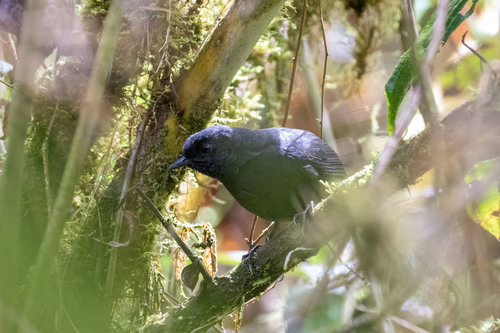 Großfußtapaculo
Kurz gesagt
Das zuverlässigste Feldmerkmal zur Unterscheidung des Aschgrautapaculo vom Großfußtapaculo ist der allgemeine Gefiederfarbton: Aschgrautapaculo-Erwachsene sind mittel- bis hellgrau mit etwas Zimt an den Flanken und dem Crissum, während Großfußtapaculo-Erwachsene gleichmäßig sehr dunkelgrau sind. Juvenile sind ebenfalls unterschiedlich: Aschgrautapaculo-Juvenile sind oben rötlichbraun und unten ockerbraun, während Großfußtapaculo-Juvenile immer noch dunkelgrau sind, mit braunen und buff/off-white Federenden. Die Größe ist ebenfalls ein Hinweis – Großfußtapaculo ist viel schwerer und massiver, obwohl beide die gleiche Länge haben. Der Verbreitungsbereich kann helfen: Großfußtapaculo ist endemisch in Peru, während Aschgrautapaculo von Kolumbien bis Peru verbreitet ist.
Bestimmungstipps
- Juvenilgefieder ist das entscheidendste Merkmal: Wenn der Vogel oben rötlichbraun und unten ockerbraun ist, handelt es sich um einen juvenile Aschgrautapaculo. Wenn er insgesamt immer noch dunkelgrau mit braunspitzen Oberteilen und buff/off-white unten ist, handelt es sich um einen juvenile Großfußtapaculo. Dies ist besonders nützlich in der späten Brutzeit oder wenn Familiengruppen vorhanden sind.
- Allgemeine Dunkelheit bei Erwachsenen: Der adulte Großfußtapaculo ist immer sehr dunkelgrau, fast schwärzlich, ohne helle oder warme Flecken. Aschgrautapaculo ist oben mittelgrau und unten heller, oft mit Zimt an den Flanken/Crissum. Bei schwachem Licht sieht der Großfußtapaculo wie ein dunkler Klumpen aus, während der Aschgrautapaculo mehr Kontrast zeigt.
- Farbe der Flanken und des Crissums: Zimt- oder rötliche Töne an den Flanken und am Untertail (Crissum) deuten auf Aschgrautapaculo hin. Großfußtapaculo zeigt niemals diese warmen Töne.
- Einheitlichkeit: Großfußtapaculo ist gleichmäßig dunkelgrau überall, ohne Kontrast zwischen Ober- und Unterseite. Aschgrautapaculo ist deutlich heller unten.
- Volumen und Struktur: Großfußtapaculo ist viel schwerer und massiver bei gleicher Länge. Wenn Sie einen Tapaculo sehen, der besonders robust oder schwer wirkt, vermuten Sie Großfußtapaculo, insbesondere in Peru.
- Geschlechtsunterschiede: Beide Arten sind zwischen den Geschlechtern ähnlich, aber Aschgrautapaculo-Weibchen können etwas heller oder dunkler als Männchen sein. Dies ist subtil und selten diagnostisch im Feld.
- Populationsvariation: Aschgrautapaculo zeigt einige Variationen in der Dunkelheit des Graus, abhängig davon, auf welcher Seite der Anden er gefunden wird, bleibt aber immer heller als Großfußtapaculo.
- Verbreitung: Großfußtapaculo wird nur in Peru gefunden. Aschgrautapaculo reicht von Kolumbien bis Peru. Wenn Sie in Kolumbien oder Ecuador sind, sehen Sie keinen Großfußtapaculo.
- Habitatüberlappung: Beide können in feuchten montanen Wäldern in Peru vorkommen, daher ist das Habitat allein dort nicht diagnostisch.
- Keine ausgeprägten Flügel- oder Flugmuster: Keine der Arten zeigt kontrastierende Oberflügel- oder Flugmerkmale in jedem Alter, daher verlassen Sie sich auf Körperfarbe und Struktur.
- Keine starken Unterschiede in Schnabel oder Schwanz: Notizen erwähnen keine Schnabel- oder Schwanzform als Trennmerkmal, konzentrieren Sie sich also auf Gefieder und Größe.
- Keine ausgeprägten vokalen Unterschiede in diesen Notizen: Wenn Sie einen Tapaculo hören, verlassen Sie sich nicht auf Gesang zur Trennung, es sei denn, Sie haben lokales Wissen.
- Achten Sie auf Lichtverhältnisse: Im tiefen Schatten kann Aschgrautapaculo dunkler erscheinen, zeigt aber immer noch hellere Unterseiten und mögliche Zimtflanken, wenn gut gesehen.
- Verwirrung bei Unreifen: Wenn Sie einen Tapaculo sehen, der nicht vollständig grau, aber auch nicht rötlichbraun ist, überprüfen Sie die Federenden: braunspitzen Oberteile und buff/off-white unten deuten auf einen juvenile Großfußtapaculo hin; rötliche/ockerfarbene Töne deuten auf einen juvenile Aschgrautapaculo hin.
- Im Zweifel eine Kombination verwenden: Wenn das Gefieder mehrdeutig ist, verwenden Sie Verbreitung, Volumen und jeden Hinweis auf Zimt oder Helligkeit zur Entscheidung.
Größe
Beide Arten sind etwa 14 cm lang, aber Großfußtapaculo ist viel schwerer und massiver (Männchen 36–43 g, Weibchen ~32 g) im Vergleich zum Aschgrautapaculo (Männchen 20–23,5 g, Weibchen 18,1–24,5 g) [wikidata]. Dieser Unterschied ist oft im Feld sichtbar als ein robusteres, schwereres Erscheinungsbild für Großfußtapaculo, insbesondere wenn sie nebeneinander oder mit Erfahrung gesehen werden. Aschgrautapaculo erscheint leichter und zarter.
Gefieder
- Juvenile: Aschgrautapaculo-Juvenile sind oben rötlichbraun und unten ockerbraun, ein starker Kontrast zum juvenile Großfußtapaculo, der insgesamt immer noch dunkelgrau ist, aber mit braunspitzen Oberfedern und buff/off-white Spitzen unten. Dies macht Aschgrautapaculo-Juvenile insgesamt viel wärmer und heller, während Großfußtapaculo-Juvenile einen dunklen, düsteren Look behalten.
- Erwachsene: Aschgrautapaculo-Erwachsene sind oben mittelgrau und unten heller grau, wobei einige Individuen Zimt an den Flanken und dem Crissum zeigen. Großfußtapaculo-Erwachsene sind gleichmäßig sehr dunkelgrau ohne kontrastierende Töne oder warme Farben. Dieser Unterschied ist oft selbst bei schwachem Licht sichtbar: Aschgrautapaculo sieht heller und manchmal fleckig an den Flanken aus, während Großfußtapaculo konstant dunkel ist.
- Geschlechter: Beide Arten zeigen wenig sexuellen Dimorphismus im Gefieder, aber Aschgrautapaculo-Weibchen können etwas heller oder dunkler als Männchen sein, und es gibt einige Populationsvariationen in der Dunkelheit des Graus.
Lebensraum
Aschgrautapaculo wird in feuchten montanen Wäldern und strauchigen Gebieten von Kolumbien über Ecuador bis Peru gefunden. Großfußtapaculo ist auf Peru beschränkt. Wenn Sie außerhalb von Peru sind, ist Großfußtapaculo keine Option. Innerhalb von Peru überprüfen Sie den lokalen Verbreitungsbereich und die Höhe, aber beide können in montanen Lebensräumen überlappen.
Aschgrautapaculo · Großfußtapaculo · Meine schwierigen Vögel