
Grijze tapaculo vs Grootpoottapaculo
Myornis senilis versus Scytalopus macropus
Speel een quiz met Grijze tapaculo en Grootpoottapaculo
 Grijze tapaculo
 Grootpoottapaculo
Kort gezegd
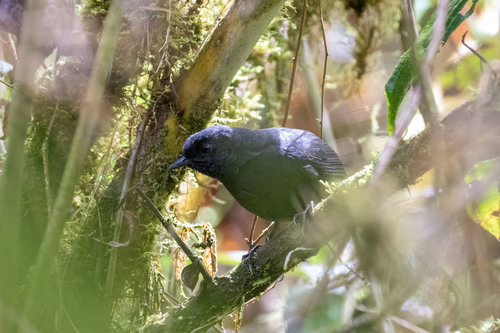
Het meest betrouwbare veldkenmerk om Grijze tapaculo van Grootpoottapaculo te scheiden, is de algemene kleur van het verenkleed: Grijze tapaculo volwassen vogels zijn middelmatig tot lichtgrijs met wat kaneel op de flanken en crissum, terwijl Grootpoottapaculo volwassen vogels uniform zeer donkergrijs zijn. Juvenielen zijn ook onderscheidend: Grijze tapaculo juvenielen zijn roestbruin boven en okerbruin onder, terwijl Grootpoottapaculo juvenielen nog steeds donkergrijs zijn, met bruine en buff/off-white veertips. Grootte is ook een aanwijzing—Grootpoottapaculo is veel zwaarder en robuuster, hoewel beide dezelfde lengte hebben. Het verspreidingsgebied kan helpen: Grootpoottapaculo is endemisch voor Peru, terwijl Grijze tapaculo zich uitstrekt van Colombia tot Peru.
Herkenningstips
- Juveniel verenkleed is het meest beslissende kenmerk: Als de vogel roestbruin boven en okerbruin onder is, is het een juveniele Grijze tapaculo. Als het nog steeds donkergrijs is met bruine getipte bovenste delen en buff/off-white onder, is het een juveniele Grootpoottapaculo. Dit is vooral nuttig aan het einde van het broedseizoen of wanneer familiegroepen aanwezig zijn.
- Algemene donkerheid bij volwassenen: Volwassen Grootpoottapaculo is altijd zeer donkergrijs, bijna zwartachtig, zonder lichte of warme vlekken. Grijze tapaculo is middelgrijs boven en lichter onder, vaak met kaneel op de flanken/crissum. In slecht licht zal Grootpoottapaculo eruitzien als een donkere massa, terwijl Grijze tapaculo meer contrast zal tonen.
- Kleur van flanken en crissum: Kaneel- of roesttinten op de flanken en onderstaart (crissum) wijzen op Grijze tapaculo. Grootpoottapaculo toont nooit deze warme tinten.
- Uniformiteit: Grootpoottapaculo is uniform donkergrijs overal, zonder contrast tussen boven- en onderdelen. Grijze tapaculo is duidelijk lichter onder.
- Bulk en structuur: Grootpoottapaculo is veel zwaarder en robuuster voor dezelfde lengte. Als je een tapaculo ziet die er bijzonder robuust of zwaar uitziet, vermoed dan Grootpoottapaculo, vooral in Peru.
- Geslachtsverschillen: Beide soorten zijn vergelijkbaar tussen de geslachten, maar Grijze tapaculo vrouwtjes kunnen iets lichter of donkerder zijn dan mannetjes. Dit is subtiel en zelden diagnostisch in het veld.
- Populatievariatie: Grijze tapaculo vertoont enige variatie in donkerheid van grijs, afhankelijk van aan welke kant van de Andes het wordt gevonden, maar blijft altijd lichter dan Grootpoottapaculo.
- Verspreidingsgebied: Grootpoottapaculo wordt alleen in Peru aangetroffen. Grijze tapaculo komt voor van Colombia tot Peru. Als je in Colombia of Ecuador bent, zie je geen Grootpoottapaculo.
- Habitatoverlap: Beide kunnen voorkomen in vochtige montane bossen in Peru, dus alleen het habitat is daar niet diagnostisch.
- Geen onderscheidend vleugel- of vluchtpatroon: Geen van beide soorten toont contrasterende bovenvleugel- of vluchtkenmerken in enige leeftijd, dus vertrouw op de kleur en structuur van het lichaam.
- Geen sterke verschillen in snavel of staart: Notities vermelden geen snavel- of staartvorm als scheiding, dus focus op verenkleed en grootte.
- Geen onderscheidende vocale verschillen in deze notities: Als je een tapaculo hoort, vertrouw dan niet op het gezang voor scheiding, tenzij je lokale kennis hebt.
- Let op lichtomstandigheden: In diepe schaduw kan Grijze tapaculo donkerder lijken, maar zal nog steeds lichter onder zijn en mogelijke kaneel flanken tonen als goed gezien.
- Verwarring bij onvolwassenen: Als je een tapaculo ziet die niet volledig grijs is maar ook niet roestbruin, controleer dan de veertips: bruine getipte bovenste delen en buff/off-white onder geven aan dat het een juveniele Grootpoottapaculo is; roest/oker tinten wijzen op een juveniele Grijze tapaculo.
- Bij twijfel, gebruik een combinatie: Als het verenkleed ambigu is, gebruik dan verspreiding, bulk en enige hint van kaneel of bleekheid om te helpen beslissen.
Grootte
Beide soorten zijn ongeveer 14 cm lang, maar Grootpoottapaculo is veel zwaarder en robuuster (mannetjes 36–43 g, vrouwtjes ~32 g) in vergelijking met Grijze tapaculo (mannetjes 20–23,5 g, vrouwtjes 18,1–24,5 g) [wikidata]. Dit verschil is vaak zichtbaar in het veld als een robuustere, zwaar gebouwde uitstraling voor Grootpoottapaculo, vooral als ze naast elkaar worden gezien of met ervaring. Grijze tapaculo lijkt lichter en delicater.
Verenkleed
- Juvenielen: Grijze tapaculo juvenielen zijn roestbruin boven en okerbruin onder, een sterk contrast met de juveniele Grootpoottapaculo, die nog steeds donkergrijs is maar met bruine getipte bovenste veren en buff/off-white tips onder. Dit maakt Grijze tapaculo juvenielen veel warmer en lichter in het algemeen, terwijl Grootpoottapaculo juvenielen een donkere, sombere uitstraling behouden.
- Volwassenen: Grijze tapaculo volwassenen zijn middelgrijs boven en lichter grijs onder, met sommige individuen die kaneel op de flanken en crissum tonen. Grootpoottapaculo volwassenen zijn uniform zeer donkergrijs zonder contrasterende tonen of warme kleuren. Dit verschil is vaak zichtbaar, zelfs in slecht licht: Grijze tapaculo lijkt lichter en soms vlekkerig op de flanken, terwijl Grootpoottapaculo consistent donker is.
- Geslachten: Beide soorten vertonen weinig seksuele dimorfie in het verenkleed, maar Grijze tapaculo vrouwtjes kunnen iets lichter of donkerder zijn dan mannetjes, en er bestaat enige populatievariatie in de donkerheid van grijs.
Habitat
Grijze tapaculo wordt aangetroffen in vochtige montane bossen en struikachtige gebieden van Colombia via Ecuador naar Peru. Grootpoottapaculo is beperkt tot Peru. Als je buiten Peru bent, is Grootpoottapaculo geen optie. Binnen Peru, controleer het lokale verspreidingsgebied en de hoogte, maar beide kunnen overlappen in montane habitats.