
amethyst brown-dove vs pink-necked green-pigeon
Phapitreron amethystinus versus Treron vernans
Jogue um quiz com amethyst brown-dove e pink-necked green-pigeon
 amethyst brown-dove
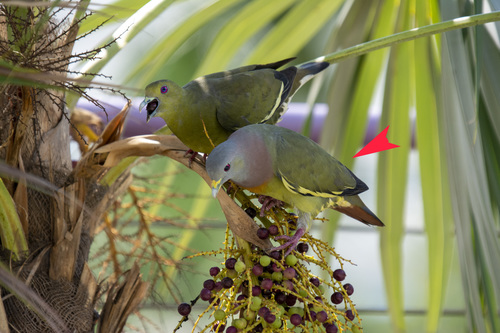 pink-necked green-pigeon
Em resumo
A marca de campo mais confiável entre amethyst brown-dove e pink-necked green-pigeon é a cor e a estrutura geral: o brown-dove é um pássaro escuro de floresta densa com tons ricos de marrom e roxo e um bico longo e pesado, enquanto o green-pigeon é verde brilhante no geral (especialmente fêmeas e imaturos), com machos mostrando um pescoço rosado distinto e um peito laranja. Em voo, o green-pigeon exibe uma barra amarela na asa (proveniente das tertiais com bordas amarelas), ausente no brown-dove. O brown-dove é escasso e tímido em florestas densas, enquanto o green-pigeon é comum e frequentemente visto em habitats mais abertos ou urbanos. Pombos verdes juvenis se assemelham às fêmeas, mas ainda são muito mais verdes do que qualquer brown-dove.
Dicas de identificação
- Cor geral: Brown-dove é sempre marrom com tons arroxeados e acinzentados; green-pigeon é verde no geral (fêmea/imaturo) ou tem rosa/laranja/vermelho (macho).
- Padrão da asa em voo: Green-pigeon (todas as idades) exibe uma barra amarela na asa proveniente das tertiais com bordas amarelas; brown-dove nunca mostra amarelo na asa.
- Estrutura do bico: Brown-dove tem um bico notavelmente longo e pesado (mais longo que seu tarso); green-pigeon tem um bico mais curto e mais esguio.
- Região dos olhos: Brown-dove tem pele nua rosada ao redor dos olhos e linhas suboculares brancas; green-pigeon não possui essas características, mas pode ter um bico pálido.
- Macho green-pigeon: Única espécie com pescoço rosa e peito laranja—nunca igualado pelo brown-dove.
- Fêmea/imatura green-pigeon: Verde por cima, amarelada por baixo, coroa esverdeada—nenhum brown-dove é tão verde assim.
- Partes inferiores: Brown-dove é marrom arroxeado por baixo com coberturas de cauda de tan rico; green-pigeon é amarelado por baixo (fêmea/imaturo) ou laranja (macho).
- Cauda: Green-pigeon tem uma cauda cinza com uma faixa terminal preta e coberturas de cauda castanhas; a cauda do brown-dove não é descrita como distinta.
- Habitat: Brown-dove está apenas em florestas densas e maduras; green-pigeon é comum em habitats abertos, de borda e urbanos.
- Comportamento: Brown-dove é tímido, raramente visto em campo aberto; green-pigeon é gregário, frequentemente pousando em locais abertos.
- Estilo de voo: Green-pigeon é rápido e direto, frequentemente em bandos; brown-dove se assusta baixo e rapidamente se esconde.
- Abundância: Green-pigeon é comum e amplamente distribuído; brown-dove é raro e local.
- Dimorfismo sexual: Apenas o green-pigeon mostra diferenças fortes entre machos e fêmeas; os sexos do brown-dove são semelhantes.
- Confusão juvenil: Pombos verdes juvenis podem ser confundidos com brown-doves à distância, mas são sempre mais verdes e mostram a barra amarela na asa em voo.
- Voz: Green-pigeon pode emitir um chamado assobiado ou raspante em grupos; a voz do brown-dove não é descrita, então não confie nisso para separação.
Tamanho
Amethyst Brown-Dove é ligeiramente mais pesado (massa corporal cerca de 145 g [wikidata]) e parece mais robusto, com um bico notavelmente mais longo e pesado em relação ao seu tarso. Pink-necked Green-Pigeon é semelhante em comprimento (25–30 cm), mas a massa varia (105–160 g), com fêmeas sendo menores. No campo, o brown-dove frequentemente parece mais robusto e menos aerodinâmico do que o green-pigeon, que tem uma aparência mais esguia e compacta com um bico mais curto.
Plumagem
- Juvenil/imaturo: Pombos verdes juvenis se assemelham a fêmeas adultas—verdes no geral, com uma barriga amarelada e coroa esverdeada, e mais cinzentos por cima. Eles não têm o pescoço rosa e o peito laranja dos machos adultos, mas ainda mostram a barra amarela na asa em voo, que nunca está presente no brown-dove. Imaturos de amethyst brown-dove não são descritos em detalhes, mas todas as idades são geralmente marrons escuros com tons arroxeados e acinzentados, sem qualquer verde ou amarelo.
- Macho adulto pink-necked green-pigeon: Pescoço e peito superior rosados impressionantes, peito inferior laranja, costas verde-oliva, barriga amarela e uma barra amarela na asa em voo. Cabeça e cauda cinzas com uma faixa terminal preta.
- Fêmea adulta pink-necked green-pigeon: Verde no geral, amarelada por baixo, coroa e nuca esverdeadas, barra amarela na asa em voo.
- Amethyst Brown-Dove (todas as idades/sexos): Marrom mais escuro e rico no geral com partes inferiores marrons arroxeadas, extensa mancha azul-púrpura na manta, queixo e garganta marrons avermelhados com estrias mais escuras, tom acinzentado, pele nua rosada ao redor dos olhos e iridescência ametista ou púrpura na nuca. Linhas suboculares brancas abaixo dos olhos estão presentes, mas podem ser sutis. Nenhum tom verde ou amarelo em lugar algum.
Comportamento
Amethyst Brown-Dove é uma espécie tímida e rara de florestas densas e profundas, frequentemente permanecendo escondida e difícil de observar. Tende a pousar silenciosamente e raramente é visto em campo aberto. Pink-necked Green-Pigeon é gregário, frequentemente visto em pequenos bandos, e é muito mais abordável, frequentemente pousando em locais abertos em fios, árvores frutíferas ou em jardins. Em voo, pombos verdes são rápidos e diretos, frequentemente revelando a barra amarela na asa; brown-doves têm mais probabilidade de se assustar baixo e rapidamente desaparecer em cobertura.
Habitat
Amethyst Brown-Dove é restrito a florestas densas e maduras em várias ilhas das Filipinas e é geralmente raro e local. Evita áreas abertas ou perturbadas. Pink-necked Green-Pigeon é amplamente distribuído e comum no Sudeste Asiático e nas Filipinas, prosperando em uma variedade de habitats: borda de floresta, crescimento secundário, manguezais, jardins, plantações e até parques urbanos. Se o pássaro for visto em uma cidade, plantação ou área aberta, é quase certamente um green-pigeon.
Voz
Pink-necked Green-Pigeon não é muito vocal, mas machos às vezes emitem um chamado assobiado tri-silábico que termina em um coo, e ocasionalmente um som raspante 'krrak krrak...', especialmente em dormidas comunitárias ou ao encontrar comida. As vocalizações de Amethyst Brown-Dove não são descritas nas notas fornecidas, então a voz não é uma separação confiável em campo com base nas informações atuais.
amethyst brown-dove · pink-necked green-pigeon · Minhas aves difíceis