
Motmot

オオテリアオバト 対 コアオバト

Phapitreron amethystinus 対 Treron vernans

オオテリアオバトとコアオバトのクイズ

オオテリアオバト (Phapitreron amethystinus) オオテリアオバト
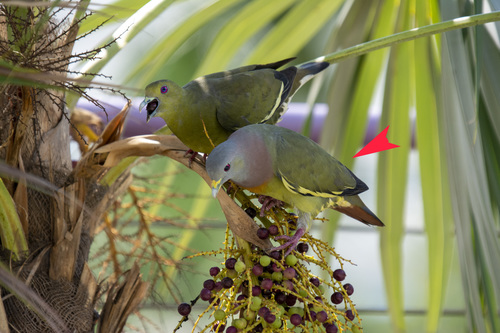
コアオバト (Treron vernans) コアオバト

メディア

読み込み中…

要点

オオテリアオバトとコアオバトの最も信頼できるフィールドマークは、全体の色と構造です:オオテリアオバトは、豊かな茶色と紫のトーンを持つ暗い深い森の鳥で、長くて重いくちばしを持っています。一方、コアオバトは全体的に明るい緑色で(特に雌と幼鳥)、オスは特徴的なピンクがかった首とオレンジ色の胸を示します。飛行中、コアオバトは翼に黄色のバーを示します(黄色の縁取りのある三次羽から)、オオテリアオバトにはありません。オオテリアオバトは密集した森では稀で内気ですが、コアオバトは一般的で、より開けた場所や都市の生息地でよく見られます。幼鳥のコアオバトは雌に似ていますが、オオテリアオバトよりもはるかに緑色です。

識別のコツ

  1. Overall color: オオテリアオバトは常に紫がかった灰色の色合いを持つ茶色で、コアオバトは全体的に緑色(雌/幼鳥)またはピンク/オレンジ/緑(オス)です。
  2. Wing pattern in flight: コアオバト(すべての年齢)は、黄色の縁取りのある三次羽から翼に黄色のバーを示します;オオテリアオバトは翼に黄色を示しません。
  3. Bill structure: オオテリアオバトは、足首に対して明らかに長くて重いくちばしを持っています;コアオバトは、より短くて細いくちばしを持っています。
  4. Eye region: オオテリアオバトは目の周りにピンク色の裸の皮膚と白い眼下線を持っています;コアオバトはこれを欠いていますが、淡いくちばしを持っているかもしれません。
  5. Male green-pigeon: ピンクの首とオレンジ色の胸を持つ唯一の種—オオテリアオバトには一致しません。
  6. Female/immature green-pigeon: 上は緑色、下は黄色がかり、緑色の冠—オオテリアオバトはこれほど緑色ではありません。
  7. Underparts: オオテリアオバトは紫がかった茶色の下部を持ち、豊かな茶色の尾羽の覆いを持っています;コアオバトは下部が黄色がかり(雌/幼鳥)またはオレンジ(オス)です。
  8. Tail: コアオバトは黒い端部バンドと栗色の上尾羽の覆いを持つ灰色の尾を持っています;オオテリアオバトの尾は特徴的とは記述されていません。
  9. Habitat: オオテリアオバトは密集した成熟した森林にのみ生息しています;コアオバトは開けた場所、エッジ、都市の生息地で一般的です。
  10. Behavior: オオテリアオバトは内気で、開けた場所ではめったに見られません;コアオバトは群れを成し、しばしば開けた場所に止まります。
  11. Flight style: コアオバトは迅速で直接的で、しばしば群れで飛びます;オオテリアオバトは低く飛び、すぐに隠れます。
  12. Abundance: コアオバトは一般的で広範囲に分布しています;オオテリアオバトは稀で局所的です。
  13. Sexual dimorphism: コアオバトだけが強いオス/メスの違いを示します;オオテリアオバトの性別は似ています。
  14. Juvenile confusion: 幼鳥のコアオバトは遠くからオオテリアオバトと混同されることがありますが、常により緑色で、飛行中に黄色の翼のバーを示します。
  15. Voice: コアオバトは群れで笛のような音やざらざらした音を出すことがあります;オオテリアオバトの声は記述されていないため、分離のためにこれに頼らないでください。

大きさ

オオテリアオバトはわずかに重く(体重約145 g [wikidata])見え、足首に対して明らかに長くて重いくちばしを持っているため、より大きく見えます。コアオバトは長さ(25〜30 cm)は似ていますが、体重は(105〜160 g)異なり、雌は小さいです。フィールドでは、オオテリアオバトはコアオバトよりも頑丈で流線型ではないように見えることがよくありますが、コアオバトはより細く、コンパクトな外観で、くちばしが短いです。

羽色

行動

オオテリアオバトは内気で稀な種で、深い密集した森林に生息し、しばしば隠れていて観察が難しいです。静かに止まる傾向があり、開けた場所ではめったに見られません。コアオバトは群れを成し、しばしば小さな群れで見られ、はるかに近づきやすく、しばしば開けた場所に止まります。飛行中、コアオバトは迅速で直接的で、しばしば黄色の翼のバーを示します;オオテリアオバトは低く飛び、すぐに隠れる可能性が高いです。

生息環境

オオテリアオバトはフィリピンのいくつかの島の密集した成熟した森林に制限されており、一般的に稀で局所的です。開けた場所や乱された地域を避けます。コアオバトは東南アジアとフィリピン全体に広がり、一般的で、森林のエッジ、二次成長、マングローブ、庭、プランテーション、さらには都市公園など、さまざまな生息地で繁栄しています。もし鳥が都市、プランテーション、または開けた場所で見られた場合、それはほぼ確実にコアオバトです。

声

コアオバトはあまり声を出しませんが、オスは時々三音節の笛のような音を出し、クーという音で終わることがあり、時折、特に群れでの休息や食べ物を見つけるときにざらざらした「クラック クラック...」という音を出すことがあります。オオテリアオバトの声は提供されたメモには記述されていないため、現在の情報に基づいてフィールドでの分離には信頼できません。

より良い説明を送る

比較と同じ項目を使ってください。文章はすぐに公開されます。

The most reliable field mark between Amethyst Brown-Dove and Pink-necked Green-Pigeon is overall color and structure: the brown-dove is a dark, deep-woods bird with rich brown and purple tones and a long, heavy bill, while the green-pigeon is bright green overall (especially females and immatures), with males showing a distinctive pinkish neck and orange breast. In flight, the green-pigeon shows a yellow bar across the wing (from yellow-edged tertials), absent in brown-dove. The brown-dove is scarce and shy in dense forest, while the green-pigeon is common and often seen in more open or urban habitats. Juvenile green-pigeons resemble females but are still much greener than any brown-dove.

  1. Overall color: Brown-dove is always brown with purplish and greyish tinges; green-pigeon is green overall (female/immature) or has pink/orange/green (male).
  2. Wing pattern in flight: Green-pigeon (all ages) shows a yellow bar across the wing from yellow-edged tertials; brown-dove never shows yellow in the wing.
  3. Bill structure: Brown-dove has a noticeably long, heavy bill (longer than its tarsus); green-pigeon has a shorter, more slender bill.
  4. Eye region: Brown-dove has pinkish bare skin around the eye and white subocular lines; green-pigeon lacks these but may have a pale bill.
  5. Male green-pigeon: Only species with a pink neck and orange breast—never matched by brown-dove.
  6. Female/immature green-pigeon: Green above, yellowish below, greenish crown—no brown-dove is ever this green.
  7. Underparts: Brown-dove is purplish-brown below with rich tan undertail-coverts; green-pigeon is yellowish below (female/immature) or orange (male).
  8. Tail: Green-pigeon has a grey tail with a black terminal band and chestnut uppertail coverts; brown-dove's tail is not described as distinctive.
  9. Habitat: Brown-dove is only in dense, mature forest; green-pigeon is common in open, edge, and urban habitats.
  10. Behavior: Brown-dove is shy, rarely seen in the open; green-pigeon is gregarious, often perches in the open.
  11. Flight style: Green-pigeon is swift and direct, often in flocks; brown-dove flushes low and quickly hides.
  12. Abundance: Green-pigeon is common and widespread; brown-dove is rare and local.
  13. Sexual dimorphism: Only green-pigeon shows strong male/female differences; brown-dove sexes are similar.
  14. Juvenile confusion: Juvenile green-pigeons can be confused with brown-doves at a distance, but are always greener and show the yellow wing bar in flight.
  15. Voice: Green-pigeon may give a whistling or rasping call in groups; brown-dove's voice is not described, so do not rely on this for separation.

Amethyst Brown-Dove is slightly heavier (body mass about 145 g [wikidata]) and appears bulkier, with a noticeably longer and heavier bill relative to its tarsus. Pink-necked Green-Pigeon is similar in length (25–30 cm), but mass varies (105–160 g), with females being smaller. In the field, the brown-dove often looks more robust and less streamlined than the green-pigeon, which has a more slender, compact appearance with a shorter bill.

  • Juvenile/immature: Juvenile Pink-necked Green-Pigeons resemble adult females—green overall, with a yellowish belly and greenish crown, and greyer above. They lack the pink neck and orange breast of adult males, but still show the yellow wing bar in flight, which is never present in brown-dove. Amethyst Brown-Dove immatures are not described in detail, but all ages are generally dark brown with purplish and greyish tinges, lacking any green or yellow.
  • Adult male Pink-necked Green-Pigeon: Striking pinkish neck and upper breast, orange lower breast, olive green back, yellow belly, and a yellow bar across the wing in flight. Grey head and tail with a black terminal band.
  • Adult female Pink-necked Green-Pigeon: Green overall, yellowish below, greenish crown and nape, yellow wing bar in flight.
  • Amethyst Brown-Dove (all ages/sexes): Darker, richer brown overall with purplish-brown underparts, extensive blue-purple patch on mantle, reddish-brown chin and throat with darker streaking, grey tinge, pinkish bare skin around the eye, and amethyst or purple iridescence on the nape. Subocular white lines below the eye are present but can be subtle. No green or yellow tones anywhere.

Amethyst Brown-Dove is a shy, rare species of deep, dense forests, often remaining hidden and difficult to observe. It tends to perch quietly and is rarely seen in the open. Pink-necked Green-Pigeon is gregarious, often seen in small flocks, and is much more approachable, frequently perching in the open on wires, fruiting trees, or in gardens. In flight, green-pigeons are swift and direct, often revealing the yellow wing bar; brown-doves are more likely to flush low and quickly disappear into cover.

Amethyst Brown-Dove is restricted to dense, mature forests on several Philippine islands and is generally rare and local. It avoids open or disturbed areas. Pink-necked Green-Pigeon is widespread and common across Southeast Asia and the Philippines, thriving in a variety of habitats: forest edge, secondary growth, mangroves, gardens, plantations, and even urban parks. If the bird is seen in a city, plantation, or open area, it is almost certainly a green-pigeon.

Pink-necked Green-Pigeon is not very vocal, but males sometimes give a tri-syllabic whistling call ending in a coo, and occasionally a rasping 'krrak krrak...' sound, especially in communal roosts or when finding food. Amethyst Brown-Dove's vocalizations are not described in the provided notes, so voice is not a reliable separation in the field based on current information.

変更を破棄しますか?

保存していない編集があります。今離れると失われます。

オオテリアオバト · コアオバト · 苦手な鳥