
Amethyst Brown-Dove vs Pink-necked Green-Pigeon
Phapitreron amethystinus contro Treron vernans
Fai un quiz con Amethyst Brown-Dove e Pink-necked Green-Pigeon
 Amethyst Brown-Dove
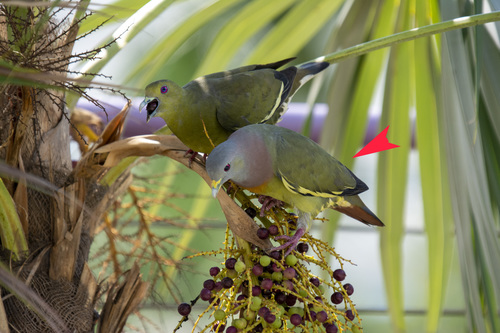 Pink-necked Green-Pigeon
In breve
Il segno distintivo più affidabile tra Amethyst Brown-Dove e Pink-necked Green-Pigeon è il colore e la struttura complessiva: il brown-dove è un uccello scuro, di foresta profonda, con toni ricchi di marrone e viola e un becco lungo e pesante, mentre il green-pigeon è di un verde brillante (soprattutto le femmine e gli immaturi), con i maschi che mostrano un collo rosa distintivo e un petto arancione. In volo, il green-pigeon mostra una barra gialla attraverso l'ala (dai terziali con bordi gialli), assente nel brown-dove. Il brown-dove è scarso e timido nella foresta densa, mentre il green-pigeon è comune e spesso visto in habitat più aperti o urbani. I giovani green-pigeons somigliano alle femmine ma sono ancora molto più verdi di qualsiasi brown-dove.
Consigli di identificazione
- Overall color: Il brown-dove è sempre marrone con sfumature violacee e grigie; il green-pigeon è verde in generale (femmina/immaturo) o ha rosa/arancione/verde (maschio).
- Wing pattern in flight: Il green-pigeon (tutte le età) mostra una barra gialla attraverso l'ala dai terziali con bordi gialli; il brown-dove non mostra mai giallo nell'ala.
- Bill structure: Il brown-dove ha un becco notevolmente lungo e pesante (più lungo del suo tarso); il green-pigeon ha un becco più corto e più snello.
- Eye region: Il brown-dove ha pelle nuda rosa attorno all'occhio e linee suboculari bianche; il green-pigeon non ha queste ma può avere un becco pallido.
- Male green-pigeon: Unico specie con un collo rosa e un petto arancione—mai eguagliato dal brown-dove.
- Female/immature green-pigeon: Verde sopra, giallastro sotto, corona verdognola—nessun brown-dove è mai così verde.
- Underparts: Il brown-dove è marrone violaceo sotto con copritrici del sottocoda di un ricco color sabbia; il green-pigeon è giallastro sotto (femmina/immaturo) o arancione (maschio).
- Tail: Il green-pigeon ha una coda grigia con una banda terminale nera e copritrici superiori castagne; la coda del brown-dove non è descritta come distintiva.
- Habitat: Il brown-dove si trova solo in foreste dense e mature; il green-pigeon è comune in habitat aperti, di margine e urbani.
- Behavior: Il brown-dove è timido, raramente visto in aperto; il green-pigeon è gregario, spesso si posa in aperto.
- Flight style: Il green-pigeon è veloce e diretto, spesso in stormi; il brown-dove si alza basso e si nasconde rapidamente.
- Abundance: Il green-pigeon è comune e diffuso; il brown-dove è raro e locale.
- Sexual dimorphism: Solo il green-pigeon mostra forti differenze maschio/femmina; i sessi del brown-dove sono simili.
- Juvenile confusion: I giovani green-pigeons possono essere confusi con i brown-doves a distanza, ma sono sempre più verdi e mostrano la barra gialla dell'ala in volo.
- Voice: Il green-pigeon può emettere un richiamo fischiante o raspante in gruppo; la voce del brown-dove non è descritta, quindi non fare affidamento su questo per la separazione.
Taglia
Amethyst Brown-Dove è leggermente più pesante (massa corporea circa 145 g [wikidata]) e appare più robusto, con un becco notevolmente più lungo e pesante rispetto al suo tarso. Pink-necked Green-Pigeon è simile in lunghezza (25–30 cm), ma la massa varia (105–160 g), con le femmine più piccole. Sul campo, il brown-dove spesso appare più robusto e meno aerodinamico rispetto al green-pigeon, che ha un aspetto più snello e compatto con un becco più corto.
Piumaggio
- Juvenile/immature: I giovani Pink-necked Green-Pigeons somigliano alle femmine adulte—verdi in generale, con una pancia giallastra e una corona verdognola, e più grigi sopra. Mancano del collo rosa e del petto arancione dei maschi adulti, ma mostrano ancora la barra gialla dell'ala in volo, che non è mai presente nel brown-dove. Gli immaturi di Amethyst Brown-Dove non sono descritti in dettaglio, ma tutte le età sono generalmente di un marrone scuro con sfumature violacee e grigie, senza alcun verde o giallo.
- Adult male Pink-necked Green-Pigeon: Collo e parte superiore del petto rosa, parte inferiore del petto arancione, dorso verde oliva, pancia gialla e una barra gialla attraverso l'ala in volo. Testa e coda grigie con una banda terminale nera.
- Adult female Pink-necked Green-Pigeon: Verde in generale, giallastra sotto, corona e nuca verdognole, barra gialla dell'ala in volo.
- Amethyst Brown-Dove (tutte le età/sessi): Marrone più scuro e ricco in generale con parti inferiori marrone violaceo, ampia macchia blu-viola sul mantello, mento e gola marrone-rossicci con striature più scure, sfumatura grigia, pelle nuda rosa attorno all'occhio e iridescenza ametista o viola sulla nuca. Le linee bianche suboculari sotto l'occhio sono presenti ma possono essere sottili. Nessun tono verde o giallo ovunque.
Comportamento
Amethyst Brown-Dove è una specie timida e rara delle foreste profonde e dense, spesso rimanendo nascosta e difficile da osservare. Tende a posarsi silenziosamente ed è raramente visto in aperto. Pink-necked Green-Pigeon è gregario, spesso visto in piccoli stormi, ed è molto più avvicinabile, frequentemente posandosi in aperto su fili, alberi da frutto o nei giardini. In volo, i green-pigeons sono veloci e diretti, rivelando spesso la barra gialla dell'ala; i brown-doves sono più propensi a alzarsi bassi e scomparire rapidamente nel riparo.
Habitat
Amethyst Brown-Dove è ristretto a foreste dense e mature su diverse isole filippine ed è generalmente raro e locale. Evita aree aperte o disturbate. Pink-necked Green-Pigeon è diffuso e comune in tutta l'Asia sudorientale e nelle Filippine, prosperando in una varietà di habitat: margine della foresta, crescita secondaria, mangrovie, giardini, piantagioni e persino parchi urbani. Se l'uccello è visto in una città, piantagione o area aperta, è quasi certamente un green-pigeon.
Voce
Pink-necked Green-Pigeon non è molto vocale, ma i maschi a volte emettono un richiamo fischiante tri-sillabico che termina in un coo, e occasionalmente un suono raspante 'krrak krrak...', specialmente nei dormitori comuni o quando trovano cibo. Le vocalizzazioni di Amethyst Brown-Dove non sono descritte nelle note fornite, quindi la voce non è una separazione affidabile sul campo basata sulle informazioni attuali.
Amethyst Brown-Dove · Pink-necked Green-Pigeon · I miei uccelli difficili