

choca-canela vs recurve-billed bushbird
Thamnophilus amazonicus versus Clytoctantes alixii
Jogue um quiz com choca-canela e recurve-billed bushbird
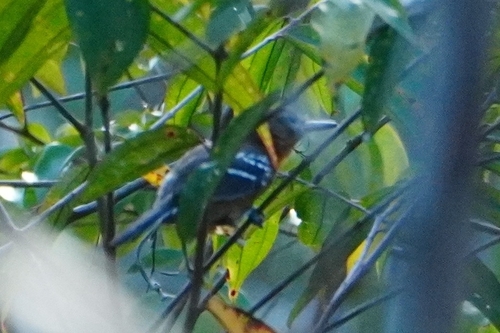 choca-canela
 recurve-billed bushbird
Em resumo
A marca de campo mais confiável para separar choca-canela de recurve-billed bushbird é o bico: o bico do bushbird é maciço, pálido e dramaticamente curvado para cima, enquanto o do antshrike é robusto, mas reto e escuro. Os machos adultos de ambos são principalmente cinza escuro a negróide, mas o macho do bushbird apresenta uma mancha branca única no ombro e garganta preta, enquanto o macho do antshrike tem uma coroa preta e manchas brancas mais evidentes nas asas e cauda. As fêmeas têm ambas coroa ruiva, mas a fêmea do antshrike é mais brilhante e mais amarelada por baixo, com oliva nas costas, em comparação com a fêmea do bushbird, que é overall mais escura, com um marrom ruivo mais uniforme. Em voo ou empoleirado, a cauda curta do bushbird e o bico pesado e curvado para cima lhe conferem uma aparência mais robusta e de cabeça mais larga. O habitat também é uma forte pista: o bushbird é uma especialidade andina local de crescimento secundário denso, enquanto o antshrike é amplamente distribuído nas terras baixas amazônicas.
Dicas de identificação
- Formato e cor do bico: O bico do bushbird é enorme, de cor chifre pálido, comprimido lateralmente e curva acentuadamente para cima (mandíbula curvada) — único entre as formigas. O bico do antshrike é robusto e curvado, mas reto e escuro. Esta é a marca de campo mais confiável em qualquer idade.
- Cabeça e aparência: O bushbird parece ter uma cabeça larga e robusta, com cauda curta e bico maciço; o antshrike é mais esguio, com cauda mais longa e menos pesada na cabeça.
- Plumagem do macho adulto: Os machos do bushbird são cinza escuro com garganta preta, lore e parte superior do peito, e uma mancha branca conspícua entre os ombros. Os machos do antshrike têm uma coroa e testa pretas, cabeça e partes inferiores cinzas, costas pretas com rabo cinza, e manchas brancas mais evidentes nas asas e cauda. A mancha branca do escápulo do antshrike geralmente está oculta.
- Plumagem da fêmea adulta: Ambas têm coroas ruivas, mas as fêmeas do antshrike são mais brilhantes, com partes inferiores vermelho-amareladas, costas de oliva profundo e barriga clara. As fêmeas do bushbird são mais escuras, com um marrom ruivo mais uniforme acima e marrom avermelhado abaixo, com asas e cauda negras e pontas ruivas pálidas nas coberturas das asas.
- Bushbird juvenil/subadulto: Os bushbirds subadultos são de um amarelo escuro e marrom negróide com marrom avermelhado na cabeça e garganta, e pontos brancos nas coberturas das asas — nenhuma plumagem juvenil/imatura é descrita para o antshrike, então isso é diagnóstico para jovens bushbirds.
- Padrão de asas e cauda em voo: O antshrike (ambos os sexos) mostra manchas e pontas brancas mais proeminentes nas asas e cauda, especialmente visíveis em voo ou quando abertas. As marcas do bushbird são muito menos contrastantes — os machos têm pequenas manchas pretas nas coberturas, as fêmeas têm pontas ruivas pálidas, mas no geral as asas e cauda parecem mais escuras e simples.
- Cor da coroa (fêmeas): As fêmeas do antshrike têm uma coroa ruiva brilhante contrastando com as costas de oliva e barriga clara; as fêmeas do bushbird têm uma coroa marrom ruivo escura que se mistura com as costas e o rabo.
- Mancha no ombro (machos): Os machos do bushbird têm uma mancha branca conspícua entre os ombros, visível quando empoleirados ou em voo. Os machos do antshrike têm uma mancha branca do escápulo oculta, raramente vista.
- Cor das partes inferiores (fêmeas): As fêmeas do antshrike são mais brilhantes e mais amareladas por baixo, enquanto as fêmeas do bushbird são mais escuras, com um marrom avermelhado, especialmente nas laterais e na parte inferior da cauda.
- Comprimento e formato da cauda: O bushbird tem uma cauda curta, acentuando sua aparência robusta; a cauda do antshrike é mais longa e mais típica dos antshrikes do gênero Thamnophilus.
- Habitat e distribuição: Se você está em floresta de baixa altitude amazônica, é quase certamente um antshrike. O bushbird é restrito a crescimento secundário denso (frequentemente bambu) nas montanhas do norte da Colômbia e Venezuela.
- Comportamento: O antshrike é frequentemente encontrado em bandos mistos e forrageia de forma mais aberta; o bushbird é secreto e raramente visto, frequentemente em bambu denso.
- Tamanho: O bushbird é ligeiramente maior e mais robusto (16–17 cm) do que o antshrike (14–15 cm), mas isso é sutil e menos confiável do que a forma do bico ou plumagem.
- Dimorfismo sexual: Ambas as espécies são dimórficas sexualmente, mas o padrão difere: as fêmeas do antshrike são mais brilhantes e contrastantes, enquanto as fêmeas do bushbird são mais escuras e mais uniformes.
- Voz: Nenhuma diferença vocal diagnóstica é descrita nas fontes; confie nas marcas visuais.
Tamanho
O recurve-billed bushbird é ligeiramente maior e mais robusto (16–17 cm) do que o choca-canela (14–15 cm) [wikipedia]. O bushbird é notavelmente mais robusto com uma cauda mais curta, enquanto o antshrike é mais esguio e com cauda mais longa para seu tamanho. O bico do bushbird é muito maior e mais proeminente, acentuando sua aparência de cabeça pesada. O peso é dado apenas para o antshrike (17–21 g), mas a construção do bushbird sugere que ele é mais pesado para seu comprimento.
Plumagem
-
Plumagem juvenil/subadulto: Apenas o bushbird tem plumagem subadulta descrita: os machos subadultos são de um amarelo escuro e marrom negróide, com marrom avermelhado na testa, laterais da cabeça e garganta, e pontos brancos nas coberturas das asas. Nenhuma plumagem juvenil/imatura é descrita para o antshrike, então esse contraste é diagnóstico para jovens bushbirds.
-
Machos adultos: Ambos são principalmente cinza escuro a negróide, mas o macho do bushbird tem uma garganta preta e lore, uma mancha branca entre os ombros, e penas de voo marrom-escuras com pequenas manchas pretas nas coberturas. O macho do antshrike tem uma coroa e testa pretas, cabeça cinza e partes inferiores, costas pretas com rabo cinza, e manchas brancas mais extensas e pontas nas asas e cauda. A mancha branca do escápulo do antshrike geralmente está oculta.
-
Fêmeas adultas: Ambas mostram coroas ruivas, mas a fêmea do antshrike é mais brilhante e mais amarelada por baixo, com costas de oliva profundo e barriga clara, e asas/cauda semelhantes ao macho, mas mais marrons com bordas de oliva pálido. A fêmea do bushbird é overall escura, marrom ruivo acima, asas e cauda negróides com pontas ruivas pálidas nas coberturas, e partes inferiores marrom avermelhado que são mais escuras nas laterais e na parte inferior da cauda. As partes inferiores da fêmea do antshrike são mais brilhantes e contrastantes do que as do bushbird.
-
Padrão de asas e cauda: O antshrike (ambos os sexos) mostra manchas e pontas brancas mais proeminentes nas asas e cauda, especialmente em voo. As coberturas das asas do bushbird têm pequenas manchas pretas (macho) ou pontas ruivas pálidas (fêmea), mas o efeito geral é muito menos contrastante.
Comportamento
O choca-canela forrageia sozinho ou em pares, frequentemente juntando-se a bandos de espécies mistas e às vezes seguindo enxames de formigas. Ele se move através de arbustos e emaranhados de vinhas, coletando insetos de folhas e galhos, e faz curtas investidas. O comportamento do bushbird é menos bem descrito, mas está associado a crescimento secundário denso e bambu, e foi visto em enxames de formigas. O bushbird é mais secreto e localizado, enquanto o antshrike é mais propenso a ser visto se movendo com outras aves no sub-bosque.
Habitat
O habitat é um forte separador. O choca-canela é amplamente distribuído em florestas de baixa altitude amazônicas em grande parte da América do Sul tropical (exceto o cone sul), favorecendo arbustos e emaranhados de vinhas em florestas úmidas. O recurve-billed bushbird é altamente local, encontrado apenas em densos aglomerados de vegetação secundária (frequentemente bambu) na extremidade norte dos Andes na Colômbia e Venezuela. Se você está na bacia amazônica, você está quase certamente vendo um antshrike; se estiver nas encostas andinas com bambu denso, o bushbird é possível.
choca-canela · recurve-billed bushbird · Minhas aves difíceis