

Batará Amazónico vs Batará Piquicurvo
Thamnophilus amazonicus frente a Clytoctantes alixii
Juega un quiz con Batará Amazónico y Batará Piquicurvo
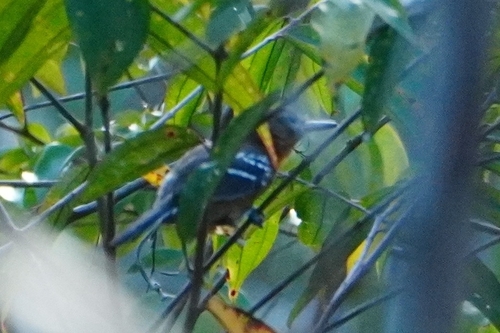 Batará Amazónico
 Batará Piquicurvo
En breve
La marca de campo más confiable para separar el Batará Amazónico del Batará Piquicurvo es el pico: el pico del batará es masivo, pálido y dramáticamente curvado hacia arriba, mientras que el pico del batará amazónico es robusto pero recto y oscuro. Los machos adultos de ambos son mayormente de color gris oscuro a negruzco, pero el macho del batará muestra una única mancha blanca en el hombro y una garganta negra, mientras que el macho del batará amazónico tiene una corona negra y manchas blancas más evidentes en las alas y la cola. Las hembras son ambas con corona rufo, pero la hembra del batará amazónico es más brillante y más amarillenta por debajo, con oliva en la espalda, en comparación con la hembra del batará, que es en general más oscura y de un rufo marrón más uniforme. En vuelo o posada, la cola corta del batará y su pesado pico curvado le dan un aspecto más robusto y de cabeza más ancha. El hábitat también es una pista fuerte: el batará es una especialidad andina local de crecimiento secundario denso, mientras que el batará amazónico es común en las tierras bajas amazónicas.
Consejos de identificación
- Forma y color del pico: El pico del batará es enorme, de color cuerno pálido, comprimido lateralmente y se curva bruscamente hacia arriba (mandíbula curvada), único entre las hormigueras. El pico del batará amazónico es robusto y ganchudo, pero recto y oscuro. Esta es la marca de campo más confiable a cualquier edad.
- Cabeza y apariencia: El batará parece tener una cabeza ancha y robusta, con una cola corta y un pico masivo; el batará amazónico es más esbelto, con cola más larga y menos pesada en la cabeza.
- Plumaje de machos adultos: Los machos del batará son de color gris oscuro con una garganta negra, loretes y parte superior del pecho, y una conspicua mancha blanca entre los hombros. Los machos del batará amazónico tienen una corona y frente negras, cabeza gris en otras partes y partes inferiores, espalda negra con rabadilla gris, y manchas blancas más evidentes en las alas y la cola. La mancha escápula blanca del batará amazónico suele estar oculta.
- Plumaje de hembras adultas: Ambas tienen coronas rufo, pero las hembras del batará amazónico son más brillantes, con partes inferiores de un marrón rojizo amarillento, espalda de oliva profundo y vientre claro. Las hembras del batará son más oscuras, de un rufo marrón más uniforme por encima y marrón rojizo por debajo, con alas y cola negruzcas y puntas rufo pálido en las cobertoras de las alas.
- Batará juvenil/subadulto: Los batarás subadultos son de un marrón amarillento oscuro y negruzco con marrón rojizo amarillento en la cabeza y la garganta, y puntos blancos en las cobertoras de las alas; no se describe plumaje juvenil/inmaduro para el batará amazónico, por lo que este contraste es diagnóstico para los jóvenes batarás.
- Patrón de alas y cola en vuelo: El batará amazónico (ambos sexos) muestra manchas y puntas blancas más prominentes en las alas y la cola, especialmente visibles en vuelo o cuando se despliegan. Las marcas del batará son mucho menos contrastantes: los machos tienen pequeñas manchas negras en las cobertoras, las hembras tienen puntas rufo pálido, pero en general las alas y la cola parecen más oscuras y simples.
- Color de la corona (hembras): Las hembras del batará amazónico tienen una brillante corona rufo que contrasta con la espalda oliva y el vientre claro; las hembras del batará tienen una corona rufo marrón oscura que se mezcla con la espalda y la rabadilla.
- Mancha en el hombro (machos): Los machos del batará tienen una conspicua mancha blanca entre los hombros, visible cuando están posados o en vuelo. Los machos del batará amazónico tienen una mancha escápula blanca oculta, rara vez vista.
- Color de las partes inferiores (hembras): Las hembras del batará amazónico son más brillantes y más amarillentas por debajo, mientras que las hembras del batará son de un marrón rojizo más oscuro, especialmente en los flancos y la parte inferior de la cola.
- Longitud y forma de la cola: El batará tiene una cola corta, acentuando su aspecto robusto; la cola del batará amazónico es más larga y más típica de los batarás del género Thamnophilus.
- Hábitat y distribución: Si estás en un bosque de tierras bajas amazónicas, casi con certeza es un batará amazónico. El batará está restringido a un crecimiento secundario denso (a menudo bambú) en los Andes del norte de Colombia y Venezuela.
- Comportamiento: El batará amazónico a menudo se encuentra en bandadas mixtas y forrajea de manera más abierta; el batará es secreto y rara vez se ve, a menudo en denso bambú.
- Tamaño: El batará es ligeramente más grande y robusto (16–17 cm) que el batará amazónico (14–15 cm), pero esto es sutil y menos confiable que la forma del pico o el plumaje.
- Dimorfismo sexual: Ambas especies son dimórficas sexualmente, pero el patrón difiere: las hembras del batará amazónico son más brillantes y contrastantes, las hembras del batará son más oscuras y más uniformes.
- Voz: No se describen diferencias vocales diagnósticas en las fuentes; confía en las marcas visuales.
Tamaño
El Batará Piquicurvo es ligeramente más grande y robusto (16–17 cm) que el Batará Amazónico (14–15 cm) [wikipedia]. El batará es notablemente más robusto con una cola más corta, mientras que el batará amazónico es más esbelto y tiene una cola más larga para su tamaño. El pico del batará es mucho más grande y prominente, acentuando su apariencia de cabeza pesada. El peso solo se da para el batará amazónico (17–21 g), pero la constitución del batará sugiere que es más pesado para su longitud.
Plumaje
-
Plumaje juvenil/subadulto: Solo el batará tiene plumaje subadulto descrito: los machos subadultos son de un marrón amarillento oscuro y negruzco, con marrón rojizo amarillento en la frente, lados de la cabeza y garganta, y puntos blancos en las cobertoras de las alas. No se describe plumaje juvenil/inmaduro para el batará amazónico, por lo que este contraste es diagnóstico para los jóvenes batarás.
-
Machos adultos: Ambos son mayormente de color gris oscuro a negruzco, pero el macho del batará tiene una garganta negra y loretes, una mancha blanca entre los hombros, y plumas de vuelo marrón negruzco con pequeñas manchas negras en las cobertoras. El macho del batará amazónico tiene una corona y frente negras, cabeza gris en otras partes y partes inferiores, espalda negra con rabadilla gris, y manchas y puntas blancas más extensas en las alas y la cola. La mancha escápula blanca del batará amazónico suele estar oculta.
-
Hembras adultas: Ambas muestran coronas rufo, pero la hembra del batará amazónico es más brillante y más amarillenta por debajo, con una espalda de oliva profundo y vientre claro, y alas/cola similares al macho pero más marrones con bordes oliva pálido. La hembra del batará es en general de un rufo marrón oscuro por encima, con alas y cola negruzcas con puntas rufo pálido en las cobertoras, y partes inferiores marrón rojizo que son más oscuras en los flancos y la parte inferior de la cola. Las partes inferiores de la hembra del batará amazónico son más brillantes y contrastantes que las del batará.
-
Patrón de alas y cola: El batará amazónico (ambos sexos) muestra manchas y puntas blancas más prominentes en las alas y la cola, especialmente en vuelo. Las cobertoras de alas del batará tienen pequeñas manchas negras (macho) o puntas rufo pálido (hembra), pero el efecto general es mucho menos contrastante.
Comportamiento
El Batará Amazónico forrajea solo o en parejas, a menudo uniéndose a bandadas de especies mixtas y a veces siguiendo enjambres de hormigas ejército. Se mueve a través de matorrales y enredaderas, recolectando insectos de hojas y ramas, y realiza cortos saltos. El comportamiento del batará es menos bien descrito, pero está asociado con un crecimiento secundario denso y bambú, y se ha visto en enjambres de hormigas. El batará es más secreto y localizado, mientras que el batará amazónico es más probable que se vea moviéndose con otros pájaros en el estrato medio.
Hábitat
El hábitat es un fuerte separador. El Batará Amazónico es común en los bosques de tierras bajas amazónicas en la mayor parte de América del Sur tropical (excepto el cono sur), favoreciendo matorrales y enredaderas en bosques húmedos. El Batará Piquicurvo es altamente local, encontrado solo en densas formaciones de vegetación secundaria (a menudo bambú) en el extremo norte de los Andes en Colombia y Venezuela. Si estás en la cuenca amazónica, casi con certeza estás viendo un batará amazónico; si estás en las laderas andinas con denso bambú, es posible que veas un batará.