

Amazonian Antshrike vs Recurve-billed Bushbird
Thamnophilus amazonicus contro Clytoctantes alixii
Fai un quiz con Amazonian Antshrike e Recurve-billed Bushbird
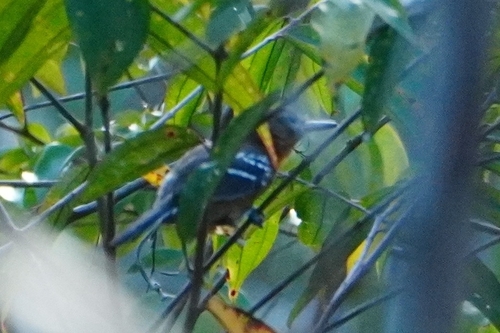 Amazonian Antshrike
 Recurve-billed Bushbird
In breve
Il segno distintivo più affidabile per separare l'Amazonian Antshrike dal Recurve-billed Bushbird è il becco: il becco del bushbird è massiccio, chiaro e drammaticamente rivolto verso l'alto, mentre quello dell'antshrike è robusto ma dritto e scuro. I maschi adulti di entrambi sono per lo più grigio scuro fino al nero, ma il maschio del bushbird mostra una caratteristica macchia bianca sulla spalla e una gola nera, mentre il maschio dell'antshrike ha una corona nera e macchie bianche più evidenti sulle ali e sulla coda. Le femmine hanno entrambe una corona rugginosa, ma la femmina dell'antshrike è più luminosa e più giallastra sotto, con oliva sulla schiena, rispetto alla femmina del bushbird che è complessivamente più scura e di un ruggine uniforme. In volo o posata, la coda corta del bushbird e il pesante becco rivolto verso l'alto gli conferiscono un aspetto più robusto e massiccio. L'habitat è anche un forte indizio: il bushbird è una specialità andina locale di crescita secondaria densa, mentre l'antshrike è diffuso nelle pianure amazzoniche.
Consigli di identificazione
- Bill shape and color: Il becco del bushbird è enorme, di colore chiaro simile all'avorio, compresso lateralmente e curva bruscamente verso l'alto (mandibola rivolta verso l'alto)—unico tra gli antbirds. Il becco dell'antshrike è robusto e ricurvo ma dritto e scuro. Questo è il segno distintivo più affidabile a qualsiasi età.
- Head and jizz: Il bushbird appare massiccio e robusto, con una coda corta e un becco enorme; l'antshrike è più snello, con una coda più lunga e meno pesante.
- Adult male plumage: I maschi del bushbird sono grigio scuro con una gola nera, lore e parte superiore del petto, e una macchia bianca evidente tra le spalle. I maschi dell'antshrike hanno una corona e una fronte nere, testa e parti inferiori grigie, schiena nera con un sopracciglio grigio, e macchie bianche più evidenti sulle ali e sulla coda. La macchia scapolare bianca dell'antshrike è solitamente nascosta.
- Adult female plumage: Entrambi hanno corone rugginose, ma le femmine dell'antshrike sono più luminose, con parti inferiori rosso-brune giallastre, schiena di un verde oliva profondo e ventre chiaro. Le femmine del bushbird sono più scure, di un ruggine uniforme sopra e rosso-bruno sotto, con ali e coda nere e punte rugginose chiare sulle copritrici delle ali.
- Juvenile/subadult bushbird: I bushbird subadulti sono di un giallo scuro e marrone scuro con un rosso giallastro sulla testa e sulla gola, e punti bianchi sulle copritrici delle ali—nessuna plumaggio giovanile è descritto per l'antshrike, quindi questo è diagnostico per i giovani bushbird.
- Wing and tail pattern in flight: L'antshrike (entrambi i sessi) mostra macchie bianche e punte più evidenti sulle ali e sulla coda, specialmente visibili in volo o quando spiegate. I segni del bushbird sono molto meno contrastanti—i maschi hanno piccole macchie nere sulle copritrici, le femmine hanno punte rugginose chiare, ma nel complesso le ali e la coda appaiono più scure e più semplici.
- Crown color (females): Le femmine dell'antshrike hanno una corona rugginosa brillante che contrasta con la schiena oliva e il ventre chiaro; le femmine del bushbird hanno una corona rugginosa-bruna scura che si fonde con la schiena e il sopracciglio.
- Shoulder patch (males): I maschi del bushbird hanno una macchia bianca evidente tra le spalle, visibile quando sono posati o in volo. I maschi dell'antshrike hanno una macchia scapolare bianca nascosta, raramente vista.
- Underpart color (females): Le femmine dell'antshrike sono più luminose e più giallastre sotto, mentre le femmine del bushbird sono di un marrone rosso scuro, specialmente sui fianchi e sull'undertail.
- Tail length and shape: Il bushbird ha una coda corta, accentuando il suo aspetto robusto; la coda dell'antshrike è più lunga e più tipica degli antshrike del genere Thamnophilus.
- Habitat and range: Se ti trovi nella foresta di pianura amazzonica, è quasi certamente un antshrike. Il bushbird è limitato a una crescita secondaria densa (spesso bambù) nelle Ande settentrionali della Colombia e del Venezuela.
- Behavior: L'antshrike è spesso in gruppi misti e cerca cibo in modo più aperto; il bushbird è riservato e raramente visto, spesso in bambù denso.
- Size: Il bushbird è leggermente più grande e massiccio (16–17 cm) rispetto all'antshrike (14–15 cm), ma questo è sottile e meno affidabile rispetto alla forma del becco o al piumaggio.
- Sexual dimorphism: Entrambe le specie sono sessualmente dimorfiche, ma il modello differisce: le femmine dell'antshrike sono più luminose e più contrastanti, le femmine del bushbird sono più scure e più uniformi.
- Voice: Non ci sono differenze vocali diagnostiche descritte nelle fonti; fare affidamento sui segni visivi.
Taglia
Il Recurve-billed Bushbird è leggermente più grande e massiccio (16–17 cm) rispetto all'Amazonian Antshrike (14–15 cm) [wikipedia]. Il bushbird è notevolmente più robusto con una coda più corta, mentre l'antshrike è più snello e con una coda più lunga per la sua taglia. Il becco del bushbird è molto più grande e prominente, accentuando il suo aspetto pesante. Il peso è dato solo per l'antshrike (17–21 g), ma la struttura del bushbird suggerisce che sia più pesante per la sua lunghezza.
Piumaggio
-
Juvenile/subadult plumage: Solo il bushbird ha descritto il piumaggio subadulto: i maschi subadulti sono di un giallo scuro e marrone scuro, con un rosso giallastro sulla fronte, lati della testa e gola, e punti bianchi sulle copritrici delle ali. Nessun piumaggio giovanile/immaturo è descritto per l'antshrike, quindi questo contrasto è diagnostico per i giovani bushbird.
-
Adult males: Entrambi sono per lo più grigio scuro fino al nero, ma il maschio del bushbird ha una gola nera e lore, una macchia bianca tra le spalle, e piume da volo marrone scuro con piccole macchie nere sulle copritrici. Il maschio dell'antshrike ha una corona e una fronte nere, testa grigia altrove e parti inferiori, schiena nera con un sopracciglio grigio, e macchie bianche più estese e punte sulle ali e sulla coda. La macchia scapolare bianca dell'antshrike è solitamente nascosta.
-
Adult females: Entrambi mostrano corone rugginose, ma la femmina dell'antshrike è più luminosa e più giallastra sotto, con una schiena di un verde oliva profondo e un ventre chiaro, e ali/coda simili al maschio ma più marroni con bordi oliva chiari. La femmina del bushbird è complessivamente di un ruggine scuro sopra, ali e coda nere con punte rugginose chiare sulle copritrici, e parti inferiori rosso-brune che sono più scure sui fianchi e sull'undertail. Le parti inferiori della femmina dell'antshrike sono più luminose e più contrastanti rispetto a quelle del bushbird.
-
Wing and tail pattern: L'antshrike (entrambi i sessi) mostra macchie bianche e punte più evidenti sulle ali e sulla coda, specialmente in volo. Le copritrici delle ali del bushbird hanno piccole macchie nere (maschio) o punte rugginose chiare (femmina), ma l'effetto complessivo è molto meno contrastante.
Comportamento
L'Amazonian Antshrike cerca cibo singolarmente o in coppie, spesso unendosi a stormi di specie miste e talvolta seguendo sciami di formiche soldato. Si muove attraverso i cespugli e le trame di vite, raccogliendo insetti da foglie e rami, e compie brevi voli. Il comportamento del bushbird è meno ben descritto, ma è associato a una crescita secondaria densa e bambù, ed è stato visto presso sciami di formiche. Il bushbird è più riservato e localizzato, mentre l'antshrike è più probabile che venga visto muoversi con altri uccelli nel sottobosco.
Habitat
L'habitat è un forte separatore. L'Amazonian Antshrike è diffuso nelle foreste di pianura amazzoniche in gran parte dell'America del Sud tropicale (eccetto il cono meridionale), favorendo i cespugli e le trame di vite nella foresta umida. Il Recurve-billed Bushbird è altamente locale, trovato solo in densi gruppi di vegetazione secondaria (spesso bambù) all'estremità settentrionale delle Ande in Colombia e Venezuela. Se ti trovi nel bacino amazzonico, stai quasi certamente vedendo un antshrike; se ti trovi nelle pendici andine con bambù denso, è possibile vedere un bushbird.
Amazonian Antshrike · Recurve-billed Bushbird · I miei uccelli difficili