

papa-mosquitos vs sabiá-da-várzea
Empidonax virescens versus Turdus sanchezorum
Jogue um quiz com papa-mosquitos e sabiá-da-várzea
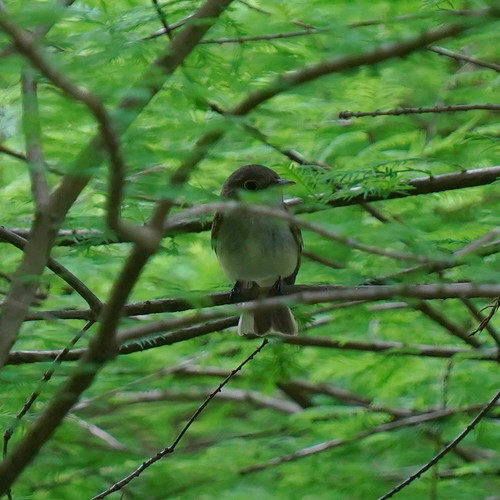 papa-mosquitos
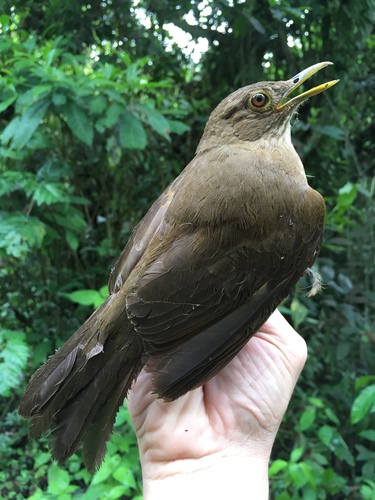 sabiá-da-várzea
Em resumo
A maneira mais confiável de separar o papa-mosquitos do sabiá-da-várzea é pela estrutura geral e plumagem: o papa-mosquitos é um Empidonax pequeno, esbelto e oliva, com um bico curto e barras alares ousadas, enquanto o sabiá-da-várzea é um sabiá muito maior, robusto e marrom, com um padrão de partes inferiores mais rico e estriado e um anel ocular laranja contrastante. O tamanho e a forma do sabiá são inconfundíveis em comparação direta, mas em vistas ruins, note o anel ocular branco do papa-mosquitos e as barras alares em contraste com o anel ocular laranja do sabiá e a falta de barras alares. A voz e o comportamento também diferem acentuadamente, com o papa-mosquitos emitindo chamadas explosivas de peet-sa e o sabiá-da-várzea cantando canções lentas e suaves. Mesmo em voo ou com aves imaturas, o volume e os tons marrons quentes do sabiá contrastam com a aparência compacta e oliva-e-branca do papa-mosquitos.
Dicas de identificação
- O tamanho é uma pista importante: O sabiá-da-várzea é quase duas vezes mais longo e várias vezes mais pesado que o papa-mosquitos. Se a ave parecer grande e robusta, é o sabiá.
- Barras alares vs. sem barras alares: O papa-mosquitos sempre apresenta duas barras alares brancas nítidas em asas escuras; o sabiá-da-várzea não possui barras alares. Isso é confiável em todas as idades e em todas as estações.
- Cor do anel ocular: O anel ocular do papa-mosquitos é branco e se destaca em seu rosto oliva; o do sabiá-da-várzea é laranja opaco, combinando com os tons marrons quentes de sua cabeça.
- Estrutura e cor do bico: O papa-mosquitos tem um bico curto e largo com a parte superior escura e a parte inferior amarelada; o bico do sabiá é mais longo, amarelo opaco com uma base escura, e mais típico de um sabiá do gênero Turdus.
- Cor das partes superiores: O papa-mosquitos é verde-oliva por cima, enquanto o sabiá-da-várzea é de um rico marrom sépia. A cor do sabiá é mais quente e uniforme.
- Padrão das partes inferiores: As partes inferiores do papa-mosquitos são limpas e esbranquiçadas com uma lavagem oliva no peito; o sabiá tem uma garganta estriada de cor creme, peito/flancos de cor caramelo e uma barriga mais clara com penas de cauda estriadas.
- Cor da parte inferior da asa: O sabiá-da-várzea tem penas de cobertura da parte inferior da asa de um laranja-rúfio brilhante, visíveis em voo ou durante a limpeza; a parte inferior da asa do papa-mosquitos não é descrita como contrastante.
- Cauda: A cauda do sabiá é mais longa e marrom acinzentado com bordas quentes; a do papa-mosquitos é mais curta e mais escura, combinando com as asas.
- Cor das pernas: O papa-mosquitos tem pernas claras; as pernas do sabiá-da-várzea são oliva-acinzentadas, mas isso é sutil e raramente diagnóstico à distância.
- Postura e comportamento: Os papa-mosquitos empoleiram-se eretos e saem em busca de insetos; os sabiás são mais propensos a serem vistos pulando no chão ou se movendo através da vegetação baixa.
- Estilo de voo: O papa-mosquitos é ágil e leve em voo, frequentemente batendo as asas e a cauda; o sabiá-da-várzea é mais pesado e mais direto.
- Voz: O peet-sa explosivo do papa-mosquitos é diferente de qualquer sabiá; o carol suave e arrastado do sabiá-da-várzea é típico dos sabiás do gênero Turdus e nunca é tão abrupto quanto as chamadas do papa-mosquitos.
- Contexto do habitat: Se visto em floresta amazônica inundada sazonalmente, é provável que seja o sabiá-da-várzea; se em floresta madura no leste da América do Norte, é o papa-mosquitos. No entanto, não confie apenas no habitat se a localização for incerta.
- Sexo e idade: Ambas as espécies têm plumagem semelhante em ambos os sexos e todas as idades, então o sexo não é útil para separação.
- Armadilhas: Em luz fraca, o anel ocular laranja do sabiá pode parecer pálido, e as barras alares brancas do papa-mosquitos podem ser menos óbvias. Sempre verifique múltiplas características—tamanho, estrutura e cor geral são as mais confiáveis.
Tamanho
O sabiá-da-várzea é muito maior e mais pesado que o papa-mosquitos. O sabiá mede cerca de 22–24 cm (8.7–9.4 in) de comprimento e pesa cerca de 58 g (2.0 oz), enquanto o papa-mosquitos tem apenas 14–15 cm (5.5–5.9 in) de comprimento e pesa 11–14 g (0.4–0.5 oz). O sabiá parece robusto e corpulento, com um peito largo e cauda mais longa, enquanto o papa-mosquitos é esbelto, com cabeça pequena e delicada. Mesmo à distância, a diferença de tamanho é impressionante se ambas as espécies forem familiares.
Plumagem
O papa-mosquitos (todas as idades) apresenta partes superiores verde-oliva, um anel ocular branco ousado e duas barras alares brancas brilhantes destacadas contra asas mais escuras. As partes inferiores são esbranquiçadas com uma lavagem oliva no peito, e o bico é largo com a parte superior escura e a parte inferior amarelada. Em contraste, o sabiá-da-várzea (adultos, sexos iguais) é rico em marrom sépia por cima, com um anel ocular laranja opaco e sem barras alares. Suas penas de voo são marrons escuras com bordas sépia quentes, e a cauda é marrom acinzentada com bordas quentes semelhantes. As partes inferiores são mais complexas: o queixo e a garganta são brancos com estrias marrons, o peito superior e os flancos são de cor caramelo, o peito inferior é mais claro e a barriga/ventre são esbranquiçados. As penas de cobertura da parte inferior da asa são de um laranja-rúfio brilhante, uma característica não presente no papa-mosquitos. O bico do sabiá é amarelo opaco com uma base escura, e as pernas são oliva-acinzentadas. Nenhum padrão específico de asa para idade é notado para ambas as espécies, então esses contrastes se aplicam a adultos e imaturos igualmente.
Comportamento
O papa-mosquitos geralmente empoleira-se ereto em ramos finos, frequentemente saindo para capturar insetos em voos curtos e acrobáticos. Seus movimentos são rápidos e inquietos, e ele frequentemente bate a cauda ou as asas. O sabiá-da-várzea, em contraste, se comporta como um sabiá típico: passa mais tempo no chão ou perto dele, pulando ou andando, e forrageando por insetos e frutas. Seus movimentos são mais lentos e deliberados, e ele é menos propenso a sair de um poleiro. Em voo, o sabiá parece mais pesado e mais direto, enquanto o papa-mosquitos é ágil e leve.
Habitat
O papa-mosquitos não é encontrado na mesma área que o sabiá-da-várzea, mas se encontrado em campo, o papa-mosquitos estaria em habitats florestais, frequentemente em florestas maduras com densa vegetação rasteira. O sabiá-da-várzea é encontrado em florestas de várzea (inundadas sazonalmente) na bacia amazônica do Brasil, Colômbia e Peru. O habitat do sabiá é mais propenso a ser uma floresta de baixa altitude, inundada sazonalmente, enquanto o papa-mosquitos prefere florestas maduras e mais secas. No entanto, o habitat sozinho não é diagnóstico se o observador não tiver certeza da localização.
Voz
A canção do papa-mosquitos é um peet-sa agudo e explosivo de duas notas, e sua chamada é um peet suave, às vezes semelhante à chamada de um pica-pau. Isso é muito diferente do sabiá-da-várzea, que canta um carol lento, suave e arrastado com frases curtas separadas por pausas. O sabiá também emite uma chamada crescente e miada e uma série de notas cuk. As vocalizações do papa-mosquitos são abruptas e penetrantes, enquanto as do sabiá são musicais e prolongadas.