

Acadian Flycatcher vs Varzea Thrush
Empidonax virescens contro Turdus sanchezorum
Fai un quiz con Acadian Flycatcher e Varzea Thrush
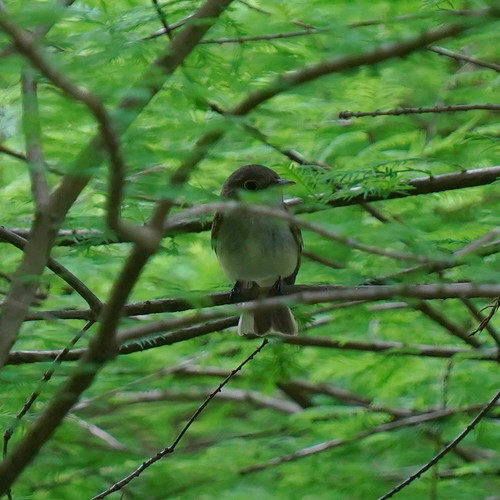 Acadian Flycatcher
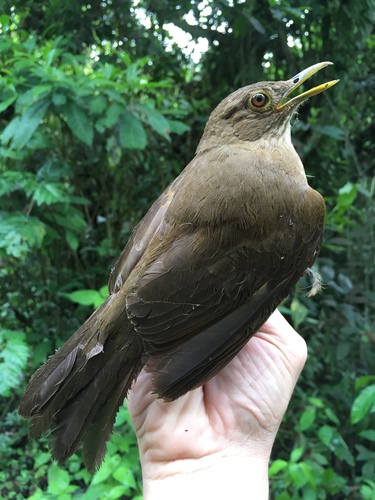 Varzea Thrush
In breve
Il modo più affidabile per separare l'Acadian Flycatcher dal Varzea Thrush è attraverso la struttura generale e il piumaggio: l'Acadian Flycatcher è un piccolo, snello, oliva Empidonax con un becco corto e bande alari audaci, mentre il Varzea Thrush è un thrush molto più grande, robusto e marrone con un motivo di parti inferiori più ricco e striato e un anello oculare arancione a contrasto. La dimensione e la forma del thrush sono inconfondibili in un confronto diretto, ma in viste scadenti, nota l'anello oculare bianco e le bande alari dell'Acadian rispetto all'anello oculare arancione e alla mancanza di bande alari del thrush. La voce e il comportamento differiscono anche nettamente, con l'Acadian che emette esplosivi richiami peet-sa e il Varzea Thrush che canta carole lente e morbide. Anche in volo o con uccelli immaturi, la massa e le tonalità marroni calde del thrush contrastano con l'aspetto compatto, oliva e bianco del flycatcher.
Consigli di identificazione
- La dimensione è un indizio importante: Il Varzea Thrush è quasi due volte più lungo e diverse volte più pesante dell'Acadian Flycatcher. Se l'uccello sembra grande e robusto, è il thrush.
- Bande alari vs. assenza di bande alari: L'Acadian Flycatcher mostra sempre due bande alari bianche nette su ali scure; il Varzea Thrush non ha bande alari. Questo è affidabile in tutte le età e in tutte le stagioni.
- Colore dell'anello oculare: L'anello oculare dell'Acadian Flycatcher è bianco e spicca sul suo volto oliva; quello del Varzea Thrush è arancione opaco, abbinato alle tonalità marroni calde della sua testa.
- Struttura e colore del becco: Il flycatcher ha un becco corto e largo con una parte superiore scura e una parte inferiore giallastra; il becco del thrush è più lungo, giallo opaco con una base nerastra, e più tipico di un thrush del genere Turdus.
- Colore della parte superiore: L'Acadian Flycatcher è verde oliva sopra, mentre il Varzea Thrush è di un ricco marrone seppia. Il colore del thrush è più caldo e uniforme.
- Motivo delle parti inferiori: Le parti inferiori del flycatcher sono bianche pulite con un lavaggio oliva sul petto; il thrush ha una gola striata color crema, petto/flanco marrone caramello e una pancia più chiara con copritail striati.
- Colore della parte inferiore dell'ala: Il Varzea Thrush ha copritail arancione-rossiccio brillanti, visibili in volo o quando si pulisce; la parte inferiore dell'ala dell'Acadian Flycatcher non è descritta come contrastante.
- Coda: La coda del thrush è più lunga e marrone grigiastro con bordi caldi; quella del flycatcher è più corta e più scura, abbinata alle ali.
- Colore delle gambe: L'Acadian Flycatcher ha gambe chiare; le gambe del Varzea Thrush sono grigio oliva, ma questo è sottile e raramente diagnostico a distanza.
- Postura e comportamento: I flycatchers si posano eretti e si lanciano per gli insetti; i thrushes sono più propensi a essere visti saltellare a terra o muoversi attraverso la vegetazione bassa.
- Stile di volo: L'Acadian Flycatcher è agile e leggero in volo, spesso muovendo ali e coda; il Varzea Thrush è più pesante e diretto.
- Voce: L'esplosivo peet-sa dell'Acadian Flycatcher è diverso da qualsiasi thrush; la carola morbida e slargata del Varzea Thrush è tipica dei thrush del genere Turdus e non è mai così brusca come i richiami del flycatcher.
- Contesto dell'habitat: Se visto in una foresta amazzonica stagionalmente allagata, è probabile che sia un Varzea Thrush; se in un bosco maturo nell'America del Nord orientale, è un Acadian Flycatcher. Tuttavia, non fare affidamento solo sull'habitat se la posizione è incerta.
- Sesso e età: Entrambe le specie hanno piumaggio simile in entrambi i sessi e in tutte le età, quindi il sesso non è utile per la separazione.
- Trappole: In scarsa luce, l'anello oculare arancione del thrush può sembrare pallido, e le bande alari bianche del flycatcher possono essere meno evidenti. Controlla sempre più caratteristiche: dimensione, struttura e colore generale sono i più affidabili.
Taglia
Il Varzea Thrush è molto più grande e pesante dell'Acadian Flycatcher. Il thrush misura circa 22–24 cm (8.7–9.4 in) di lunghezza e pesa circa 58 g (2.0 oz), mentre il flycatcher è lungo solo 14–15 cm (5.5–5.9 in) e pesa 11–14 g (0.4–0.5 oz). Il thrush appare robusto e pieno, con un petto ampio e una coda più lunga, mentre il flycatcher è snello, con una testa piccola e delicata. Anche a distanza, il divario di dimensione è sorprendente se entrambe le specie sono familiari.
Piumaggio
L'Acadian Flycatcher (tutte le età) mostra parti superiori verde oliva, un audace anello oculare bianco e due bande alari bianche brillanti messe in risalto contro ali più scure. Le parti inferiori sono bianche con un lavaggio oliva sul petto, e il becco è largo con una parte superiore scura e una parte inferiore giallastra. Al contrario, il Varzea Thrush (adulti, sessi simili) è di un ricco marrone seppia sopra, con un anello oculare arancione opaco e senza bande alari. Le sue penne alari sono marroni scure bordate di seppia calda, e la coda è marrone grigiastro con bordi caldi simili. Le parti inferiori sono più complesse: il mento e la gola sono bianchi crema con striature marroni, il petto superiore e i fianchi sono marrone caramello, il petto inferiore è più chiaro e la pancia/ventre sono bianchi. Le copritail inferiori sono arancione-rossiccio brillanti, una caratteristica non presente nel flycatcher. Il becco del thrush è giallo opaco con una base nerastra, e le gambe sono grigio oliva. Non è stato notato alcun motivo specifico per l'età nella parte superiore dell'ala per entrambe le specie, quindi questi contrasti si applicano sia agli adulti che agli immaturi.
Comportamento
L'Acadian Flycatcher si posiziona tipicamente eretto su rami sottili, spesso lanciandosi per catturare insetti in brevi voli acrobatici. I suoi movimenti sono rapidi e irrequieti, e spesso muove la coda o le ali. Il Varzea Thrush, al contrario, si comporta come un tipico thrush: trascorre più tempo a terra o vicino al suolo, saltellando o camminando, e cerca insetti e frutta. I suoi movimenti sono più lenti e deliberati, ed è meno probabile che si lanci da un posatoio. In volo, il thrush appare più pesante e diretto, mentre il flycatcher è agile e leggero.
Habitat
L'Acadian Flycatcher non si trova nella stessa area del Varzea Thrush, ma se incontrato sul campo, il flycatcher sarebbe in habitat boschivi, spesso in foreste mature con un sottobosco denso. Il Varzea Thrush si trova in foreste di varzea (stagionalmente allagate) nel bacino amazzonico del Brasile, Colombia e Perù. L'habitat del thrush è più probabile che sia una foresta di pianura, stagionalmente allagata, mentre il flycatcher preferisce boschi maturi e più asciutti. Tuttavia, l'habitat da solo non è diagnostico se l'osservatore non è sicuro della posizione.
Voce
Il canto dell'Acadian Flycatcher è un netto e esplosivo richiamo a due note peet-sa, e il suo richiamo è un morbido peet, a volte simile al richiamo di un picchio. Questo è molto diverso dal Varzea Thrush, che canta una carola lenta, morbida e slargata con brevi frasi separate da pause. Il thrush emette anche un richiamo crescente e miagolante e una serie di note cuk. Le vocalizzazioni del flycatcher sono brusche e penetranti, mentre quelle del thrush sono musicali e prolungate.
Acadian Flycatcher · Varzea Thrush · I miei uccelli difficili