

Geelbuiksapspecht vs Noord-Amerikaanse helmspecht
Sphyrapicus varius versus Dryocopus pileatus
Speel een quiz met Geelbuiksapspecht en Noord-Amerikaanse helmspecht
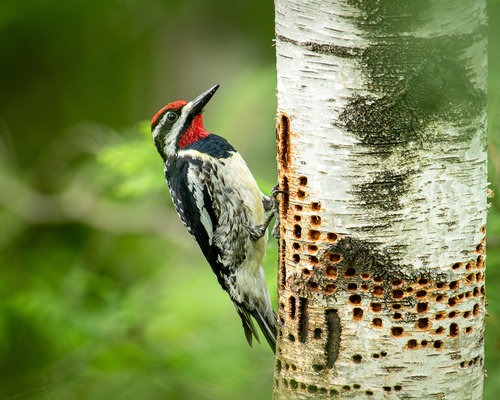 Geelbuiksapspecht
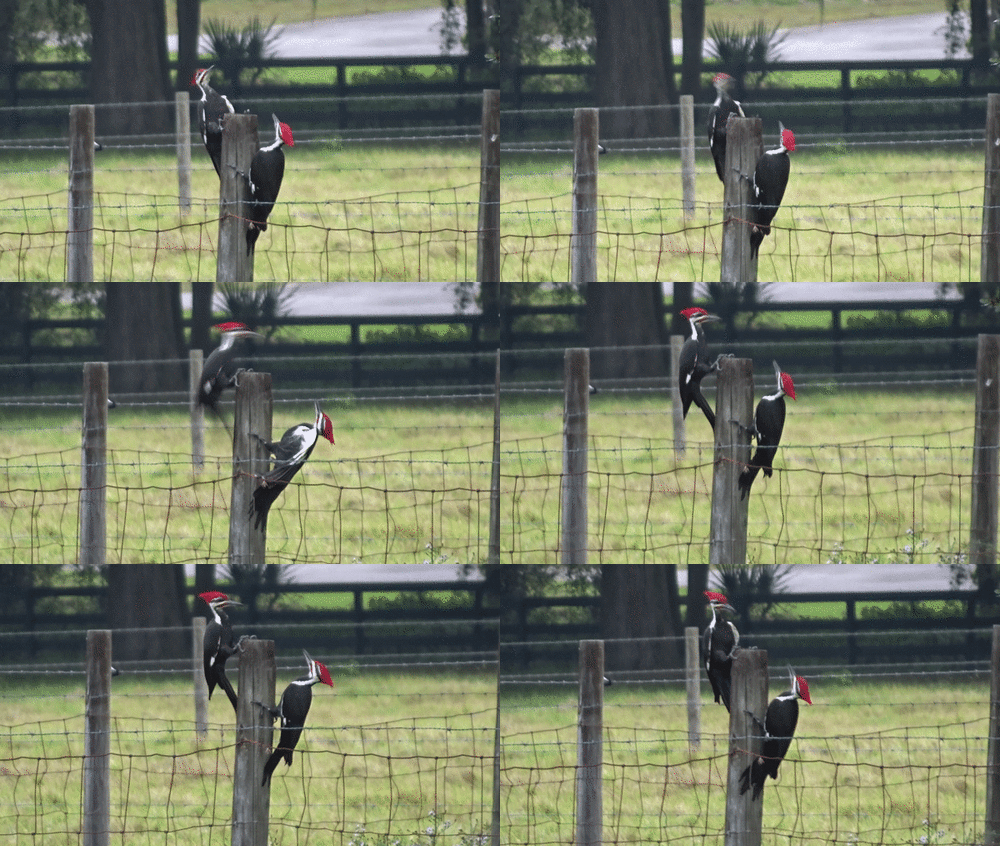 Noord-Amerikaanse helmspecht
Kort gezegd
The most reliable field mark between Yellow-bellied Sapsucker and Pileated Woodpecker is overall size and structure: Pileated is a massive, crow-sized woodpecker with a bold red crest and striking white neck stripe, while Yellow-bellied Sapsucker is much smaller and slimmer, with a more delicate build and no prominent crest. In flight, Pileated shows large white underwings and white wing patches, whereas sapsuckers have smaller, barred underwings and a white wing panel. Juvenile sapsuckers are mottled brown and lack the strong black-and-white contrast of Pileated. If you see a woodpecker with a huge bill, a flaming red crest, and a white neck stripe, it's Pileated; if it's smaller, with a yellowish belly and less dramatic head pattern, it's a Yellow-bellied Sapsucker.
Herkenningstips
- Size is the fastest check: Pileated is crow-sized (40–49 cm, ~277 g), dwarfing the sapsucker (19–21 cm, 50 g). If the bird looks huge for a woodpecker, it's Pileated.
- Crest and head shape: Pileated has a tall, flaming red crest that stands out even at a distance; sapsucker's crown is red (male) or pale (female) but never forms a prominent crest.
- Bill structure: Pileated has a long, chisel-like bill nearly as long as its head; sapsucker's bill is short, straight, and fine.
- Facial pattern: Pileated shows a bold white stripe running from the bill down the neck (neck stripe), and a red malar (male) or black malar (female). Sapsucker has a white stripe above the eye and a black line through the ear-coverts, but lacks the bold neck stripe.
- Underparts: Sapsucker has yellow-tinged underparts with black arrowhead markings; Pileated is black below, sometimes with a little white on the flanks, but never yellow.
- Wing pattern in flight: Pileated flashes large white patches on the underwing and upperwing; sapsucker shows a white wing panel and barred underwing, but less white overall.
- Juvenile plumage: Juvenile sapsuckers are mottled brown and streaky, with a scaly breast and barred tail; juvenile Pileateds look like adults but with a less curved crest.
- Tail: Pileated's tail is long and wedge-shaped, used as a prop on trunks; sapsucker's tail is shorter and more barred in juveniles.
- Perching behavior: Pileated often clings to large trunks, sometimes low to the ground, and excavates big, rectangular holes. Sapsuckers perch on smaller trunks/branches and drill neat rows of sap wells.
- Habitat context: In deep, mature forest, especially with large dead trees, expect Pileated; in aspen or birch groves, especially in the north, look for sapsucker.
- Sex differences: Male sapsucker has a red throat and crown; female has a white throat and paler crown. Male Pileated has a red malar stripe; female's is black.
- Flight style: Pileated's flight is heavy, direct, and powerful; sapsucker's is lighter and more flickering.
- Group size: Pileated is usually solitary or in pairs; sapsucker may be seen in small groups, especially in migration.
- Mistaken identity: Immature sapsuckers can be confused with other small woodpeckers, but never show the massive size or bold crest of Pileated. Pileated is unlikely to be mistaken for anything but the (likely extinct) Ivory-billed Woodpecker.
- When in doubt: If you see a woodpecker with a huge red crest, white neck stripe, and massive size, it's Pileated. If it's smaller, with yellowish belly and subtle head pattern, it's a sapsucker.
Grootte
Pileated Woodpecker is dramatically larger: adults are 40–49 cm long, with a wingspan of 66–75 cm and an average weight around 277 g (males up to 300 g). In contrast, Yellow-bellied Sapsucker is only 19–21 cm long, with a wingspan of 34–40 cm and average mass of 50.3 g. The sheer size difference is obvious in the field, especially if both species are known from the area. Pileated's bill is also much longer and heavier, proportionate to its head, while sapsucker's bill is short and straight.
Verenkleed
- Juvenile/immature birds: Yellow-bellied Sapsucker juveniles are dark olive-brown overall, with a buff-striped head, streaked crown, and scaly breast; their upperparts are mottled pale and blackish, and the tail is more barred than in adults. Juvenile Pileated Woodpeckers have less curved red crests ('mohawk' style), but otherwise resemble adults with mostly black plumage, white neck stripe, and white underwings.
- Adults: Sapsucker adults have a red (male) or pale (female) crown and forehead, black-bordered crown, white vertical stripe on the face, and yellow-tinged underparts with black arrowhead marks. Pileated adults are mostly black with a prominent red crest, bold white neck stripe, and white underwings and wing patches visible in flight. Males have a red malar stripe, females have a black one. Sapsuckers lack the massive red crest and white neck stripe of Pileated.
- In flight: Pileated shows extensive white in the wings (especially underwing), while sapsucker shows a white wing panel and barred underwing, but much less white overall.
Gedrag
Pileated Woodpeckers are powerful, direct fliers with strong, undulating flight and often cling to large trunks, excavating massive rectangular holes. They are often seen alone or in pairs, defending territories year-round. Yellow-bellied Sapsuckers are more agile and often perch on smaller branches or trunks, drilling neat rows of sap wells. Their flight is also undulating but less forceful and heavy than Pileated. Sapsuckers may be seen in loose groups or singly, especially in migration.
Habitat
Both species occur in North American forests, but Pileated prefers large, mature deciduous or mixed forests with big trees and is often found in deep woods, while Yellow-bellied Sapsucker breeds in northern and northeastern forests, often in aspen, birch, or poplar groves, and is more likely to be found in smaller woodlots or edge habitats. Pileated is resident year-round; sapsucker is migratory in much of its range.
Geelbuiksapspecht · Noord-Amerikaanse helmspecht · Mijn lastige vogels