

Wilsons stormvogeltje vs Vaal stormvogeltje
Oceanites oceanicus versus Hydrobates leucorhous
Speel een quiz met Wilsons stormvogeltje en Vaal stormvogeltje
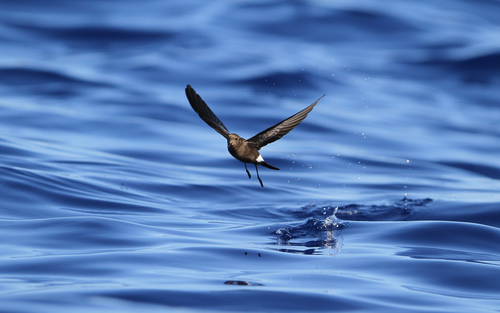 Wilsons stormvogeltje
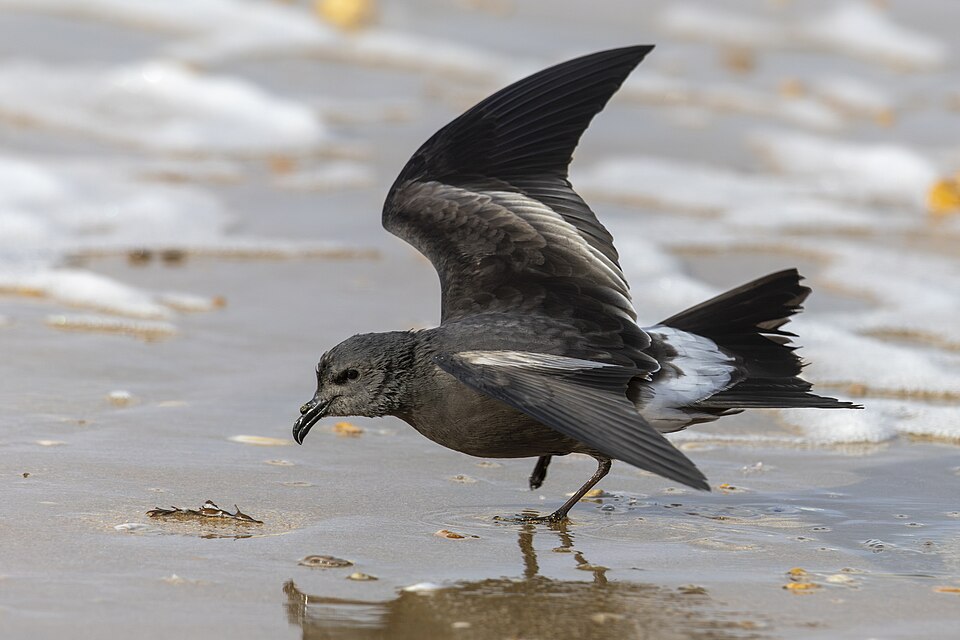 Vaal stormvogeltje
Kort gezegd
Het meest betrouwbare veldkenmerk om Wilsons stormvogeltje van Vaal stormvogeltje te scheiden, is de staartvorm en het patroon van de staart in vlucht: Wilsons heeft een vierkante staart en een schone witte staart, terwijl Vaal een merkbaar gevorkte staart toont en meestal een witte staart met een donkere centrale lijn heeft. Voor alle leeftijden toont Wilsons ook een diffuse lichte band op de bovenste vleugelbedekking, terwijl Vaal een lichtere balk op de secundaire bedekking heeft, maar hetzelfde diffuse paneel mist. Wilsons is iets kleiner en compacter, met voeten die in vlucht voorbij de staart uitsteken, wat Vaal niet toont. Beide soorten zijn over het algemeen donker met witte staarten, maar subtiele verschillen in vluchtstijl en structuur zijn essentieel voor een zekere identificatie.
Herkenningstips
- Staartvorm: In vlucht heeft Wilsons stormvogeltje een vierkante staart, terwijl Vaal stormvogeltje een duidelijk gevorkte staart toont. Dit is het meest betrouwbare veldkenmerk in alle leeftijden en seizoenen.
- Staartpatroon: Wilsons heeft altijd een schone, ononderbroken witte staart en flanken. Vaal toont typisch een witte staart met een donkere centrale lijn of vlek, vooral bij Atlantische vogels. Pas op voor donkerstaartige Vaal in de Stille Oceaan, die de witte staart volledig kan missen.
- Bovenste vleugelpatroon: Wilsons toont een diffuse lichte band langs de bovenste vleugelbedekking (alle leeftijden), terwijl Vaal een lichtere grijsbruine balk op de secundaire bedekking heeft. Het verschil is subtiel maar zichtbaar bij goed licht.
- Voetprojectie: Bij Wilsons steken de benen en voeten net voorbij de staart in vlucht uit, wat een kleine projectie creëert. Vaal toont deze eigenschap niet; de voeten zijn niet zichtbaar voorbij de staart.
- Vluchtstijl: Wilsons heeft een directere, glijdende en fladderende vlucht, vaak met de vleugels hoog gehouden en frequent 'patteren' op het water. Vaal is meer springerig en onregelmatig, met frequentere glijvluchten en minder zweven.
- Grootte en vorm: Wilsons is iets kleiner en compacter; Vaal heeft langere vleugels en is slanker. Dit is subtiel en het beste te gebruiken in directe vergelijking.
- Gezicht: Vaal kan een iets bleker gezicht tonen, maar dit is niet altijd duidelijk.
- Kleur van het zwemvlies: Wilsons vogels in de pre-broedtijd hebben gele zwemvliezen met zwarte vlekken tussen de tenen, maar dit is zelden zichtbaar, behalve van zeer dichtbij.
- Verenvalkuilen: Beide zijn donker met witte staarten, maar pas op voor donkerstaartige Vaal aan de kust van de Stille Oceaan, die volledig donker kan lijken en de witte staart kan missen. In dergelijke gevallen moet je vertrouwen op de staartvorm en vluchtstijl.
- Habitat en context: Wilsons is waarschijnlijker in grote groepen en is wereldwijd overvloedig; Vaal is meer gelokaliseerd en minder waarschijnlijk in grote aantallen te zien buiten de broedgebieden.
- Scheepsvolging: Wilsons volgt waarschijnlijker schepen en vissersboten, soms in grote groepen. Vaal is in deze context minder sociaal.
- Vocalisaties: Niet nuttig voor scheiding op zee; beide zijn over het algemeen stil weg van kolonies.
- Seizoensoverlap: Beide kunnen samen voorkomen in noordelijke oceanen tijdens de zomer, dus vertrouw niet alleen op het seizoen voor identificatie.
- Zittende weergaven: Zeldzaam voor beide op zee; de meeste identificatie zal in vlucht zijn.
- Jong/immatuur verwarring: Alle belangrijke veldkenmerken (staartvorm, staartpatroon, bovenste vleugelpaneel) zijn van toepassing op alle leeftijden, dus immaturen worden gescheiden door dezelfde kenmerken als volwassenen.
Grootte
Wilsons stormvogeltje is iets kleiner en lichter, met een lichaamsgewicht van 34,0 g [wikidata] en een lengte van 16–18,5 cm, spanwijdte 38–42 cm [wikipedia]. Vaal stormvogeltje is groter, met een lengte van 18–21 cm en een spanwijdte van 43–48 cm [wikipedia]. In het veld is dit grootteverschil subtiel, maar Vaal lijkt vaak langere vleugels en slanker, terwijl Wilsons compacter is.
Verenkleed
- Jong en immatuur: Beide soorten zijn over het algemeen donker met een witte staart, maar Wilsons toont altijd een schone, heldere witte staart en flanken, terwijl Vaal typisch een witte staart met een donkere centrale lijn of vlek heeft (vooral zichtbaar bij Atlantische vogels). Op de bovenste vleugel heeft Wilsons een diffuse lichte band langs de bovenste vleugelbedekking, aanwezig in alle verenkleed, terwijl Vaal een lichtere grijsbruine balk op de secundaire bedekking toont, maar niet hetzelfde diffuse paneel. Vaal kan een iets bleker gezicht hebben.
- Volwassenen: Wilsons behoudt de witte staart en de lichte bovenste vleugelbedekking, met een vierkante staart. Volwassen Vaal toont de witte staart (vaak verdeeld), een gevorkte staart en een lichtere balk op de vleugel. Pas op voor donkerstaartige Vaal aan de kust van de Stille Oceaan, die de witte staart volledig kan missen—dit is zeldzaam ten noorden van Zuid-Californië, maar gebruikelijk verder naar het zuiden.
- Voeten: Bij Wilsons steken de voeten net voorbij de staart in vlucht uit, een subtiel maar consistent kenmerk. Vaal toont deze eigenschap niet.
- Zwemvliezen: Wilsons vogels in de pre-broedtijd hebben gele zwemvliezen met zwarte vlekken tussen de tenen, maar dit is zelden zichtbaar in het veld.
Gedrag
Beide soorten voeden zich door te patteren op het wateroppervlak en het oppikken van planktonische voedselitems. Wilsons stormvogeltje heeft een directere, glijdende vlucht met de vleugels vaak hoog gehouden, en is beroemd om zijn fladderende, zwevende stijl terwijl het 'loopt' op het water. Vaal stormvogeltje pattert ook, maar heeft de neiging een fladderige, springerige vlucht te hebben, vaak afgewisseld met glijvluchten, en is waarschijnlijker om een springerige, onregelmatige vluchtbaan te tonen. Wilsons is zeer sociaal en volgt vaak schepen; Vaal is dat minder.
Habitat
Beide zijn pelagisch, zelden vanaf het land te zien, behalve bij broedkolonies. Wilsons stormvogeltje is een van de meest overvloedige zeevogels ter wereld en zal waarschijnlijk in grote groepen worden aangetroffen, vooral in de zuidelijke oceanen, maar ook in de noordelijke zomer. Vaal is meer gelokaliseerd en minder overvloedig, broedend op afgelegen eilanden in de Noord-Atlantische en Noord-Pacifische gebieden. In het veld kan context (locatie en seizoen) helpen, maar beide kunnen offshore overlappen.
Geluid
Geen diagnostische vocalisaties zijn beschreven voor veldscheiding tussen deze twee soorten in de verstrekte notities. Beide zijn over het algemeen stil op zee.
Wilsons stormvogeltje · Vaal stormvogeltje · Mijn lastige vogels