

Tropische koningstiran vs Texaanse koningstiran
Tyrannus melancholicus versus Tyrannus couchii
Speel een quiz met Tropische koningstiran en Texaanse koningstiran
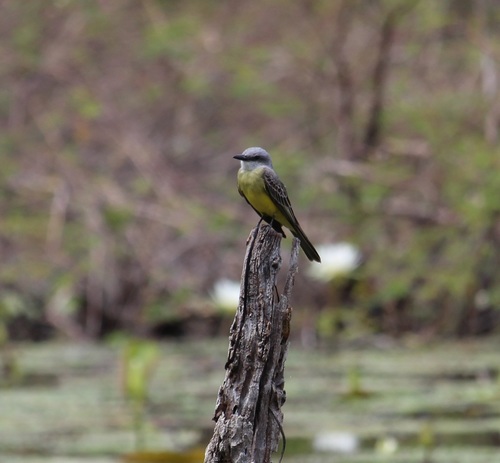 Tropische koningstiran
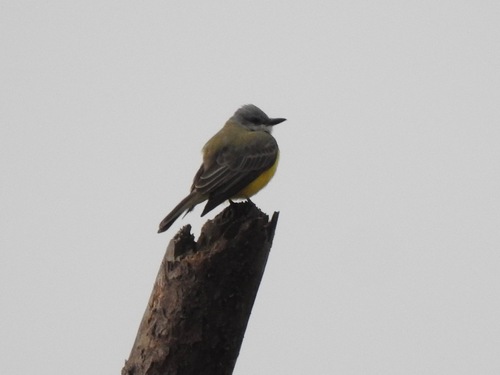 Texaanse koningstiran
Kort gezegd
De meest betrouwbare manier om de Tropische koningstiran van de Texaanse koningstiran te onderscheiden, is op basis van hun stem, aangezien hun roepen duidelijk verschillend zijn. In het veld zijn beide soorten extreem vergelijkbaar in grootte, structuur en algemene kleur, maar subtiele verschillen in koppatroon, borstkleur en voorkeur voor habitat kunnen helpen. Juvenielen van beide soorten vertonen bleke randen op de vleugelbedekking, dus leeftijdspecifieke bovenvleugelmarkeringen zijn geen sterke scheider. Zorgvuldige aandacht voor de schaduw en omvang van grijs op de kop en borst, evenals de context van de waarneming, kan je kansen op een correcte identificatie verbeteren.
Herkenningstips
- Luister eerst: Als je de vogel hoort, geeft de Texaanse koningstiran een raspiger, gevarieerder roep; het roepje van de Tropische koningstiran is een hoog, trillerig geluid. Dit is de beste veldscheider.
- Koppatroon: De Tropische koningstiran heeft een lichtgrijze kop met een donkerder oogmasker en soms een verborgen oranje kroonstreep. De kop van de Texaanse koningstiran is lichtgrijs, maar met meer contrasterende donkere wangen, wat een iets gemaskerde uitstraling geeft. Dit is subtiel, maar kan in goed licht worden gezien.
- Borstkleur en patroon: De Texaanse koningstiran heeft een donkerdere, scherper afgebakende borst boven de gele buik, terwijl de borst van de Tropische koningstiran olijfkleurig is en geleidelijk in geel overgaat. Zoek naar een duidelijke afbakening bij de Texaanse in tegenstelling tot een meer geleidelijke overgang bij de Tropische.
- Keel kleur: Beide hebben een lichte keel, maar het contrast met de borst is vaak sterker bij de Texaanse koningstiran vanwege de donkerdere bovenborst.
- Staartvorm: Beide soorten hebben donkere, iets gevorkte staarten. Staartvorm is geen betrouwbare scheider.
- Juveniele vleugelbedekking: De juvenielen van beide soorten hebben bleke randen op de vleugelbedekking, dus deze eigenschap helpt niet om ze te onderscheiden.
- Juveniele onderzijde: De juveniele Texaanse koningstiran heeft een bruiner onderlichaam dan de volwassene, maar dit is subtiel en niet altijd duidelijk in het veld.
- Snavelgrootte en -vorm: Beide hebben grote, zware snavels; de structuur is geen sterke scheider.
- Zitgedrag: De Tropische koningstiran zit vaak hoger en meer blootgesteld, terwijl de Texaanse koningstiran lager of in meer bosrijke omgevingen kan zitten, maar dit is niet absoluut.
- Habitatcontext: In open gebieden, vooral weg van water, is de Tropische koningstiran waarschijnlijker. In licht beboste gebieden, bosranden of nabij water, vooral in het zuiden van Texas en de Yucatán, is de Texaanse koningstiran waarschijnlijker.
- Geografisch bereik: Als je buiten het zuiden van Texas of de lagere Rio Grande-vallei bent, controleer dan de lokale status—de Tropische koningstiran is wijdverspreid in Midden- en Zuid-Amerika, terwijl de Texaanse meer beperkt is tot de Golfkust en het Yucatán-gebied.
- Geslacht en seizoen: De geslachten zijn vergelijkbaar bij beide soorten; er zijn geen seizoensgebonden verenkleedverschillen die diagnostisch zijn.
- Voedingsgedrag: Beide jagen op insecten vanuit hun zitplaatsen, maar de Tropische koningstiran kan meer zweven om te scharrelen tussen de vegetatie.
- Aggressie: Beide zijn territoriaal en zullen grotere vogels achtervolgen, dus dit is geen scheider.
- Bij twijfel: Als de vogel stil is en het habitat ambigu is, vertrouw dan op de combinatie van koppatroon, borstcontrast en context, maar wees eerlijk over de hoge kans op overlap en onzekerheid.
Grootte
De Tropische koningstiran en de Texaanse koningstiran zijn bijna identiek in grootte, met een gemiddelde van 37 g voor de Tropische koningstiran en 39 g voor de Texaanse koningstiran in lichaamsgewicht. Beide zijn grote, robuuste vliegenvangers met vergelijkbare algehele afmetingen. Lengte en vleugelspanwijdte overlappen volledig in het veld, dus grootte is geen nuttige scheider.
Verenkleed
- Juvenielen: De juvenielen van beide soorten hebben bleke buff of bleke randen op de vleugelbedekking, waardoor deze markering niet diagnostisch is tussen hen. De juveniele Texaanse koningstiran heeft ook een bruiner onderlichaam dan de volwassene.
- Volwassenen: Beide hebben lichtgrijze koppen, olijfkleurige ruggen, bruine vleugels en felgele onderkanten. De Tropische koningstiran toont een meer uniforme lichtgrijze kop met een donkerder oogmasker en soms een oranje kroonstreep (vaak verborgen), terwijl de Texaanse koningstiran een lichtgrijze kop heeft met meer contrasterende donkere wangen. De borst van de Texaanse koningstiran is donkerder boven de gele buik, wat een scherpere afbakening creëert, terwijl de borst van de Tropische koningstiran olijfkleurig is en in geel overgaat. Beide hebben donkere, iets gevorkte staarten. De geslachten zijn vergelijkbaar bij beide soorten.
Gedrag
Beide soorten zitten opvallend in open gebieden en jagen op insecten in de vlucht, vaak terugkerend naar dezelfde zitplaats. De Tropische koningstiran staat bekend om het gebruik van hogere, meer blootgestelde zitplaatsen en is waarschijnlijker te zien in open gebieden, terwijl de Texaanse koningstiran de voorkeur geeft aan licht beboste of randhabitats. Beide zullen hun territoria agressief verdedigen tegen grotere vogels.
Habitat
De Tropische koningstiran wordt het vaakst aangetroffen in open gebieden met verspreide bomen en struiken, waaronder tuinen en bermen, en blijft meestal in de hogere delen van bomen. De Texaanse koningstiran geeft de voorkeur aan meer bosrijke omgevingen, zoals spaarzame bossen, doornbossen, beboste stroomoevers en voorstedelijke gebieden, vaak nabij water. In overlappingszones (zuid Texas, lagere Rio Grande-vallei) kan het habitat een aanwijzing zijn: open voor de Tropische, bosrijk voor de Texaanse, maar er is enige overlap, vooral nabij bosranden en water.
Geluid
Vocalisatie is het meest betrouwbare veldkenmerk. De Tropische koningstiran geeft een hoog, trillerig geluid ("tree-e-e-e-e-e"), terwijl de Texaanse koningstiran een raspiger, complexer roepje heeft met meer variatie in toonhoogte. Als je de vogel hoort, is identificatie eenvoudig; als hij stil is, vertrouw dan op subtiele verenkleed- en habitat aanwijzingen.
Tropische koningstiran · Texaanse koningstiran · Mijn lastige vogels