

Motmot

オリーブタイランチョウ 対 ヒガシオリーブタイランチョウ

Tyrannus melancholicus 対 Tyrannus couchii

オリーブタイランチョウとヒガシオリーブタイランチョウのクイズ
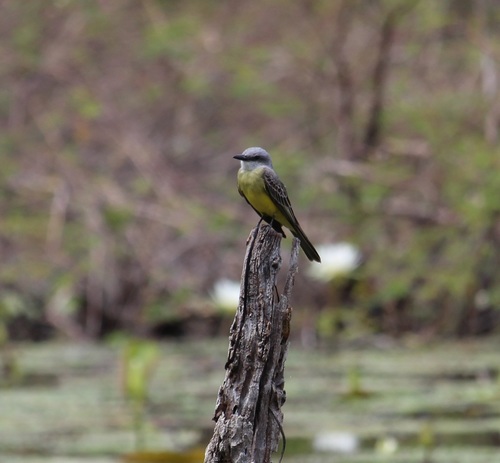
オリーブタイランチョウ (Tyrannus melancholicus) オリーブタイランチョウ
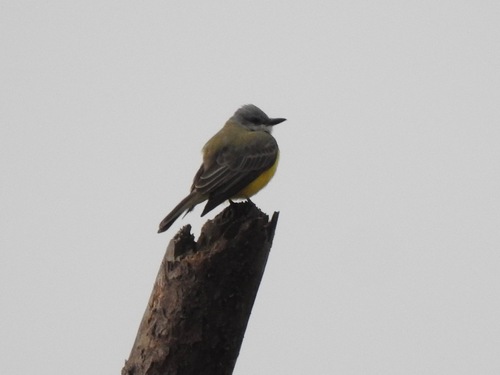
ヒガシオリーブタイランチョウ (Tyrannus couchii) ヒガシオリーブタイランチョウ

メディア

読み込み中…

要点

オリーブタイランチョウとヒガシオリーブタイランチョウを区別する最も信頼できる方法は声です。彼らの鳴き声は明確に異なります。フィールドでは、両種はサイズ、構造、一般的な色合いが非常に似ていますが、頭の模様、胸の色、そして生息地の好みにおける微妙な違いが役立つことがあります。両種の幼鳥は翼の覆羽に淡い縁取りを示すため、年齢特有の上翼のマークは強い区別要因ではありません。頭部と胸部の灰色の色合いや範囲、さらには観察の文脈に注意を払うことで、正しい同定の可能性を高めることができます。

識別のコツ

  1. まず聞く: 鳥の声を聞いたら、ヒガシオリーブタイランチョウはよりざらざらした、より多様な鳴き声を出します。オリーブタイランチョウの鳴き声は高音で、さえずりのトリルです。これが最良のフィールド区別要因です。
  2. 頭の模様: オリーブタイランチョウは淡い灰色の頭に暗い目のマスクがあり、時には隠れたオレンジ色の冠のストライプがあります。ヒガシオリーブタイランチョウの頭は淡い灰色ですが、より対照的な暗い頬があり、ややフードをかぶったように見えます。これは微妙ですが、良い光の中で見ることができます。
  3. 胸の色と模様: ヒガシオリーブタイランチョウは黄色い腹の上により暗く、よりはっきりとした胸を持っていますが、オリーブタイランチョウの胸はオリーブ色で、より徐々に黄色に溶け込んでいます。ヒガシオリーブタイランチョウでは明確なカットオフを探し、オリーブタイランチョウではより混ざり合った移行を探してください。
  4. 喉の色: 両種とも淡い喉を持っていますが、胸とのコントラストはヒガシオリーブタイランチョウの方が暗い上胸のためにしばしば強くなります。
  5. 尾の形: 両種ともに暗い、やや分かれた尾を持っています。尾の形は信頼できる区別要因ではありません。
  6. 幼鳥の翼の覆羽: 両種の幼鳥は翼の覆羽に淡い縁取りを持っているため、この特徴は彼らを区別するのに役立ちません。
  7. 幼鳥の腹部: 幼鳥のヒガシオリーブタイランチョウは成鳥よりも腹部が茶色がかっていますが、これは微妙で、フィールドでは常に明らかではありません。
  8. くちばしのサイズと形: 両種ともに大きく、重いくちばしを持っています。構造は強い区別要因ではありません。
  9. 止まり方: オリーブタイランチョウはしばしば高く、より露出した場所に止まりますが、ヒガシオリーブタイランチョウはより低い場所やより木の多い環境にいることがありますが、これは絶対的ではありません。
  10. 生息地の文脈: 開けた土地、特に水から離れた場所では、オリーブタイランチョウの方が可能性が高いです。軽く木が生えた地域、森林の縁、または水の近く、特に南テキサスやユカタンでは、ヒガシオリーブタイランチョウの方が可能性が高いです。
  11. 地理的範囲: 南テキサスや下リオグランデバレーの外にいる場合は、地元の状況を確認してください。オリーブタイランチョウは中南米全体に広がっていますが、ヒガシオリーブタイランチョウはメキシコ湾岸やユカタン地域により制限されています。
  12. 性別と季節: 両種の性別は似ています。季節的な羽毛の違いは診断的ではありません。
  13. 採餌行動: 両種ともに止まり木から昆虫を捕まえるために飛び出しますが、オリーブタイランチョウは植物から食べるためによりホバリングすることがあります。
  14. 攻撃性: 両種ともにテリトリーを持ち、より大きな鳥を追い払いますので、これは区別要因ではありません。
  15. 疑わしい場合: 鳥が静かで生息地があいまいな場合は、頭の模様、胸のコントラスト、文脈の組み合わせに頼ってください。ただし、重複と不確実性の高い可能性について正直でいることが重要です。

大きさ

オリーブタイランチョウとヒガシオリーブタイランチョウはサイズがほぼ同じで、オリーブタイランチョウは平均37g、ヒガシオリーブタイランチョウは39gの体重です。両者は大きく、頑丈なフライキャッチャーで、全体的な寸法も似ています。フィールドでは長さと翼幅が完全に重なっているため、サイズは有用な区別要因ではありません。

羽色

行動

両種は開けた場所に目立って止まり、飛行中に昆虫を捕まえるために飛び出し、しばしば同じ止まり木に戻ります。オリーブタイランチョウは高く、より露出した止まり木を使用することで知られており、開けた土地で見られる可能性が高いですが、ヒガシオリーブタイランチョウは軽く木が生えた環境やエッジの生息地を好みます。両者はより大きな鳥に対して自分のテリトリーを積極的に守ります。

生息環境

オリーブタイランチョウは、散在する木や低木がある開けた場所、庭や道路脇で最もよく見られ、木の上部に留まる傾向があります。ヒガシオリーブタイランチョウは、まばらな森林、トゲのある森林、木の生えた小川の縁、郊外の地域など、より木の多い環境を好み、しばしば水の近くにいます。重複ゾーン(南テキサス、下リオグランデバレー)では、生息地が手がかりになることがあります:オリーブタイランチョウには開けた場所、ヒガシオリーブタイランチョウには木の多い場所ですが、特に森林の縁や水の近くでは重複が見られます。

声

鳴き声は最も信頼できるフィールドマークです。オリーブタイランチョウは高音でさえずるトリル("tree-e-e-e-e-e")を出しますが、ヒガシオリーブタイランチョウはよりざらざらした、より複雑な鳴き声で、より多様な音程を持っています。鳥の声を聞いた場合、同定は簡単ですが、静かな場合は微妙な羽毛と生息地の手がかりに頼ってください。

より良い説明を送る

比較と同じ項目を使ってください。文章はすぐに公開されます。

The most reliable way to separate Tropical Kingbird from Couch's Kingbird is by voice, as their calls are distinctively different. In the field, both species are extremely similar in size, structure, and general coloration, but subtle differences in head pattern, breast color, and habitat preference can help. Juveniles of both species show pale edges to the wing coverts, so age-specific upperwing marks are not a strong separator. Careful attention to the shade and extent of gray on the head and breast, as well as the context of the sighting, can improve your chances of a correct ID.

  1. Listen first: If you hear the bird, Couch's Kingbird gives a raspier, more varied call; Tropical Kingbird's call is a high-pitched, twittering trill. This is the best field separator.
  2. Head pattern: Tropical Kingbird has a pale gray head with a darker eye mask and sometimes a concealed orange crown stripe. Couch's Kingbird's head is pale gray but with more contrasting darker cheeks, giving a slightly hooded look. This is subtle but can be seen in good light.
  3. Breast color and pattern: Couch's Kingbird has a darker, more sharply demarcated breast above the yellow belly, while Tropical Kingbird's breast is olive blending more gradually into yellow. Look for a clear cutoff in Couch's versus a more blended transition in Tropical.
  4. Throat color: Both have pale throats, but the contrast with the breast is often stronger in Couch's Kingbird due to the darker upper breast.
  5. Tail shape: Both species have dark, slightly forked tails. Tail shape is not a reliable separator.
  6. Juvenile wing coverts: Both species' juveniles have pale edges to the wing coverts, so this feature does not help distinguish them.
  7. Juvenile underparts: Juvenile Couch's Kingbird has browner underparts than the adult, but this is subtle and not always obvious in the field.
  8. Bill size and shape: Both have large, heavy bills; structure is not a strong separator.
  9. Perching behavior: Tropical Kingbird often perches higher and more exposed, while Couch's Kingbird may be lower or in more wooded settings, but this is not absolute.
  10. Habitat context: In open country, especially away from water, Tropical Kingbird is more likely. In lightly wooded areas, forest edges, or near water, especially in southern Texas and the Yucatán, Couch's Kingbird is more likely.
  11. Geographic range: If you are outside southern Texas or the lower Rio Grande Valley, check local status—Tropical Kingbird is widespread in Central and South America, while Couch's is more restricted to the Gulf Coast and Yucatán region.
  12. Sex and season: Sexes are similar in both species; no seasonal plumage differences are diagnostic.
  13. Feeding behavior: Both sally for insects from perches, but Tropical Kingbird may hover more to glean from vegetation.
  14. Aggression: Both are territorial and will chase larger birds, so this is not a separator.
  15. When in doubt: If the bird is silent and habitat is ambiguous, rely on the combination of head pattern, breast contrast, and context, but be honest about the high potential for overlap and uncertainty.

Tropical Kingbird and Couch's Kingbird are nearly identical in size, with Tropical Kingbird averaging 37 g and Couch's Kingbird 39 g in body mass. Both are large, robust flycatchers with similar overall dimensions. Length and wingspan overlap completely in the field, so size is not a useful separator.

  • Juveniles: Both species' juveniles have pale buff or pale edges to the wing coverts, making this mark non-diagnostic between them. Juvenile Couch's Kingbird also has browner underparts than the adult.
  • Adults: Both have pale gray heads, olive-tinged backs, brown wings, and bright yellow underparts. Tropical Kingbird shows a more uniform pale gray head with a darker eye mask and sometimes an orange crown stripe (often concealed), while Couch's Kingbird has a pale gray head with more contrasting darker cheeks. The breast of Couch's Kingbird is darker above the yellow belly, creating a sharper demarcation, whereas Tropical Kingbird's breast is olive blending into yellow. Both have dark, slightly forked tails. Sexes are similar in both species.

Both species perch conspicuously in open areas and sally out to catch insects in flight, often returning to the same perch. Tropical Kingbird is noted for using higher, more exposed perches and is more likely to be seen in open country, while Couch's Kingbird prefers lightly wooded or edge habitats. Both will aggressively defend their territories against larger birds.

Tropical Kingbird is most often found in open areas with scattered trees and shrubs, including gardens and roadsides, and tends to stay in the upper levels of trees. Couch's Kingbird prefers more wooded environments, such as sparse forests, thorn forests, wooded stream edges, and suburban areas, often near water. In overlap zones (southern Texas, lower Rio Grande Valley), habitat can be a clue: open for Tropical, wooded for Couch's, but there is some overlap, especially near forest edges and water.

Vocalization is the most reliable field mark. Tropical Kingbird gives a high-pitched, twittering trill ("tree-e-e-e-e-e"), while Couch's Kingbird has a raspier, more complex call with more varied pitch. If you hear the bird, identification is straightforward; if silent, rely on subtle plumage and habitat clues.

変更を破棄しますか?

保存していない編集があります。今離れると失われます。

オリーブタイランチョウ · ヒガシオリーブタイランチョウ · 苦手な鳥