

Boomzwaluw vs Boerenzwaluw
Tachycineta bicolor versus Hirundo rustica
Speel een quiz met Boomzwaluw en Boerenzwaluw
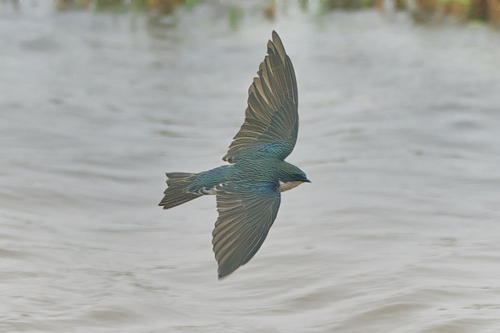 Boomzwaluw
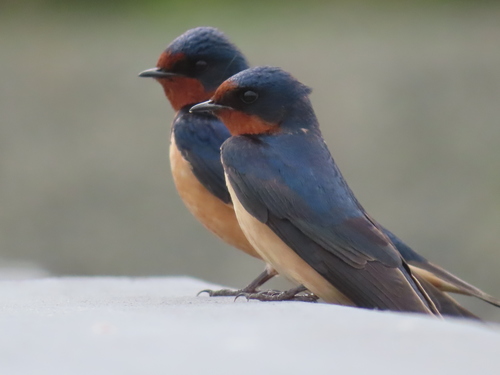 Boerenzwaluw
Kort gezegd
Het meest betrouwbare veldkenmerk tussen Boomzwaluw en Boerenzwaluw is de staart: Boerenzwaluw heeft een lange, diep gevorkte staart met verlengde streamers (vooral bij volwassenen), terwijl de staart van de Boomzwaluw korter is en slechts lichtjes ingesneden. In de vlucht zijn de lange staartstreamers en de blauwe borstband van de Boerenzwaluw kenmerkend, terwijl de Boomzwaluw een compacte, schone witte onderzijde zonder borstband vertoont. Juveniele Boomzwaluwen zijn bruin boven en missen enige roestkleur op het gezicht, terwijl juvenile Boerenzwaluwen over het algemeen bruiner zijn maar een bleke roestkleurige gezicht en een hint van een borstband vertonen. Beide soorten zijn luchtinsecteneters, maar Boerenzwaluw zit vaak op draden en zoekt voedsel boven open velden, terwijl Boomzwaluw meer waarschijnlijk boven water of moerassen is.
Herkenningstips
- Staartvorm en -lengte: Boerenzwaluw (volwassen) heeft een lange, diep gevorkte staart met verlengde streamers en witte vlekken nabij de punt; de staart van de Boomzwaluw is kort en slechts lichtjes ingesneden. Dit is het enige meest betrouwbare kenmerk, vooral in de vlucht of wanneer gezeten met de staart zichtbaar.
- Borstband: Boerenzwaluw (alle leeftijden behalve zeer jonge juvenielen) vertoont een donkere blauwe borstband die de roestkleurige keel van de bleke buik scheidt; Boomzwaluw heeft altijd een schone, ongemarkeerde witte borst.
- Gezichtskleur: Boerenzwaluw heeft een roestkleurig (roodachtig) voorhoofd, kin en keel; het gezicht van de Boomzwaluw is wit, soms met een doffe wangvlek, maar nooit roestkleurig.
- Glans van de bovenzijde: Boomzwaluw (volwassen man) is glanzend blauw-groen boven; Boerenzwaluw is staalblauw boven. In slecht licht kan dit verschil subtiel zijn, maar Boomzwaluw is over het algemeen helderder en groener.
- Verwarring bij juvenielen: Juveniele Boomzwaluw is bruin boven met een grijsbruine borst, zonder enige roestkleur of borstband. Juveniele Boerenzwaluw is bruinachtig boven maar vertoont altijd een bleke roestkleurige gezicht en een vage borstband. Als je een bruine zwaluw met een roestkleurig gezicht ziet, is het Boerenzwaluw.
- Staart bij juvenielen: Juveniele Boerenzwaluw mist de lange staartstreamers, maar de staart is nog steeds dieper gevorkt dan die van de Boomzwaluw, en het roestkleurige gezicht en de borstband blijven nuttig.
- Zittende houding: Boerenzwaluw lijkt langer en slanker, vaak zittend op draden of hekken; Boomzwaluw is compact en kortstaartig, vaak zittend op takken nabij water.
- Vluchtstijl: De vlucht van de Boerenzwaluw is acrobatisch en zwiepend, met de lange staartstreamers die achtervolgen; de vlucht van de Boomzwaluw is meer direct en compact, met snelle, ondiepe vleugelslagen.
- Onderwingkleur: Boomzwaluw heeft grijsbruine ondervleugelbedekking, maar dit is zelden zichtbaar in het veld en geen primair kenmerk.
- Vrouwelijke/immature Boomzwaluw: Vrouwelijke tweedejaars kunnen bruine bovenzijde vertonen met enkele blauwe veren, maar vertonen nooit roestkleur op het gezicht of een borstband. Dit kan waarnemers verwarren, maar het ontbreken van gezichts kleur en borstband is cruciaal.
- Habitatcontext: Als gezien boven open water of moerassen, vooral vroeg in het seizoen, is Boomzwaluw waarschijnlijker. Boerenzwaluw is waarschijnlijker rond open velden, landbouwgrond en menselijke structuren.
- Snavel en poten: Beide hebben kleine, zwarte snavels, maar dit is geen nuttig veldkenmerk voor scheiding.
- Vocalisaties: Roepen zijn niet betrouwbaar te scheiden in het veld, tenzij je zeer vertrouwd bent met beide soorten.
- Grootte-indruk: Boerenzwaluw lijkt langer en slanker, vooral met de staartstreamers zichtbaar; Boomzwaluw is korter en steviger.
- Seizoenscontext: In het vroege voorjaar arriveert Boomzwaluw vaak eerder dan Boerenzwaluw in noordelijke gebieden, maar er is veel overlap.
Grootte
Boerenzwaluw is merkbaar langer overall (17–19 cm) dan Boomzwaluw (12–14 cm), voornamelijk vanwege de verlengde buitenste staartveren. Hun vleugelspanwijdten zijn echter vergelijkbaar (Boerenzwaluw: 32–34,5 cm; Boomzwaluw: 30–35 cm), en hun gewichten overlappen (Boerenzwaluw: 16–22 g; Boomzwaluw: 17–25,5 g). Het verschil in lengte is het meest opvallend wanneer de staartstreamers van de Boerenzwaluw zichtbaar zijn. Wanneer gezeten, lijkt de Boerenzwaluw slanker en langer, terwijl de Boomzwaluw compact en kortstaartig is.
Verenkleed
-
Juveniele/immature vogels: Juveniele Boomzwaluw is bruin boven met een grijsbruine was op de borst en mist enige roestkleur op het gezicht of de keel. Juveniele Boerenzwaluw is ook bruinachtig boven maar vertoont een bleker roestkleurig gezicht en wittere onderzijde, en zelfs jonge vogels tonen een hint van de donkere borstband. Juveniele Boerenzwaluwen missen de lange staartstreamers van volwassenen, wat hen oppervlakkig vergelijkbaar kan maken met de Boomzwaluw, maar het roestkleurige gezicht en de borstband blijven kenmerkend.
-
Volwassen mannelijke: Mannelijke Boomzwaluw zijn glanzend blauw-groen boven, met witte onderzijde en wangen, en een schone, ongemarkeerde borst. Mannelijke Boerenzwaluw zijn staalblauw boven, met een roestkleurig voorhoofd, kin en keel, gescheiden van de off-white buik door een brede blauwe borstband. De lange, diep gevorkte staart met witte vlekken is diagnostisch.
-
Volwassen vrouwelijke: Vrouwelijke Boomzwaluw is doffer dan de man, soms met een bruinachtig voorhoofd of bovenzijde, maar mist nog steeds enige roestkleur of borstband. Vrouwelijke Boerenzwaluw lijkt op de man maar met kortere staartstreamers, minder glanzende bovenzijde en blekere onderzijde; het roestkleurige gezicht en de borstband zijn nog steeds aanwezig.
-
Tweedejaars/immature vrouwelijke: Tweedejaars vrouwelijke Boomzwaluw kunnen een mix van bruin en blauw op de bovenzijde vertonen, maar vertonen nooit een roestkleurig gezicht of borstband. Immature Boerenzwaluw vertonen altijd enige roestkleur op het gezicht en een borstband.
Gedrag
Beide soorten zijn behendige luchtinsecteneters, maar Boerenzwaluw zit vaak op draden, hekken of open takken, en is waarschijnlijker te zien terwijl ze voedsel zoeken boven open velden en landbouwgrond. Boomzwaluw is nauwer verbonden met water en moerassen, vaak gezien terwijl ze laag over vijvers of meren scheren. De vlucht van de Boerenzwaluw is acrobatisch en zwiepend, benadrukt door zijn lange staartstreamers, terwijl de vlucht van de Boomzwaluw direct en compact is.
Habitat
Boomzwaluw broedt in Noord-Amerika, met voorkeur voor open gebieden nabij water, moerassen en velden met beschikbare nestholtes (natuurlijk of kunstmatig). Boerenzwaluw is meer kosmopolitisch, broedt over het noordelijk halfrond en geeft de voorkeur aan open land, landbouwgrond en menselijke structuren voor het nestelen (schuren, bruggen, dakoversteken). In Noord-Amerika is Boerenzwaluw waarschijnlijker rond menselijke bewoning en open velden, terwijl Boomzwaluw vaker nabij water wordt aangetroffen.
Geluid
Beide soorten hebben tsjilpende roepen, maar de noten geven geen gedetailleerde beschrijvingen van hun vocalisaties voor veldscheiding. De roepen van de Boerenzwaluw omvatten een scherpe 'siflitt' voor roofdieren en een 'flitt-flitt' voor roofvogels, maar deze zijn doorgaans niet diagnostisch in het veld, tenzij de waarnemer ermee vertrouwd is.