

Driekleurige glansspreeuw vs Purperglansspreeuw
Lamprotornis superbus versus Lamprotornis purpureus
Speel een quiz met Driekleurige glansspreeuw en Purperglansspreeuw
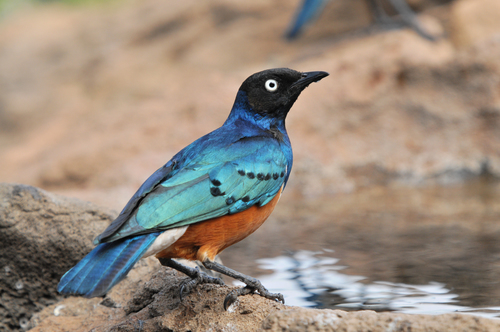 Driekleurige glansspreeuw
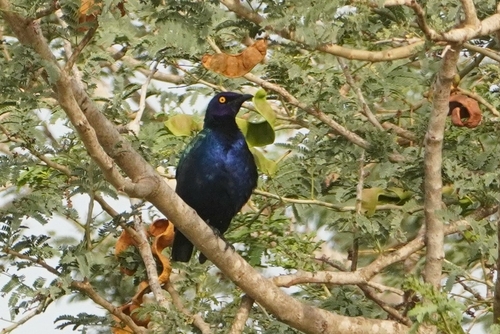 Purperglansspreeuw
Kort gezegd
De meest betrouwbare manier om de Driekleurige glansspreeuw van de Purperglansspreeuw te scheiden, is aan de oogkleur bij volwassenen: de Driekleurige glansspreeuw heeft bleek crèmekleurige ogen, terwijl de Purperglansspreeuw opvallend gele ogen heeft. Ook de verenkleedpatronen helpen—de Driekleurige glansspreeuw heeft een zwarte kop, iriserend blauw-groene bovenkant, een witte borstband en een roestkleurige buik, terwijl de Purperglansspreeuw metallic paars is met glanzend groene vleugels en de witte borstband mist. Juveniele vogels van beide soorten zijn doffer, maar juveniele Driekleurige glansspreeuwen hebben bruine ogen en slechts een vage borstband, terwijl juveniele Purperglansspreeuwen grijze onderdelen en een bruine iris hebben. De Driekleurige glansspreeuw is kleiner en korter van staart dan de forsere Purperglansspreeuw. In het veld moet je je concentreren op oogkleur, borstband en algehele kleurindruk voor de meest betrouwbare scheiding.
Herkenningstips
- Oogkleur van volwassenen: Volwassen Driekleurige glansspreeuwen hebben bleek crèmekleurige ogen, terwijl volwassen Purperglansspreeuwen heldere gele ogen hebben. Dit is het meest betrouwbare kenmerk in goed licht.
- Oogkleur van juvenielen: Beide soorten hebben bruine ogen als juvenielen, dus oogkleur is niet diagnostisch op deze leeftijd. Gebruik alleen oogkleur voor volwassenen.
- Borstband (volwassenen): De Driekleurige glansspreeuw heeft een duidelijke witte borstband die de blauwe borst van de roestkleurige buik scheidt. De Purperglansspreeuw toont nooit een witte borstband.
- Buikkleur (volwassenen): De Driekleurige glansspreeuw heeft een roest-oranje buik, scherp afgebakend door de witte borstband. De Purperglansspreeuw heeft een metallic paarse lichaamskleur zonder roestkleurige buik.
- Algehele kleurindruk: De Driekleurige glansspreeuw is blauw-groen boven met een zwarte kop en roestkleurige buik; de Purperglansspreeuw is metallic paars op hoofd en lichaam met glanzend groene vleugels.
- Onderdelen van juvenielen: Juveniele Driekleurige glansspreeuwen zijn doffer maar tonen nog steeds enige patroonvorming; juveniele Purperglansspreeuwen hebben eenvoudige grijze onderdelen en zijn over het algemeen veel doffer, met een bruine iris.
- Grootte en structuur: De Driekleurige glansspreeuw is kleiner (18–19 cm, 65,5 g), compacter en kortstaartiger. De Purperglansspreeuw is groter (22–23 cm), forsere en ook kortstaartiger maar lijkt robuuster.
- Snavel en voeten: Beide soorten hebben sterke voeten en een lange, smalle snavel, dus deze kenmerken zijn niet betrouwbaar diagnostisch.
- Vleugel- en staartpatroon: Er is geen onderscheidend leeftijdspecifiek bovenvleugel- of staartpatroon beschreven voor beide soorten dat hen in de vlucht zou scheiden.
- Onderstaartdekkingen: De Driekleurige glansspreeuw heeft witte onderstaartdekkingen en vleugelliningen, die zichtbaar kunnen zijn in de vlucht of wanneer de vogel opgevouwen is. De onderstaart van de Purperglansspreeuw wordt niet als onderscheidend beschreven.
- Geslachtsverschillen: Beide soorten zijn seksueel monomorf (de geslachten lijken op elkaar), dus vertrouw niet op geslacht voor identificatie.
- Stem: De Driekleurige glansspreeuw heeft een complexe, luide zang met trillers en geklets, en harde schreeuwende roepen. De stem van de Purperglansspreeuw is niet beschreven, dus gebruik voorzichtigheid bij vocale identificatie.
- Zittend vs. in vlucht: De meeste veldkenmerken (oogkleur, borstband, buikkleur) zijn het beste zichtbaar bij zittende vogels of in goed licht. In de vlucht kunnen grootte en algehele kleurindruk helpen, maar zijn minder betrouwbaar.
- Valkuilen met onvolwassen vogels: Juveniele vogels van beide soorten zijn doffer en missen de sterke volwassen veldkenmerken. Wees voorzichtig en concentreer je op structuur, grootte en eventuele resterende patroonvorming.
- Geografische overlap: Beide soorten zijn Afrikaanse spreeuwen maar worden niet altijd in dezelfde regio's aangetroffen. Als ze samen worden gezien, vertrouw dan op de bovenstaande veldkenmerken voor scheiding.
Grootte
De Driekleurige glansspreeuw is merkbaar kleiner en compacter, met een lengte van 18–19 cm en een lichaamsgewicht van ongeveer 65,5 g [wikidata]. De Purperglansspreeuw is groter en fors, met 22–23 cm, en lijkt over het algemeen robuuster. De staart van de Driekleurige glansspreeuw is relatief kort, terwijl de Purperglansspreeuw ook een korte staart heeft, maar de grotere bulk en lengte van de vogel zijn duidelijk wanneer ze naast elkaar worden gezien of met ervaring.
Verenkleed
-
Juvenielen: Juveniele Driekleurige glansspreeuwen zijn doffer dan volwassenen, missen een duidelijke witte borstband en beginnen met bruine ogen die met de leeftijd crèmekleurig worden. Juveniele Purperglansspreeuwen zijn veel doffer dan volwassenen, met grijze onderdelen en een bruine iris. Beide missen de sterke iriserende kleuren van volwassenen, maar de grijze onderdelen van juveniele Purperglansspreeuwen contrasteren met de meer gedempte maar nog steeds gepatterne uitstraling van juveniele Driekleurige glansspreeuwen.
-
Volwassenen: Volwassen Driekleurige glansspreeuwen hebben een zwarte kop, iriserend blauw-groene rug, bovenborst, vleugels en staart, een duidelijke witte borstband en een roest-oranje buik. De onderstaartdekkingen en vleugelliningen zijn wit. Oogkleur is bleek crèmekleurig. Volwassen Purperglansspreeuwen zijn metallic paars op het hoofd en lichaam, met glanzend groene vleugels, een korte staart en een heldere gele oog. Ze missen de witte borstband en roestkleurige buik van de Driekleurige glansspreeuw.
-
Belangrijkste contrasten: De witte borstband en roestkleurige buik van de Driekleurige glansspreeuw worden nooit geëvenaard door de Purperglansspreeuw. De algehele paarse glans en gele ogen van de Purperglansspreeuw zijn uniek onder deze twee.
Gedrag
Beide soorten zijn robuuste, sterke spreeuwen met vergelijkbaar algemeen gedrag. Er zijn geen diagnostische gedragsverschillen opgemerkt in de bronnen voor veldscheiding.
Geluid
De Driekleurige glansspreeuw staat bekend om een lange, luide zang met trillers en geklets, en een verscheidenheid aan harde roepen, waaronder een complexe schreeuwsequentie. De stem van de Purperglansspreeuw is niet beschreven in de verstrekte aantekeningen, dus vocalisaties zijn niet betrouwbaar diagnostisch tussen deze twee op basis van de huidige informatie.
Driekleurige glansspreeuw · Purperglansspreeuw · Mijn lastige vogels