

Motmot

ツキノワテリムク 対 ムラサキテリムクドリ

Lamprotornis superbus 対 Lamprotornis purpureus

ツキノワテリムクとムラサキテリムクドリのクイズ
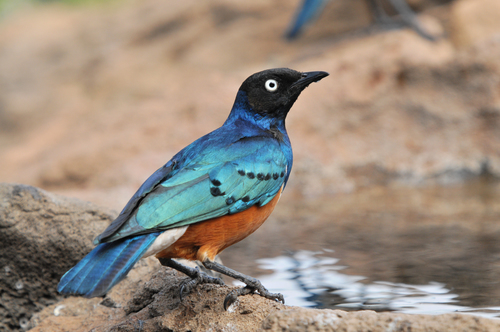
ツキノワテリムク (Lamprotornis superbus) ツキノワテリムク
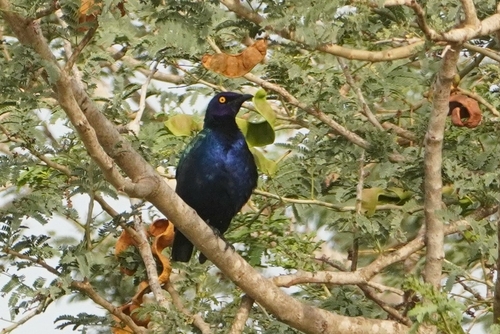
ムラサキテリムクドリ (Lamprotornis purpureus) ムラサキテリムクドリ

メディア

読み込み中…

要点

スーパーブラックスターリングとムラサキテリムクドリを分ける最も信頼できる方法は、成鳥の目の色です:スーパーブラックスターリングは淡いクリーム色の目を示し、ムラサキテリムクドリは目を引く黄色の目を持っています。羽毛のパターンも役立ちます—スーパーブラックスターリングは黒い頭、虹色の青緑色の上面、白い胸のバンド、そして赤褐色の腹を持ち、ムラサキテリムクドリは金属的な紫色で光沢のある緑の翼を持ち、白い胸のバンドがありません。両種の幼鳥はより鈍いですが、スーパーブラックスターリングの幼鳥は茶色の目とわずかな胸のバンドを持ち、ムラサキテリムクドリの幼鳥は灰色の腹部と茶色の虹彩を持っています。スーパーブラックスターリングは、より大きなムラサキテリムクドリよりも小さく、尾が短いです。フィールドでは、最も信頼できる分離のために目の色、胸のバンド、全体的な色の印象に焦点を当ててください。

識別のコツ

  1. Adult eye color: スーパーブラックスターリングの成鳥は淡いクリーム色の目を持ち、ムラサキテリムクドリの成鳥は明るい黄色の目を示します。これは良い光の中で最も信頼できる単一のマークです。
  2. Juvenile eye color: 両種は幼鳥の時に茶色の目を持っているため、この年齢では目の色は診断的ではありません。成鳥のみに目の色を使用してください。
  3. Breast band (adults): スーパーブラックスターリングは青い胸と赤褐色の腹を分ける明確な白い胸のバンドを示します。ムラサキテリムクドリは決して白い胸のバンドを示しません。
  4. Belly color (adults): スーパーブラックスターリングは赤褐色の腹を持ち、白い胸のバンドで明確に区切られています。ムラサキテリムクドリは金属的な紫色の体を持ち、赤褐色の腹はありません。
  5. Overall color impression: スーパーブラックスターリングは黒い頭と赤褐色の腹を持つ青緑色の上面を持ち、ムラサキテリムクドリは頭と体が金属的な紫色で光沢のある緑の翼を持っています。
  6. Juvenile underparts: スーパーブラックスターリングの幼鳥は鈍いですが、まだいくつかのパターンを示します。ムラサキテリムクドリの幼鳥は平坦な灰色の腹部を持ち、全体的に非常に鈍く、茶色の虹彩を持っています。
  7. Size and structure: スーパーブラックスターリングは小さく(18–19 cm, 65.5 g)、よりコンパクトで、尾が短いです。ムラサキテリムクドリは大きく(22–23 cm)、bulkier で、短い尾を持っていますが、より頑丈に見えます。
  8. Bill and feet: 両種は強い足と長く狭いくちばしを持っているため、これらの特徴は信頼できる診断的ではありません。
  9. Wing and tail pattern: どちらの種にも、飛行中にそれらを分けるための特定の年齢特有の上翼または尾のパターンは記載されていません。
  10. Undertail coverts: スーパーブラックスターリングは白い尾羽の覆いと翼の裏地を持ち、飛行中または鳥がふくらんでいるときに見えることがあります。ムラサキテリムクドリの尾羽は特に特徴的ではないとされています。
  11. Sex differences: 両種は性別が同じように見える(性別が似ている)ため、識別のために性別に依存しないでください。
  12. Voice: スーパーブラックスターリングは複雑で大きな歌を持ち、トリルやチャター、厳しい叫び声を含みます。ムラサキテリムクドリの声は記載されていないため、声による識別には注意してください。
  13. Perched vs. in flight: ほとんどのフィールドマーク(目の色、胸のバンド、腹の色)は、止まっている鳥や良い光の中で最もよく見えます。飛行中は、サイズと全体的な色の印象が役立つかもしれませんが、信頼性は低くなります。
  14. Pitfalls with immatures: 両種の幼鳥は鈍く、強い成鳥のフィールドマークが欠けています。注意を払い、構造、サイズ、残存するパターンに焦点を当ててください。
  15. Geographic overlap: 両種はアフリカのスターリングですが、必ずしも同じ地域に見られるわけではありません。一緒に見られた場合は、上記のフィールドマークに依存して分けてください。

大きさ

スーパーブラックスターリングは明らかに小さく、よりコンパクトで、長さは18–19 cm、体重は約65.5 gです [wikidata]。ムラサキテリムクドリは大きく、がっしりしており、22–23 cmで、全体的により頑丈に見えます。スーパーブラックスターリングの尾は比較的短いですが、ムラサキテリムクドリも短い尾を持っていますが、鳥のより大きな体重と長さは、並べて見たり経験を積むことで明らかになります。

羽色

行動

両種は頑丈で、強い足を持つスターリングで、一般的な行動は似ています。フィールドでの分離のための診断的な行動の違いは、情報源には記載されていません。

声

スーパーブラックスターリングはトリルやチャターを伴う長く大きな歌と、複雑な叫びのシーケンスを含むさまざまな厳しい呼び声で知られています。ムラサキテリムクドリの声は提供されたメモには記載されていないため、現在の情報に基づいてこれら二つの間での声の識別は信頼できません。

より良い説明を送る

比較と同じ項目を使ってください。文章はすぐに公開されます。

The most reliable way to separate Superb Starling from Purple Starling is by eye color in adults: Superb Starling shows pale creamy-white eyes, while Purple Starling has striking yellow eyes. Plumage patterns also help—Superb Starling has a black head, iridescent blue-green upperparts, a white breast band, and a rufous belly, while Purple Starling is metallic purple with glossy green wings and lacks the white breast band. Juvenile birds of both species are duller, but Superb Starling juveniles have brown eyes and only a faint breast band, whereas Purple Starling juveniles have grey underparts and a brown iris. Superb Starling is smaller and shorter-tailed than the bulkier Purple Starling. In the field, focus on eye color, breast band, and overall color impression for the most reliable separation.

  1. Adult eye color: Superb Starling adults have pale creamy-white eyes, while Purple Starling adults show bright yellow eyes. This is the most reliable single mark in good light.
  2. Juvenile eye color: Both species have brown eyes as juveniles, so eye color is not diagnostic at this age. Only use eye color for adults.
  3. Breast band (adults): Superb Starling shows a distinct white breast band separating the blue breast from the rufous belly. Purple Starling never shows a white breast band.
  4. Belly color (adults): Superb Starling has a rufous-orange belly, sharply demarcated by the white breast band. Purple Starling has a metallic purple body with no rufous belly.
  5. Overall color impression: Superb Starling is blue-green above with a black head and rufous belly; Purple Starling is metallic purple on head and body with glossy green wings.
  6. Juvenile underparts: Superb Starling juveniles are duller but still show some patterning; Purple Starling juveniles have plain grey underparts and are overall much duller, with a brown iris.
  7. Size and structure: Superb Starling is smaller (18–19 cm, 65.5 g), more compact, and short-tailed. Purple Starling is larger (22–23 cm), bulkier, and also short-tailed but appears more robust.
  8. Bill and feet: Both species have strong feet and a long, narrow bill, so these features are not reliably diagnostic.
  9. Wing and tail pattern: No distinctive age-specific upperwing or tail pattern is described for either species that would separate them in flight.
  10. Undertail coverts: Superb Starling has white undertail coverts and wing linings, which may be visible in flight or when the bird is fluffed up. Purple Starling's undertail is not described as distinctive.
  11. Sex differences: Both species are sexually monomorphic (sexes look alike), so do not rely on sex for identification.
  12. Voice: Superb Starling has a complex, loud song with trills and chatters, and harsh screeching calls. Purple Starling's voice is not described, so use caution with vocal ID.
  13. Perched vs. in flight: Most field marks (eye color, breast band, belly color) are best seen on perched birds or in good light. In flight, size and overall color impression may help but are less reliable.
  14. Pitfalls with immatures: Juvenile birds of both species are duller and lack the strong adult field marks. Use caution and focus on structure, size, and any residual patterning.
  15. Geographic overlap: Both species are African starlings but are not always found in the same regions. If seen together, rely on the above field marks for separation.

Superb Starling is noticeably smaller and more compact, measuring 18–19 cm in length with a body mass around 65.5 g [wikidata]. Purple Starling is larger and stockier, at 22–23 cm, and appears more robust overall. The tail of Superb Starling is relatively short, while Purple Starling also has a short tail but the bird's greater bulk and length are apparent when seen side by side or with experience.

  • Juveniles: Superb Starling juveniles are duller versions of adults, lacking a clear white breast band and starting with brown eyes that turn creamy white with age. Purple Starling juveniles are much duller than adults, with grey underparts and a brown iris. Both lack the strong iridescence of adults, but the grey underparts of Purple Starling juveniles contrast with the more muted but still patterned look of Superb Starling juveniles.

  • Adults: Superb Starling adults have a black head, iridescent blue-to-green back, upper breast, wings, and tail, a distinct white breast band, and a rufous-orange belly. The undertail coverts and wing linings are white. Eye color is pale creamy-white. Purple Starling adults are metallic purple on the head and body, with glossy green wings, a short tail, and a bright yellow eye. They lack the white breast band and rufous belly of Superb Starling.

  • Key contrasts: The white breast band and rufous belly of Superb Starling are never matched by Purple Starling. The overall purple gloss and yellow eye of Purple Starling are unique among these two.

Both species are robust, strong-footed starlings with similar general behavior. No diagnostic behavioral differences are noted in the sources for field separation.

Superb Starling is noted for a long, loud song with trills and chatters, and a variety of harsh calls including a complex screeching sequence. Purple Starling's voice is not described in the provided notes, so vocalizations are not reliably diagnostic between these two based on current information.

変更を破棄しますか?

保存していない編集があります。今離れると失われます。

ツキノワテリムク · ムラサキテリムクドリ · 苦手な鳥