

Holenduif vs Zomertortel
Columba oenas versus Streptopelia turtur
Speel een quiz met Holenduif en Zomertortel
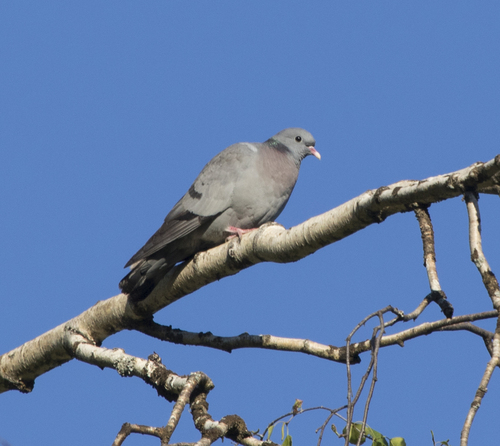 Holenduif
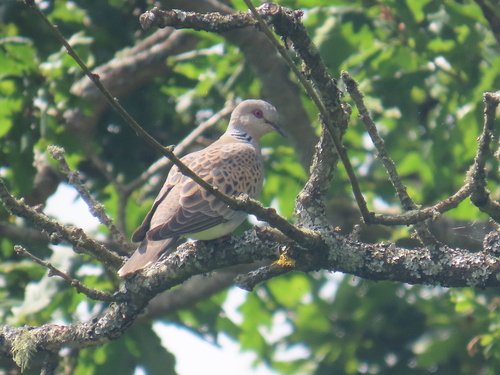 Zomertortel
Kort gezegd
Het meest betrouwbare veldkenmerk om Holenduif van Zomertortel te scheiden, is het vleugel- en staartpatroon in de vlucht: Holenduif toont een uniforme grijs bovenvleugel met onvolledige, korte donkere strepen en een eenvoudige grijze staart, terwijl Zomertortel sterk gemêleerde kaneelbruine vleugels heeft, een wigvormige staart met een donkere kern en witte randen, en een opvallende zwart-witte nekvlek bij volwassenen. Juveniele Holenduiven missen de iriserende nekvlek, maar tonen nog steeds de eenvoudige grijze bovenzijde en onvolledige vleugelstrepen, terwijl juvenile Zomertortels over het algemeen bruiner zijn en de nekvlek missen, maar het kenmerkende staartpatroon behouden. Structurele verschillen zijn ook nuttig: Holenduif is robuuster en ronder, met een kortere staart en een meer duifachtige uitstraling, terwijl Zomertortel merkbaar kleiner, slanker en langstaartiger is. Stem, habitat en gedrag kunnen helpen, maar concentreer je op het vleugel- en staartpatroon en de algehele structuur voor een betrouwbare scheiding in het veld.
Herkenningstips
- Bovenvleugel in vlucht (alle leeftijden): Holenduif toont eenvoudige blauw-grijze bovenvleugels met slechts twee korte, onvolledige donkere strepen op de deksels; Zomertortel heeft kaneelbruine bovenvleugels met zware zwarte vlekken en geen eenvoudige grijze panelen.
- Staartpatroon (alle leeftijden, vooral in vlucht): Holenduif heeft een brede donkergrijze staartpunt en een eenvoudige grijze staart; Zomertortel heeft een wigvormige staart met een donkere kern en scherpe witte randen en punten, zeer zichtbaar van achteren of wanneer de staart is uitgespreid.
- Staartkleur: De staart van Holenduif is eenvoudig grijs en mengt zich met de rug; de staart van Zomertortel is blauw-grijs maar minder onderscheidend dan het staartpatroon.
- Nekvlek (alleen volwassenen): Volwassen Holenduif heeft een groene of paarse iriserende vlek aan de zijkant van de nek; volwassen Zomertortel heeft een gedurfde zwart-witte gestreepte vlek. Juvenielen van beide soorten missen deze vlekken, dus vertrouw niet op dit kenmerk voor jonge vogels.
- Borsten en onderdelen: Holenduif heeft een lichtroze-paarse dooraderde borst en grijze onderdelen; Zomertortel heeft een wijnrode borst en witte onderstaartdeksels, die opvallend kunnen zijn wanneer de staart wordt opgetild.
- Snavel- en oogkleur: Holenduif heeft een roze snavel met een gele punt en donkere ogen; Zomertortel heeft een zwarte snavel, rode oogringen en rode poten (bruin bij juvenielen).
- Grootte en structuur: Holenduif is merkbaar groter, robuuster, en ronder, met een korte staart en een meer duifachtige uitstraling; Zomertortel is kleiner, slanker, en langstaartiger, met een meer delicate uitstraling.
- Vluchtstijl: De vlucht van Holenduif is snel, regelmatig, en direct, met af en toe scherpe vleugelflikken en een neiging om te cirkelen met vleugelscheuren tijdens de vertoning; de vlucht van Zomertortel is pijlachtig maar niet bijzonder snel, en het is waarschijnlijker dat het op afstand opvliegt.
- Zitten en vertonen: Holenduif zit vaak rechtop en loopt langs takken met een gezwollen nek tijdens de vertoning; Zomertortel is meer terughoudend en minder geneigd om openlijk te vertonen.
- Habitatcontext: Holenduif is waarschijnlijker in open land met verspreide bomen of landbouwgrond, vaak nabij oude bomen of parken; Zomertortel geeft de voorkeur aan open bossen, heggen, en zonnige randen, en wordt zelden gezien in dichte bossen of diepere dekking.
- Stem: De roep van Holenduif is een korte, diepe, grommende "Ooo-uu-ooh"; het lied van Zomertortel is een zachte, spinnende triller. Als je een grom hoort, is het Holenduif; als je een zachte spint hoort, is het Zomertortel.
- Seizoenscontext: Zomertortel is een zomergast in het grootste deel van Europa, voornamelijk aanwezig van eind april tot september; Holenduif is resident of alleen lokaal migrerend, dus een winterwaarneming is bijna zeker Holenduif.
- Juveniele valkuilen: Juveniele Holenduif mist de nekvlek maar is nog steeds eenvoudig grijs boven met onvolledige vleugelstrepen; juvenile Zomertortel is bruiner, met bruine poten en hetzelfde wigvormige staartpatroon als volwassenen.
- Veelvoorkomende verwarring: Verwar de onvolledige, korte vleugelstrepen van Holenduif niet met de volledige, gedurfde strepen van Rotsduif; het vleugelpatroon van Zomertortel is veel warmer en meer gemêleerd dan beide.
- Bij twijfel: Focus op het staartpatroon in de vlucht—Holenduif toont nooit witte randen/punten, terwijl Zomertortel dat altijd doet. Als de vogel zit, kijk dan naar de algehele bulk (Holenduif) versus slankheid en lange staart (Zomertortel), en controleer op de nekvlek als de vogel een volwassene is.
Grootte
Holenduif is aanzienlijk groter en zwaarder dan Zomertortel. Holenduif meet 28–34 cm in lengte met een spanwijdte van 60–66 cm en mannetjes wegen 303–365 g (vrouwtjes 286–290 g) [wikipedia], waardoor het een robuuste, middelgrote duif is. In tegenstelling tot dat is Zomertortel kleiner en slanker, met een lengte van 26–28 cm, spanwijdte 47–53 cm, en een typische massa van 100–156 g [wikidata]. In het veld lijkt de Holenduif merkbaar robuuster en solider, terwijl Zomertortel verfijnder en delicater is, met een langere staart in verhouding tot zijn lichaam.
Verenkleed
-
Juveniele/onvolwassen vogels: Juveniele Holenduiven zijn eenvoudig blauw-grijs boven met onvolledige, korte donkere strepen op de vleugeldeksels en een grijze staart; ze missen de iriserende nekvlek van volwassenen. Juveniele Zomertortels zijn bruiner en doffer over het algemeen, met bruine poten en geen nekvlek, maar behouden het kenmerkende wigvormige staart met witte randen en punten, en gemêleerde kaneelbruine bovenvleugels met zwarte markeringen.
-
Volwassenen: Volwassen Holenduif is blauw-grijs over het algemeen met een lichtroze-paarse dooraderde borst, twee korte donkere strepen op de vleugeldeksels (niet voluit), een brede donkergrijze staartpunt, en een groene/paarse iriserende vlek op de nek (ontbrekend bij juvenielen). De staart is eenvoudig grijs, en de ondervleugel is donkergrijs. Volwassen Zomertortel heeft een blauw-grijze kop, nek, flanken en staart, een wijnrode borst, witte onderstaartdeksels, en kaneelbruine, zwart-gemêleerde vleugels. De zwart-witte gestreepte nekvlek is diagnostisch voor volwassenen. De staart is wigvormig met een donkere kern en witte randen/punten, zeer zichtbaar in de vlucht en wanneer de staart is uitgespreid. De ondervleugel wordt niet beschreven als contrasterend, maar het onderstaartpatroon is opvallend wanneer de vogel in de vlucht is of zijn staart opheft.
-
In vlucht: Holenduif toont een uniforme grijze bovenvleugel met een donkere achterrand en geen witte staart; Zomertortel toont warme, gemêleerde bovenvleugels en een opvallend staartpatroon met witte randen en punten.
Gedrag
Holenduif zit typisch rechtop en loopt langs takken tijdens de vertoning, met een constante, regelmatige vlucht en af en toe scherpe vleugelflikken. Zijn huwelijksvertoning omvat lopen met een gezwollen nek, verlaagde vleugels en een uitgespreide staart, en in de lente cirkelt hij met vleugels die knakken als een zweep. Zomertortel is timider en geeft de voorkeur aan voeden op de grond in open bossen, zelden in dichte dekking. Zijn vlucht wordt beschreven als pijlachtig maar niet bijzonder snel, en zijn huwelijksvlucht is hoog en cirkelend. Zomertortel is over het algemeen meer terughoudend en minder geneigd om lange tijd openlijk te worden gezien, vooral in gebieden met jachtdruk.
Habitat
Holenduif is wijdverspreid in het westelijke Palearctisch gebied, vaak resident in westelijke en zuidelijke regio's, en geeft de voorkeur aan open land met verspreide bomen, landbouwgrond en parken. Het nestelt vaak in holle bomen of oude spechtenholtes. Zomertortel broedt in het zuidwestelijke Palearctisch gebied, inclusief Noord-Afrika, en is een langeafstandsmigrant die in de winter ten zuiden van de Sahara verblijft. Het geeft de voorkeur aan open bossen, randen en heggen, en wordt zelden in dichte bossen aangetroffen. Zomertortel is veel waarschijnlijker te vinden in open, zonnige habitats en is extreem timide, vaak opvliegend op afstand.
Geluid
Holenduif geeft een korte, diepe, grommende "Ooo-uu-ooh" roep, die vrij onderscheidend is en de gemoduleerde, uitgerekte cooing van andere duiven mist. De stem van Zomertortel wordt hier niet in detail beschreven, maar is beroemd om zijn treurige en zachte karakter; het is niet vergelijkbaar met de grommende roep van Holenduif. Als je een diepe, korte grom hoort, is het Holenduif; Zomertortel is waarschijnlijker te horen met een zachte, spinnende zang.