

Zwarte albatros vs Roetkopalbatros
Phoebetria fusca versus Phoebetria palpebrata
Speel een quiz met Zwarte albatros en Roetkopalbatros
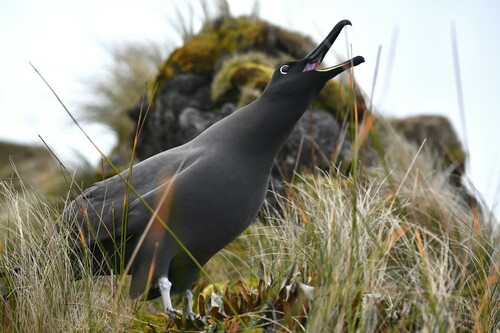 Zwarte albatros
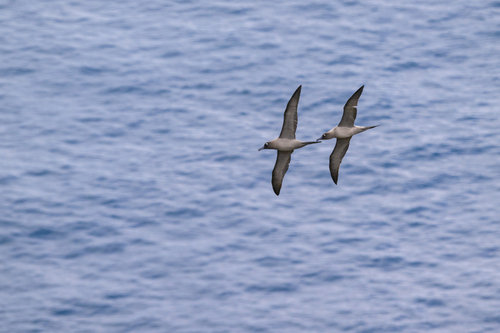 Roetkopalbatros
Kort gezegd
Het meest betrouwbare veldkenmerk tussen Zwarte albatros en Roetkopalbatros is de kleur van de mantel en rug: Zwarte albatros is uniform roetbruin tot roetzwart, terwijl Roetkopalbatros een duidelijk lichtere, zilvergrijze mantel en rug toont die contrasteert met een donkerder hoofd en onderdelen. Beide soorten delen een slanke, langvleugelige silhouet en vergelijkbare grootte, maar de twee-kleurige bovenkant van de Roetkop is zelfs op afstand zichtbaar, vooral in de vlucht. Oogring en snavelkleurdetails kunnen helpen op korte afstand, maar wees voorzichtig dat beide soorten er in slecht licht of van onderen zeer donker uit kunnen zien. Juveniele en onvolwassen verenkleed zijn niet sterk gedifferentieerd bij Zwarte albatros, dus de kleur van de mantel blijft het beste scheidingselement in alle leeftijden.
Herkenningstips
- Lichte mantel vs uniforme duisternis: Het beste veldkenmerk is de kleur van de mantel en rug. Roetkopalbatros toont altijd een lichte, zilvergrijze mantel en rug die contrasteert met een donker hoofd en onderdelen, zichtbaar op afstand en in alle leeftijden. Zwarte albatros is uniform roetbruin tot roetzwart, zonder lichte mantel.
- Oogring: Zwarte albatros heeft een gedurfde witte ring rond bijna het hele oog (behalve de binnenhoek), zichtbaar op korte afstand. Roetkop heeft alleen een dunne, kortgevederde grijze halve maan achter het oog, veel minder opvallend.
- Snavelkleur: Zwarte albatros heeft een glanzende zwarte snavel met een gele tot oranje lijn langs de onderkaak. De snavel van Roetkop is zwart met een blauwe sulcus en een grijsgele lijn op de onderkaak. Dit is subtiel en het beste te zien in goed licht op korte afstand.
- Hoofd en onderdelen: Beide soorten hebben donkerdere hoofden, maar het contrast van de Roetkop met de lichte mantel is opvallender. Het hoofd van de Zwarte is slechts iets donkerder dan de rest van het lichaam.
- Bovenvleugel en vluchtpatroon: Er zijn geen onderscheidende leeftijdspecifieke bovenvleugelkenmerken opgemerkt voor beide soorten; beide hebben lange, smalle vleugels. Focus op de kleur van de mantel in de vlucht.
- Juveniele/onvolwassen verwarring: Onvolwassen Zwarte albatrossen lijken op volwassenen na het uitvliegen, dus de kleur van de mantel blijft het belangrijkste kenmerk. Onvolwassen Roetkoppen behouden ook de lichte mantel.
- Zittende vogels: Op het land lijkt Zwarte albatros uniform donker met een witte oogring; Roetkop toont de lichte mantel en minder opvallende ooghalve maan.
- Gedrag in kolonie: Zwarte albatros is schuw en minder demonstratief; Roetkop kan worden gezien in meer uitgebreide lucht- en staartshows tijdens het hofmaken.
- Vocalisaties: Als ze worden gehoord, is de 'pee-oo' luchtroep van de Zwarte albatros onderscheidend, maar de trompetachtige roepen en het snappen van de snavel van de Roetkop zijn waarschijnlijker tijdens het hofmaken of bedreigingsshows.
- Habitat en context: Beide broeden op kliffen in de zuidelijke oceanen; Zwarte kan alleen of in kleine groepen nestelen, Roetkop is ook koloniaal. Niet een betrouwbare scheider.
- Grootte: Beide zijn vergelijkbaar in grootte en verhoudingen; vertrouw niet op grootte voor identificatie.
- Verlichtingsvalkuilen: In slecht licht of van onderen kunnen beide uniform donker lijken; kijk altijd naar het contrast van de mantel in zij- of bovenaanzichten.
- Op zee: Focus op het twee-kleurige (Roetkop) vs uniforme (Zwarte) uiterlijk, vooral bij zwevende vogels die van boven of van de zijkant worden gezien.
- Snaveldetails: Gebruik snavelkleur alleen als je uitstekende uitzichten hebt; prioriteer anders het verenkleed.
- Geslacht en seizoen: Er zijn geen sterke seksuele dimorfismen of seizoensgebonden verenkleedveranderingen opgemerkt voor beide soorten; identificatiekenmerken zijn het hele jaar van toepassing.
Grootte
Beide soorten zijn middelgrote albatrossen en zijn zeer dicht in lengte en spanwijdte, waardoor grootte een onbetrouwbare scheider in het veld is. De Roetkopalbatros weegt gemiddeld iets meer (lichaamsgewicht ~3150 g [wikidata]) dan Zwarte albatros (geen precieze massa gegeven, maar beschreven als ongeveer 2,5 kg voor volwassenen [wikipedia]), maar dit verschil is subtiel en niet gemakkelijk te beoordelen op zee. Mannetjes van beide soorten kunnen iets groter zijn dan vrouwtjes, maar dit is geen praktisch veldkenmerk.
Verenkleed
- Juveniele/onvolwassen verenkleed: Onvolwassen Zwarte albatrossen lijken bijna identiek aan volwassenen na het verliezen van dons, zonder enige duidelijke lichte mantel of onderscheidend bovenvleugelpatroon. Roetkopalbatros toont, zelfs als onvolwassen, de kenmerkende lichte grijze mantel en rug die contrasteert met het donkerdere hoofd en onderdelen. Er is geen leeftijdspecifiek bovenvleugelpatroon (zoals driehoeken of W-vormen) opgemerkt voor beide soorten, dus de kleur van de mantel is het belangrijkste kenmerk in alle leeftijden.
- Volwassen verenkleed: Zwarte albatros is uniform roetbruin tot roetzwart, soms met een iets donkerder hoofd en staart, en een prominente witte oogring. Roetkopalbatros is donkerder op het hoofd en de onderdelen, maar heeft een lichtere, zilvergrijze mantel en rug, wat een twee-kleurig uiterlijk geeft dat doet denken aan een Siamees kat. Het oog van de Roetkop is gedeeltelijk omringd door een dunne, kortgevederde grijze halve maan, minder opvallend dan de gedurfde witte ring van de Zwarte. De snavelkleur verschilt subtiel: Zwarte heeft een glanzende zwarte snavel met een gele tot oranje lijn op de onderkaak, terwijl Roetkop een zwarte snavel heeft met een blauwe sulcus en een grijsgele lijn langs de onderkaak.
Gedrag
Beide soorten zijn zeer luchtig, vaak gezien terwijl ze laag over de oceaan zweven met lange, smalle vleugels. Zwarte albatros staat bekend om gesynchroniseerde vluchtpatronen en schuwe, gereserveerde interacties, vooral bij broedkolonies. Roetkopalbatros is waarschijnlijker om luchtshows en formatievliegen uit te voeren tijdens het hofmaken, en gebruikt zijn staart meer in de show dan Zwarte. Beide soorten broeden op steile kliffen, maar Zwarte kan alleen of in kleine groepen nestelen, terwijl Roetkop ook koloniaal is. Op zee is het gedrag vergelijkbaar en niet betrouwbaar diagnostisch.
Habitat
Beide soorten zijn pelagisch, zwerven over de zuidelijke oceanen en keren terug om te broeden op afgelegen eilanden met steile kliffen. Zwarte albatros wordt aangetroffen in de zuidelijke Atlantische, zuidelijke Indische en Zuidelijke oceanen, broedend op klifrand of steile hellingen, vaak in kleine kolonies of alleen. Roetkopalbatros deelt veel van dit bereik en habitat, broedend op vergelijkbare klifachtige eilanden. Habitat alleen scheidt de twee niet betrouwbaar, maar Zwarte kan iets waarschijnlijker zijn om in kleinere groepen of alleen te nestelen.
Geluid
Vocalisaties zijn geen sterke scheider in het veld. Zwarte albatros staat bekend om luide, herhalende 'pee-oo' luchtroepen bij kolonies. Roetkopalbatros heeft een luide, scherpe, trompetachtige roep en kan zijn snavel knappen of een schorre 'gaaaa' geven wanneer hij bedreigd wordt. Hofroep en luchtshows zijn prominenter bij Roetkop, maar op zee zijn beide over het algemeen stil en moeilijk te onderscheiden op stem.