

Roodhalsduif vs Roodsnavelduif
Patagioenas squamosa versus Patagioenas flavirostris
Speel een quiz met Roodhalsduif en Roodsnavelduif
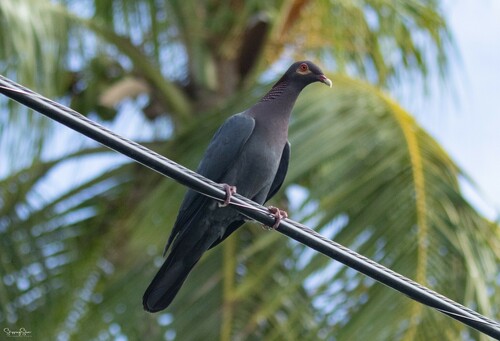 Roodhalsduif
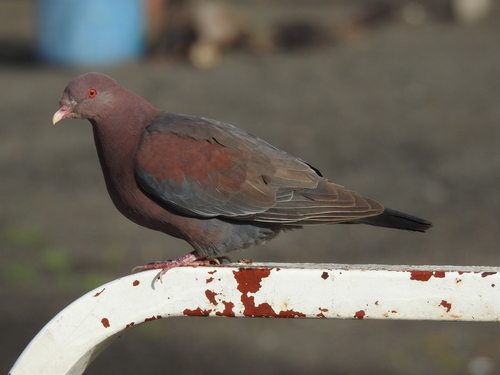 Roodsnavelduif
Kort gezegd
Het meest betrouwbare veldkenmerk tussen Roodhalsduif en Roodsnavelduif is de aanwezigheid van een schubachtige nek en een kale roodachtige of geelachtige oogring in Roodhals, versus een gladdere kastanjebruine kop en nek met een duidelijke oranje orbitale ring in Roodsnavel. Beide zijn grote, robuuste duiven met een vergelijkbare algehele structuur en leisteengrijze lichamen, maar subtiele verschillen in kleur van hoofd, nek en kale delen zijn cruciaal. Juveniele Roodsnavelduiven zijn doffer en bruiner, wat verwarring met Roodhals kan veroorzaken, maar de schubachtige nek en de rode ooghuid van Roodhals blijven onderscheidend. De kleur en het patroon van de snavel, evenals subtiele verschillen in de kleur van de buik en de staartdekkveren, helpen ook om ze te scheiden. Habitat kan een aanwijzing zijn, maar is niet altijd betrouwbaar vanwege overlap in sommige regio's.
Herkenningstips
- Schubachtige nek (alleen Roodhals): Zoek naar het schubachtige of geblokte uiterlijk op de nek—dit is afwezig bij Roodsnavel van alle leeftijden.
- Kleur van de kale ooghuid: Roodhals toont een kale huid rond het oog, roodachtig bij mannetjes en geelachtig bij vrouwtjes; Roodsnavel heeft een oranje orbitale ring maar niet hetzelfde kale huideffect.
- Kleur van hoofd en nek: Roodsnavel heeft een kastanjebruine tot paarse kop en nek die glad is en geen iriserende of schubachtige kenmerken heeft; de kastanjebruine kleur van Roodhals is meer beperkt tot de nek en gaat gepaard met de schubachtige nek.
- Kleur en patroon van de snavel: Beide hebben rood aan de basis van de snavel, maar Roodsnavel heeft een gele punt, terwijl de snavel van Roodhals rood aan de basis en lichtgekleurd (niet geel) aan de punt is.
- Buik en staartdekkveren: Roodsnavel toont een blauwgrijze buik en staartdekkveren, in contrast met de kastanjebruine kop en nek; Roodhals is meer uniform leisteengrijs aan de onderzijde.
- Verwarring bij juvenielen: Juveniele Roodsnavelduiven zijn doffer en bruiner, met donkere schouders, maar missen nog steeds de schubachtige nek en kale ooghuid van Roodhals. Onvolwassen Roodhals zou de schubachtige nek en kale ooghuid moeten behouden.
- Geslachtsverschillen: Vrouwelijke Roodhals heeft een meer geelachtige oogring, terwijl vrouwelijke Roodsnavel gewoon doffer is.
- Vluchtzicht: Er zijn geen onderscheidende bovenvleugel- of vliegpatroonverschillen beschreven voor beide soorten, dus vertrouw op de kleur van hoofd, nek en kale delen, zelfs in de vlucht.
- Habitat en verspreiding: Als gezien in het Caribisch gebied (behalve Jamaica en de Bahama's), wordt Roodhals verwacht; als op het vasteland van zuidelijk Texas tot Costa Rica, is Roodsnavel waarschijnlijk. Overlap is minimaal.
- Stem: Als je een lange, hoge roep hoort met een uitgerekt 'coooo' en drie 'cuk-c'-c'-coo' noten, is het Roodsnavel. De vocalisaties van Roodhals worden hier niet beschreven.
- Kleur van de poten: Roodhals heeft rode poten; de kleur van de poten van Roodsnavel is niet gespecificeerd, maar is geen primaire scheidingsfactor.
- Kleur van de rug: Roodsnavel is minder bruin op de rug dan vergelijkbare soorten, maar dit is geen sterke scheidingsfactor van Roodhals.
- Groepsgedrag: Beide soorten worden meestal solitair of in kleine groepen gezien; dit helpt niet bij de scheiding.
- Structuur van de snavel: Beide zijn robuuste duiven met een vergelijkbare snavelvorm; structuur is geen betrouwbare scheidingsfactor.
- Seizoenscontext: Roodsnavel is zeldzaam in de winter in het grootste deel van zijn verspreidingsgebied, terwijl Roodhals het hele jaar door in het Caribisch gebied woont.
Grootte
Beide soorten zijn grote duiven. Roodhalsduif weegt gemiddeld ongeveer 312 g [wikidata], terwijl Roodsnavelduif een gerapporteerde range heeft van 230–425 g [wikipedia], dus er is aanzienlijke overlap. Beide zijn vergelijkbaar in lengte (Roodhals: 14–16 in; Roodsnavel: 12–15 in). In het veld is grootte alleen geen betrouwbare scheidingsfactor.
Verenkleed
- Juvenielen/onvolwassen: Juveniele Roodsnavelduiven zijn merkbaar doffer dan volwassenen, met donkere, doffe schouders en een bruiner mantel en vleugels. Dit kan ze doen lijken op Roodhalsduif, maar ze missen nog steeds het schubachtige nekpatroon en de kale rode/geelachtige ooghuid van Roodhals. Juveniele Roodhalsduiven worden niet in detail beschreven, maar de schubachtige nek en kale ooghuid zijn consistente kenmerken.
- Volwassenen: Roodhalsduif toont een kastanjebruine vlek rond de nek en een duidelijk schubachtig uiterlijk op de nek. De kale huid rond het oog is rood bij mannetjes, geelachtig bij vrouwtjes. De snavel is rood aan de basis met een bleke punt. Roodsnavelduif heeft een kastanjebruine tot paarse kop, nek en vleugeldekkveren, met een blauwgrijze buik en staartdekkveren. De orbitale ring is oranje, en de snavel is rood met een gele punt. Roodsnavel mist de schubachtige nek en heeft een gladdere, minder bruine rug dan vergelijkbare soorten. Beide soorten zijn grotendeels leisteengrijs, maar Roodhals is meer uniform, terwijl Roodsnavel meer contrast toont tussen de kastanjebruine/paarse kop en de blauwgrijze buik.
Gedrag
Beide soorten worden typisch alleen of in kleine groepen gezien. Roodhalsduif is voorzichtig en snel om op te vliegen, vaak zowel in bomen als op de grond voeden. Roodsnavelduif is ook robuust en voorzichtig, met een kenmerkend vleugelklappend geluid bij het opstijgen. Er is geen sterke gedragsmatige scheidingsfactor tussen de twee in het veld.
Habitat
Roodhalsduif wordt overal in het Caribisch gebied aangetroffen, vooral in regenwouden, maar ook in drogere bossen en nabij nederzettingen. Roodsnavelduif komt voor van zuidelijk Texas via Mexico tot Costa Rica, met een voorkeur voor droge bossen en bosgebieden langs rivieren, vooral in kust- en laaglandgebieden. Hoewel beide in een reeks bosachtige habitats kunnen voorkomen, is Roodhals strikt Caribisch, terwijl Roodsnavel continentaal is (Mexico/Centraal-Amerika). Daarom is locatie een sterke aanwijzing: Caribische eilanden wijzen op Roodhals, vasteland Centraal-Amerika en Mexico op Roodsnavel.
Geluid
Roodsnavelduif heeft een kenmerkende, lange, hoge roep: een uitgerekt 'coooo' gevolgd door drie 'cuk-c'-c'-coo' noten, vaak oplopend. Zijn vleugels maken een klappend geluid bij het opstijgen. Geen specifieke vocalisatie wordt beschreven voor Roodhalsduif in de gegeven notities, dus de stem is alleen een scheidingsfactor als de unieke roep van Roodsnavel wordt gehoord.